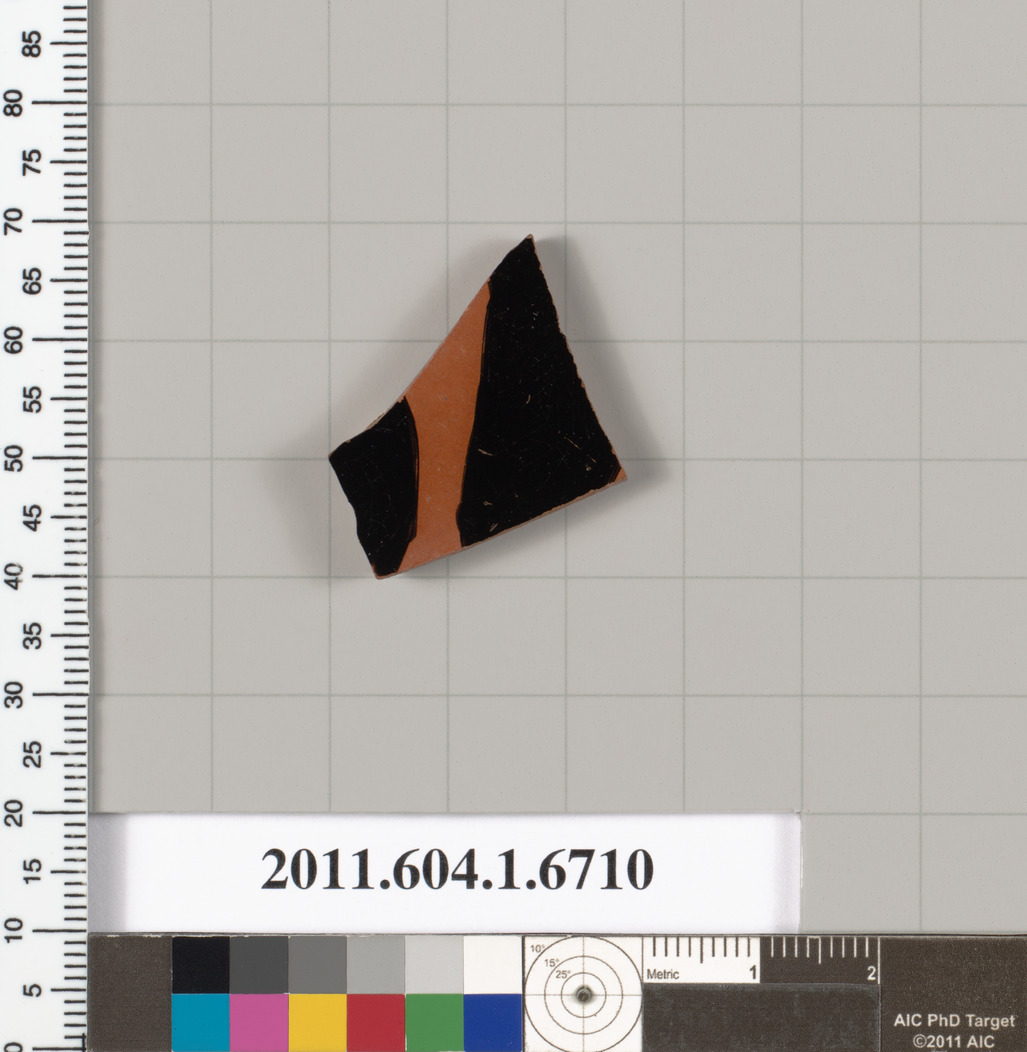
Fragmented Wholeness: The Attic Kylix and the Architecture of Unspoken Elegance
The Lauren Fashion Heritage Lab operates on the principle that profound sartorial intelligence is often found not in the complete garment, but in the resonant fragment. Our internal genetic code, analyzing the dialectic between the transcendent Bodhisattva and the talismanic bovine-headed amulet, reveals a core tenet: true heritage exists in the spectrum between the iconic, public ideal and the intimate, personal artifact. It is within this conceptual framework that we examine a seemingly distant relic—a Terracotta fragment of an Attic kylix (drinking cup)—and decode its profound implications for the 2026 Old Money silhouette. This ceramic shard, bearing the ghost of a symposium, becomes a master text on the aesthetics of discretion, cultivated fracture, and the authority of the incomplete.
The Poetics of the Fragment: From Symposium to Silhouette
The kylix was not merely a vessel; it was the centerpiece of the Athenian symposium, a ritualized space for dialogue, wine, and the performance of social and intellectual refinement. The fragment we study is a ruin of that ritual. Its broken edge does not signify loss, but rather a distillation. It carries the imprint of a hand, the stain of wine long evaporated, and a sliver of painted narrative—perhaps a god, a hero, or a simple band of black glaze. This is the essence of the “Heritage-Black” philosophy: elegance is not about ostentatious display, but about bearing the patina of use, the weight of context, and the confidence to let history show through in subtle, fractured ways. For 2026, the Old Money silhouette moves away from pristine, monolithic statements and towards an architecture of cultivated fragmentation.
This translates into tailoring that embraces a form of sartorial sparagmos (a ritual tearing). Imagine a impeccably structured wool blazer, its integrity deliberately interrupted by a seam left slightly—and perfectly—unfinished at the inner cuff, revealing a hidden narrative of cashmere in a contrasting, somber hue. Or a gown whose silhouette is classically columnar, yet fragmented through the strategic application of lace not as an overlay, but as a replacement for sections of the primary fabric, creating a palimpsest of opacity and transparency. Like the kylix fragment, the garment is no longer a sealed whole, but a deliberate composition of preserved integrity and elegant dissolution, suggesting a narrative too rich to be fully contained.
The Silhouette as Symposium: Curated Space and Ritual Posture
The kylix’s form was engineered for a specific social ritual. Its wide, shallow bowl allowed wine to be drunk while reclining, and its foot provided a stable pivot. This is a lesson in silhouette as ritualized space. The 2026 Old Money silhouette will prioritize the creation of negative space and the articulation of posture inherited from private, cultivated environments—the library, the private club, the country estate. It learns from the kylix’s ergonomics, designing for the grace of a seated, contemplative pose or the ease of a conversational gesture.
This manifests in sleeves cut with a slight, permanent bend at the elbow, as if holding a book or a cup; in jacket darts that accommodate not a rigid stance, but the relaxed twist of a torso in engaged discussion; in skirts with precise, architectural pleats that open like the petals of a flower when seated, yet fall into a severe, narrow line when standing. The silhouette becomes a vessel for a way of life, much as the kylix was a vessel for wine and discourse. The fabric choices—heavy silk faille, matt wool crepe, brushed cashmere—prioritize a tactile, hushed luxury that speaks to the wearer and the intimates within their circle, not to the distant observer. The color palette, dominated by Heritage-Black, deep oxblood, and misty charcoal, echoes the mineral, earthy tones of terracotta and aged pottery.
Narrative as Glaze: The Symbolism of Restraint
The painted scene on the kylix fragment, however partial, was a catalyst for conversation, a symbolic anchor. In our genetic code, this parallels the bovine-headed amulet’s function as a private, protective symbol. For 2026, Old Money elegance incorporates narrative as subtle glaze, not as bold print. It is symbolism so internalized it becomes texture. This means embroidery so fine it mimics the crackle of ancient glaze, hidden within a collar fold or lining. It means jacquard patterns based on Greek key or meander motifs, rendered in tonal-on-tonal weaving, discernible only at a whisper’s distance. It means hardware—a clasp, a buckle—cast from a lost-wax process that recalls the roughness of ancient metalwork, then polished to a subdued gleam.
This approach rejects the literal and embraces the allegorical. A coat does not need to shout its provenance; its cut can echo the drape of a chiton, its fastening the simplicity of a fibula, all while remaining resolutely modern. The power lies in the allusion, the fragmentary reference that invites recognition only from those versed in the same visual language. It is the sartorial equivalent of the kylix’s fractured image—a story suggested, not told, its completion dependent on the cultivated knowledge of the beholder.
In conclusion, the terracotta kylix fragment teaches us that the apex of heritage is not preservation, but intelligent erosion. It shows how an object, through fracture, gains deeper resonance, inviting the imagination to reconstruct the whole. For Lauren’s 2026 Old Money vision, this translates into a silhouette that is both impeccably constructed and thoughtfully deconstructed. It is a wardrobe of fragments that cohere into a powerful whole: a blazer that remembers the symposium, a gown that echoes the amulet’s secrecy, a palette that speaks in the language of aged clay and shadow. This is not fashion that seeks to be new, but fashion that seeks to be continuous—a living fragment in an ongoing narrative of discreet, authoritative elegance.