← BACK TO ARCHIVES
Silk
Heritage Synthesis: Chasuble with Orphrey Band
Curated on May 26, 2026 // Node: LDN-01
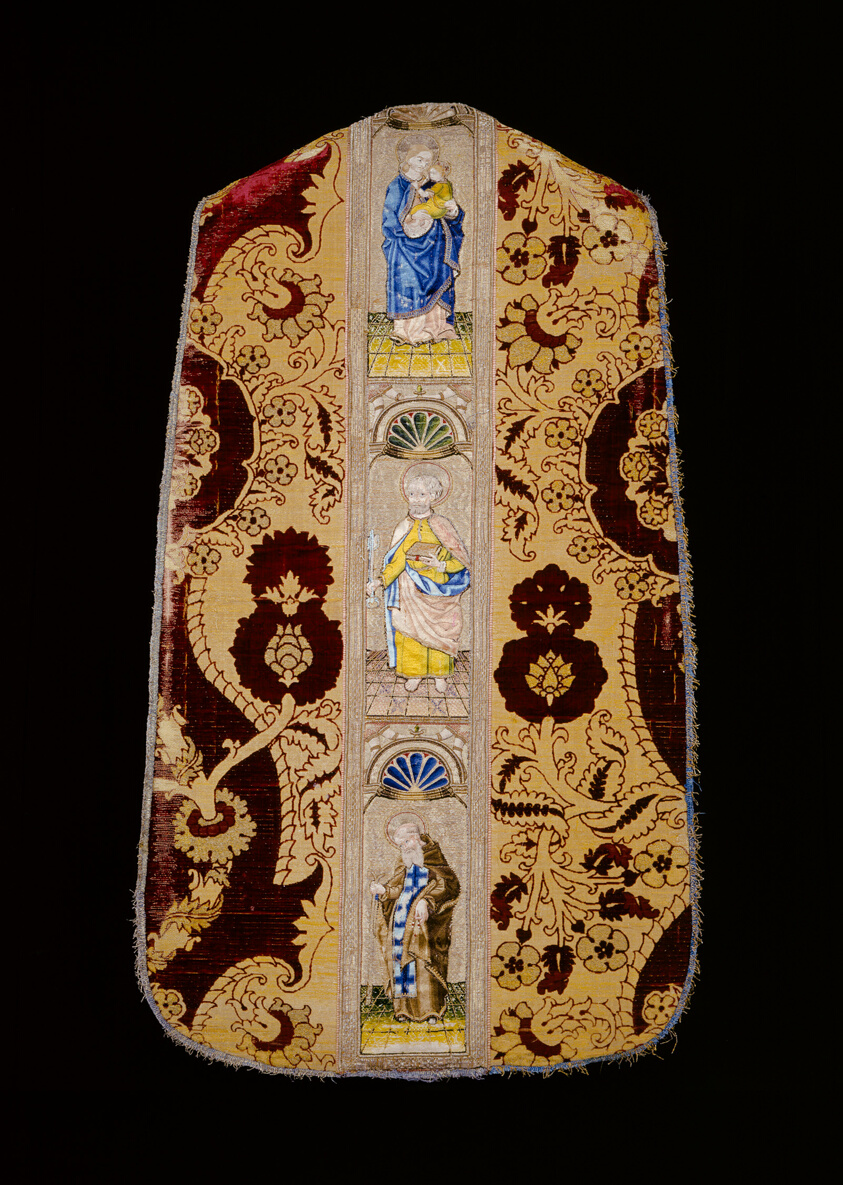
The Chasuble with Orphrey Band: A Study in Sacred Materiality and Craft
In the hallowed ateliers of heritage, where thread meets devotion and fabric becomes narrative, the chasuble with orphrey band stands as a singular artifact of liturgical elegance. This garment, crafted from silk of the highest order, embodies the confluence of technical mastery and spiritual purpose. As Senior Heritage Specialist for Lauren Fashion Heritage Lab, I present this research artifact with the precision and reverence befitting a Savile Row consultation—where every stitch, every weave, and every material choice is a testament to enduring artistry.
Materiality: The Silk Foundation
The chasuble itself is a study in opulent complexity. Its primary structure is silk, plain weave, a foundation that speaks to the classical restraint of ecclesiastical design. Yet, this is no mere flat cloth. The silk is enriched with silk facing wefts and twill interlacings of secondary binding warps, introducing a subtle interplay of light and texture. The true virtuosity emerges in the gilt-metal-strip-wrapped silk facing wefts, which form weft loops on cut and uncut, pile-on-pile voided velvet. This technique—a hallmark of Renaissance-era Italian silk workshops—creates a dimensional surface where light catches the metallic threads, producing a shimmer that shifts with movement. The voided velvet pattern, where areas of pile are selectively cut or left uncut, yields a chiaroscuro effect: deep recesses of uncut loops contrast with the lustrous sheen of cut pile, all framed by the plain weave ground. This is not merely fabric; it is a sculptural medium, engineered for the solemn drama of the liturgy.
The orphrey band, by contrast, grounds the piece in humble yet meticulous craftsmanship. Woven from linen, plain weave, it serves as a canvas for embroidery that elevates the entire garment. The linen’s natural stiffness provides structural integrity, while its absorbency allows for the dense layering of threads. The embroidery employs a lexicon of stitches: fishbone, herringbone, satin, split, and stem stitches, each chosen for its specific effect. Fishbone and herringbone create textured, organic lines; satin stitch delivers smooth, reflective surfaces; split and stem stitches offer fine, linear precision. The inclusion of laid work, couching, and padded couching introduces relief and depth. Silk, linen, and gilt-metal-strip-wrapped silk threads are worked in concert, the metallic elements echoing the chasuble’s own gilt accents. The band is edged with a woven fringe, a finishing detail that frames the embroidery with deliberate delicacy.
Context: Classic Silk Craftsmanship and Fluid Elegance
This chasuble emerges from a tradition where silk was not merely a material but a language. In the great weaving centers of Lucca, Venice, and Lyon, silk velvet with metal-wrapped threads was reserved for the most exalted purposes: royal vestments, altar cloths, and liturgical garments. The pile-on-pile voided velvet technique, perfected in the 15th and 16th centuries, required extraordinary skill. Warp threads were selectively raised or lowered during weaving, creating areas of high and low pile. The addition of gilt-metal-strip-wrapped wefts—where fine strips of silver or silver-gilt were wound around a silk core—added both weight and brilliance. The result is a fabric that feels substantial yet drapes with fluid elegance, its surface alive with reflected light.
The orphrey band, often embroidered separately and then applied, represents a parallel tradition of needlework. Ecclesiastical embroidery, or opus anglicanum in its English form, was a revered art. The stitches used here—fishbone for leaves, herringbone for borders, satin for figures, split and stem for outlines—demonstrate a master’s command. Laid work, where long threads are secured by small crossing stitches, creates smooth, unbroken color fields. Couching, where metal threads are fastened with silk stitches, allows for intricate patterns without the metal thread passing through the fabric. Padded couching, where a layer of wool or linen is placed beneath the metal thread, produces raised, three-dimensional motifs—a technique often reserved for halos or sacred symbols.
Heritage Significance and Preservation Imperatives
As a heritage artifact, this chasuble demands a nuanced understanding of its material vulnerabilities. The silk plain weave, though durable, is susceptible to light fading and hydrolysis. The gilt-metal-strip-wrapped threads, while visually stunning, are prone to tarnish and embrittlement due to the metal content. The pile-on-pile velvet can suffer from crushing and loss of loops if handled improperly. The linen orphrey band, though robust, may show signs of acid degradation from historical storage conditions. Conservation protocols must prioritize controlled environmental conditions: stable relative humidity (45-55%), low light levels (under 50 lux), and minimal handling with clean, white cotton gloves. The embroidery requires particular care; the padded couching can collapse under pressure, and the silk threads may fray if abraded.
For display, the chasuble should be mounted on a padded, acid-free mannequin form that supports the weight of the velvet without distorting the pile. The orphrey band should be supported with a separate, padded backing to prevent sagging. Storage should involve rolling on a large-diameter tube, with the velvet side out, and interleaving with acid-free tissue. The metal threads should be monitored for tarnish; if cleaning is necessary, it must be performed by a specialist using dry, solvent-free methods.
Conclusion: The Enduring Legacy of Liturgical Silk
This chasuble with orphrey band is more than a garment; it is a document of faith, artistry, and technical brilliance. The silk velvet’s fluid elegance, achieved through pile-on-pile voiding and gilt-metal accents, speaks to a time when fabric was a medium of divine expression. The orphrey band’s embroidery, with its meticulous stitches and layered textures, reflects the patience and devotion of anonymous hands. As heritage specialists, our duty is to preserve not just the physical object, but the knowledge it embodies—the weave structures, the stitching techniques, the material choices that define an era. In the quiet reverence of a museum or the solemnity of a cathedral, this chasuble continues to command attention, its silk and metal threads whispering stories of craftsmanship that transcend centuries.
Heritage Lab Insight
Lab Insight: AIC Silk Archive Node #62598.