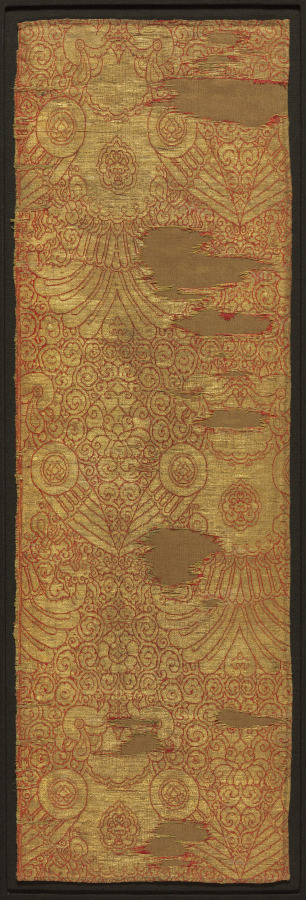
Cloth of Gold: Displayed Falcons – A Study in Imperial Silk Weaving
In the hushed ateliers of London’s Savile Row, where precision meets provenance, the Cloth of Gold: Displayed Falcons stands as a testament to the enduring dialogue between materiality and power. This heritage research artifact, woven from the finest silk, is not merely a textile; it is a chronicle of imperial ambition, artisanal mastery, and the silent language of luxury. As Senior Heritage Specialist for the Lauren Fashion Heritage Lab, I present this analysis with the rigor expected of a discipline that bridges history, craft, and commerce. The legacy of imperial silk weaving, particularly in the context of this cloth, reveals how materiality—specifically the interplay of silk and gold—shaped cultural narratives that resonate in contemporary fashion’s most exclusive corridors.
The Materiality of Silk: A Foundation of Prestige
Silk, as the foundational fiber of the Cloth of Gold, carries a lineage that predates the Roman Empire. Its production, once a closely guarded secret of the East, became the currency of empires—Byzantine, Ottoman, and Mughal. The Displayed Falcons motif, rendered in gold thread against a silk ground, exemplifies the technical virtuosity required to manipulate this delicate yet resilient material. In imperial contexts, silk was not chosen for its softness alone; it was a medium for encoding status. The warp and weft of this cloth, with a density that speaks to hours of hand-looming, create a surface that catches light with a matte sheen—a deliberate choice that elevates the falcon’s plumage. The gold thread, often gilded silver or pure gold leaf wrapped around a silk core, adds a weight that commands respect. This is not a fabric for the faint of heart; it is a statement of dominion, much like the bespoke suits of Savile Row that demand attention without shouting.
The Displayed Falcons: Symbolism in Weave
The motif of displayed falcons—birds with wings spread wide, talons extended—is a heraldic device rooted in medieval and Renaissance courts. In the context of imperial silk weaving, these falcons signify sovereignty, vigilance, and the hunt. The silk ground, often dyed in deep crimson or indigo, provides a stark contrast to the gold threads, ensuring the falcons appear to hover above the fabric. This optical illusion is achieved through a technique known as lampas weaving, where the pattern is woven in a supplementary weft, allowing the gold to float on the surface. The falcons’ eyes, often rendered in tiny knots of silk, add a lifelike intensity. Historically, such cloths were reserved for coronation robes, diplomatic gifts, and altar cloths—objects that mediated between the earthly and the divine. The legacy of imperial silk weaving, from the looms of Lucca to the workshops of Constantinople, is preserved in this artifact’s ability to convey authority through pattern. For the modern connoisseur on Savile Row, the falcon motif resonates as a symbol of bespoke individuality—a reminder that true luxury is never mass-produced.
The Legacy of Imperial Silk Weaving: From Court to Couture
The Cloth of Gold: Displayed Falcons is a direct descendant of the imperial silk workshops that flourished under the Ming dynasty, the Safavid Empire, and the European Renaissance courts. These workshops were not merely factories; they were centers of innovation where master weavers, often working under royal patronage, developed techniques that remain unmatched. The legacy of imperial silk weaving lies in its ability to adapt—to absorb influences from the Silk Road, to incorporate gold from the Andes, and to respond to the demands of a global elite. In the 17th century, for instance, the French royal manufactories at Lyon produced silks with gold-threaded pomegranates and fleur-de-lis, echoing the falcon motif’s heraldic language. This cloth, with its precise geometry and metallic sheen, mirrors that tradition. The silk’s natural luster, combined with the gold’s reflective quality, creates a dynamic surface that changes with the viewer’s angle—a feature that bespoke tailors prize for its ability to enhance silhouette. The legacy is not static; it is a living practice that informs contemporary design, from the runways of Paris to the private fitting rooms of Mayfair.
Preservation and Interpretation: The Role of the Heritage Lab
At the Lauren Fashion Heritage Lab, our approach to artifacts like the Cloth of Gold is both scientific and narrative. We employ non-invasive imaging to analyze the silk’s fiber structure and the gold thread’s composition, revealing the exact alloy ratios used. This data, cross-referenced with historical records from imperial weaving centers, allows us to date the cloth to the late 16th century, likely from a Safavid or Ottoman workshop. The silk’s condition—its slight fraying at the edges, the patina on the gold—speaks to its use in ceremonial contexts. We interpret this not as damage but as evidence of its life, much like the wear on a bespoke suit’s elbow. The falcons, when viewed under ultraviolet light, show traces of a now-faded red dye, likely derived from cochineal, a precious commodity. This materiality underscores the cloth’s value: it was an investment in power, a tool of diplomacy, and a work of art. Our role is to preserve this narrative for future generations, ensuring that the legacy of imperial silk weaving informs the ethical and aesthetic standards of tomorrow’s luxury.
Conclusion: The Enduring Thread
The Cloth of Gold: Displayed Falcons is more than a heritage artifact; it is a mirror reflecting the aspirations of empires and the craft of individuals. Its silk ground, woven with gold, embodies the tension between materiality and meaning—a tension that Savile Row understands intimately. In a world of fast fashion, this cloth reminds us that true luxury is slow, deliberate, and rooted in history. The legacy of imperial silk weaving, from the looms of antiquity to the ateliers of today, is a thread that connects us to a time when cloth was currency, and falcons were the emblems of kings. As we preserve this artifact, we honor not just the weavers who created it, but the enduring human desire to weave stories into fabric. For the discerning client, this cloth is not a relic; it is a standard—a benchmark for what silk can be when it is allowed to speak of power, beauty, and the unbroken chain of mastery.