The Terracotta Dialectic: Archaic Form and the 2026 Old Money Silhouette
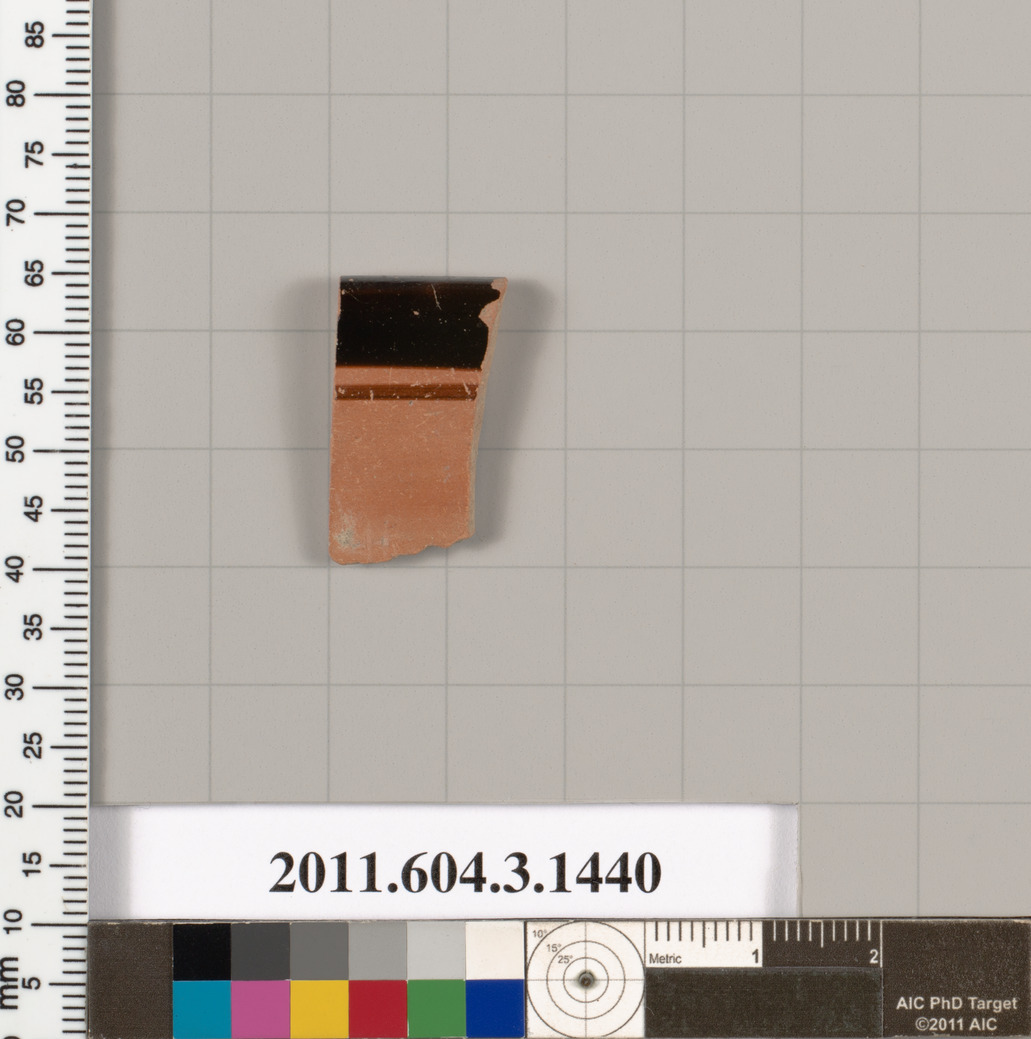
The internal genetic code of Lauren Fashion—rooted in the Eastern aesthetic of “天人合一” (unity of heaven and humanity) and the poetics of “观物取象” (observing things to capture their essence)—finds an unexpected yet profound interlocutor in the Attic Greek terracotta rim fragment of a skyphos. This humble shard of a deep drinking cup, unearthed from the classical soil of antiquity, is not merely an archaeological relic; it is a tectonic artifact that, when read through the lens of our heritage methodology, reveals the foundational principles for the 2026 Old Money silhouette. The skyphos, in its broken state, embodies a paradox: it is both an object of utilitarian function and a vessel of transcendent form. Its terracotta body—fired, fractured, and faded—speaks a language of permanence and decay, of structure and erosion, that directly informs the architectural restraint and quiet authority of the upcoming collection.
The Geometry of Restraint: From Skyphos to Silhouette
The skyphos is defined by its severe, almost brutalist geometry: a deep, cylindrical bowl rising from a flat base, flanked by two horizontal handles that project outward like the wings of a grounded bird. This form is not decorative but structural. The 2026 Old Money silhouette, in its most essential expression, borrows this principle of functional austerity. The terracotta rim fragment, with its clean, unadorned edge, becomes the blueprint for a new shoulder line—a sharp, horizontal cut that terminates at the collarbone, echoing the skyphos’s rim. This is not the soft, draped shoulder of bohemian luxury; it is a declarative line, a piece of architecture that frames the body without yielding to it. The handle, a pure arc of clay, translates into a sculpted sleeve cap that creates a negative space between arm and torso, a void that is as meaningful as the filled form. This is the “留白” (blank space) of Eastern ink painting, rendered in three-dimensional tailoring: the absence of fabric becomes a presence of power.
Furthermore, the skyphos’s depth—its capacity to hold liquid—is reimagined as the volumetric depth of the 2026 coat. The silhouette moves away from the slim, body-conscious lines of recent seasons toward a columnar, almost cylindrical form. The coat falls from a defined shoulder to a hem that grazes the mid-calf, without waist suppression. This is the “移动的山水” (moving landscape) of the Qing porcelain, but here the landscape is the body itself, moving within a rigid, protective shell. The terracotta’s earthy, unglazed surface—its raw, tactile honesty—inspires a fabric palette of unbleached wools, double-faced cashmere, and matte silk twills. These materials reject the high-shine of nouveau-riche ostentation; they absorb light, creating a surface that is quiet, dense, and deeply present. This is the “格物致知” (investigation of things to attain knowledge) applied to cloth: the fabric is not a covering but a substance to be known through touch and weight.
The Patina of Time: Imperfection as Luxury
The most radical contribution of the terracotta fragment to the 2026 Old Money aesthetic is its celebration of imperfection. The broken rim, the chipped edge, the faded slip—these are not flaws but records of existence. In the Eastern tradition, the cracked porcelain is mended with gold (kintsugi), elevating damage into beauty. The skyphos fragment, however, is not mended; it is preserved in its broken state, a testament to the passage of time. For the 2026 silhouette, this translates into a design philosophy of controlled wear. Garments will feature intentional, hand-finished details that mimic the patina of age: raw edges left unhemmed, seams that are visible and stitched with a contrasting thread, buttons that are deliberately mismatched in their patina. This is not deconstruction for its own sake; it is a narrative of inheritance, of a garment that has lived and will continue to live.
The “Old Money” archetype is not about newness; it is about continuity. A suit from 2026 must look as though it could have been worn by a grandfather in 1926, yet feel entirely of its moment. The terracotta fragment teaches us that the most powerful luxury is the luxury of time. The 2026 silhouette will therefore prioritize oversized, relaxed proportions that suggest a garment that has been worn, not just bought. Trousers will have a slight, unforced break at the shoe; jackets will have a soft, lived-in roll at the lapel. The color palette will be drawn directly from the fragment: terracotta, burnt sienna, ochre, and deep umber, punctuated by the black of the Greek glaze. These are not bright, attention-seeking colors; they are the colors of earth, of antiquity, of a wealth that is so secure it has no need to announce itself.
The Poetics of the Vessel: Embodying the Void
Returning to the internal genetic code, the skyphos is a vessel—a container for wine, for water, for the communal act of drinking. In the Eastern cosmology, the vessel is not defined by its clay walls but by the empty space within. The 2026 silhouette, in its most profound expression, is a vessel for the body. The garment does not cling; it encloses. The negative space between fabric and skin becomes a zone of privacy, of interiority. This is the “凝神寂照” (concentrated spirit, quiet illumination) of the crab apple painting, translated into tailoring. The wearer is not performing for the gaze; they are inhabiting a space of their own making.
The handles of the skyphos, which project outward, become the architectural details of the 2026 collection: a pocket that is not flush but stands slightly away from the body, a belt that is not cinched but hangs loosely, a collar that is not folded but stands upright like a rim. These elements create a dialogue between the garment and the air around it, a “气韵” (spirit resonance) that animates the otherwise static form. The terracotta fragment, in its broken silence, speaks to the 2026 silhouette with a clarity that no pristine object could. It tells us that true luxury is not in the perfect, the new, or the complete. It is in the fragment that implies the whole, the edge that suggests the form, the flaw that reveals the history. The 2026 Old Money silhouette, born from a shard of Greek clay and the brush of a Chinese master, is not a trend. It is a philosophy of wearing time itself.