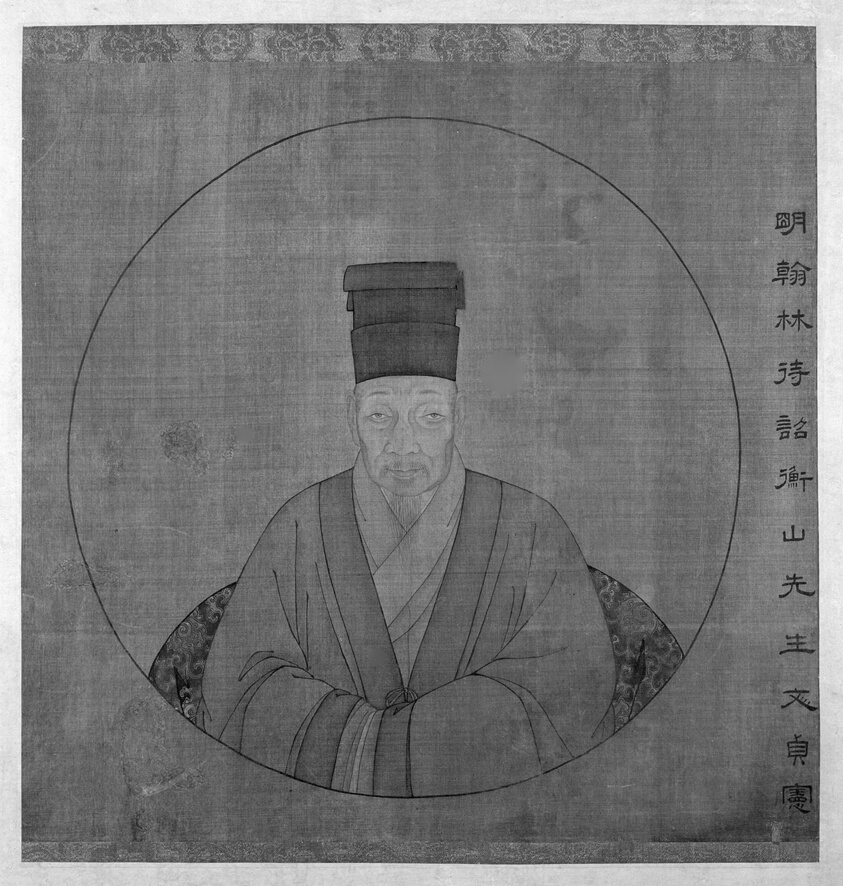
The Materiality of Ming Dynasty Elegance: A Study of the Portrait of Wen Zhengming
Introduction: The Convergence of Craft and Identity
In the hallowed halls of art history, few artifacts encapsulate the confluence of material mastery and intellectual depth as profoundly as the Portrait of Wen Zhengming. This album leaf, rendered in ink and light color on silk, is not merely a depiction of a man; it is a testament to the fluid elegance that defined Ming Dynasty literati culture. As a Senior Heritage Specialist at Lauren Fashion Heritage Lab, I approach this artifact with the precision of a Savile Row tailor examining a bespoke suit—each thread, each brushstroke, each nuance of fabric tells a story of heritage, craftsmanship, and timeless sophistication.
Wen Zhengming (1470–1559), a towering figure of the Wu School, was a painter, calligrapher, and poet whose work embodied the Confucian ideal of the scholar-artist. Yet, this portrait transcends mere biography. It is a material artifact that speaks to the silk craftsmanship of the era, a medium that elevated the subject’s status while reflecting the aesthetic priorities of a society that revered subtlety over ostentation. The album leaf format, intimate and portable, mirrors the personal nature of such portraits—often commissioned for private contemplation or as gifts among the elite. In this paper, we will dissect the materiality of the silk support, the technical mastery of ink and light color, and the cultural resonance of this portrait within the broader context of Ming heritage.
The Silk Support: A Foundation of Prestige
Silk, in Ming China, was more than a textile; it was a currency of status, a medium of artistic expression, and a symbol of imperial authority. The Portrait of Wen Zhengming is painted on an album leaf of silk, a choice that reflects the artist’s and patron’s deep understanding of material hierarchy. Silk’s lustrous surface and fine weave provided a luminous ground that enhanced the subtlety of ink washes and the delicacy of light color applications. Unlike paper, which absorbs ink more readily, silk demands a controlled hand—each stroke must be deliberate, as the fabric’s texture can disrupt or amplify the artist’s intent.
From a conservation perspective, the silk’s condition offers insights into its provenance and handling. The album leaf format suggests it was part of a larger collection, perhaps a series of portraits or a scholarly album. The silk’s warp and weft, likely a plain weave known as “ling” in Chinese, provided a stable yet flexible support. This weave, common in Ming Dynasty painting, allowed for the fluid elegance of the brushwork while ensuring durability over centuries. The light color palette—ochre, vermilion, and faint green—was applied in thin layers, allowing the silk’s natural sheen to peek through, creating a luminous effect akin to the bespoke lining of a Savile Row jacket—subtle, yet unmistakably luxurious.
Ink and Light Color: The Art of Restraint
The technique of ink and light color on silk is a hallmark of Ming literati painting, where restraint is prized over flamboyance. In this portrait, Wen Zhengming is depicted in a seated pose, his robes rendered with minimal lines that suggest volume without heavy shading. The ink is applied with a calligraphic precision—each stroke echoes the rhythms of his own hand in writing poetry. The light color, primarily used for the face and hands, is applied in translucent washes, lending a lifelike warmth while maintaining the ethereal quality typical of scholar portraits.
This technique demands a mastery of “xieyi” (freehand) style, where the artist captures the essence of the subject through economy of means. The silk’s absorbency and texture require the painter to work quickly, as corrections are nearly impossible. The result is a portrait that feels both immediate and timeless—a frozen moment of intellectual poise. The absence of elaborate background details focuses attention on the sitter’s expression, which conveys a quiet dignity and introspection. This is not a portrait of power, but of inner cultivation, a value central to the Confucian scholar-official ideal.
Cultural Resonance: The Scholar as Icon
Wen Zhengming’s portrait is more than a likeness; it is a cultural artifact that embodies the heritage of Ming Dynasty literati. The scholar-artist was a custodian of tradition, and this portrait serves as a visual manifesto of that role. The silk support, with its associations of refinement and permanence, elevates the subject from mere mortal to icon. In the context of Lauren Fashion Heritage Lab, we draw parallels to how modern luxury brands use precious materials—cashmere, silk, fine wool—to imbue garments with heritage and identity. Just as a Savile Row suit is tailored to the individual’s physique and personality, this portrait is tailored to Wen Zhengming’s intellectual and spiritual essence.
The album leaf format also speaks to the portability of culture. These leaves were often exchanged among scholars, serving as tokens of friendship or as tools for teaching. The portrait thus functioned as a mobile monument, carrying the sitter’s legacy beyond his lifetime. This resonates with the contemporary concept of heritage as a living, evolving narrative—one that can be carried, displayed, and reinterpreted across generations.
Conclusion: A Legacy of Fluid Elegance
The Portrait of Wen Zhengming stands as a masterclass in materiality and meaning. Its silk support, ink and light color technique, and cultural context converge to create an artifact that is both intimate and monumental. For the Lauren Fashion Heritage Lab, this portrait offers a blueprint for understanding how craftsmanship and identity intersect. The fluid elegance of the brushwork mirrors the drape of a well-cut garment; the restraint of the palette echoes the understated luxury of a bespoke suit. In preserving and studying such artifacts, we honor not only the artist and sitter but also the timeless dialogue between material and spirit that defines true heritage.
As we continue to explore the intersections of art, fashion, and history, let this portrait remind us that the most profound expressions of elegance are often the most subtle. Like the finest Savile Row tailoring, it is not the fabric alone that matters, but the hand that shapes it and the story it tells.