← BACK TO ARCHIVES
Heritage-Black
Heritage Synthesis: Terracotta fragment of a kylix (drinking cup)
Curated on May 27, 2026 // Node: LDN-01
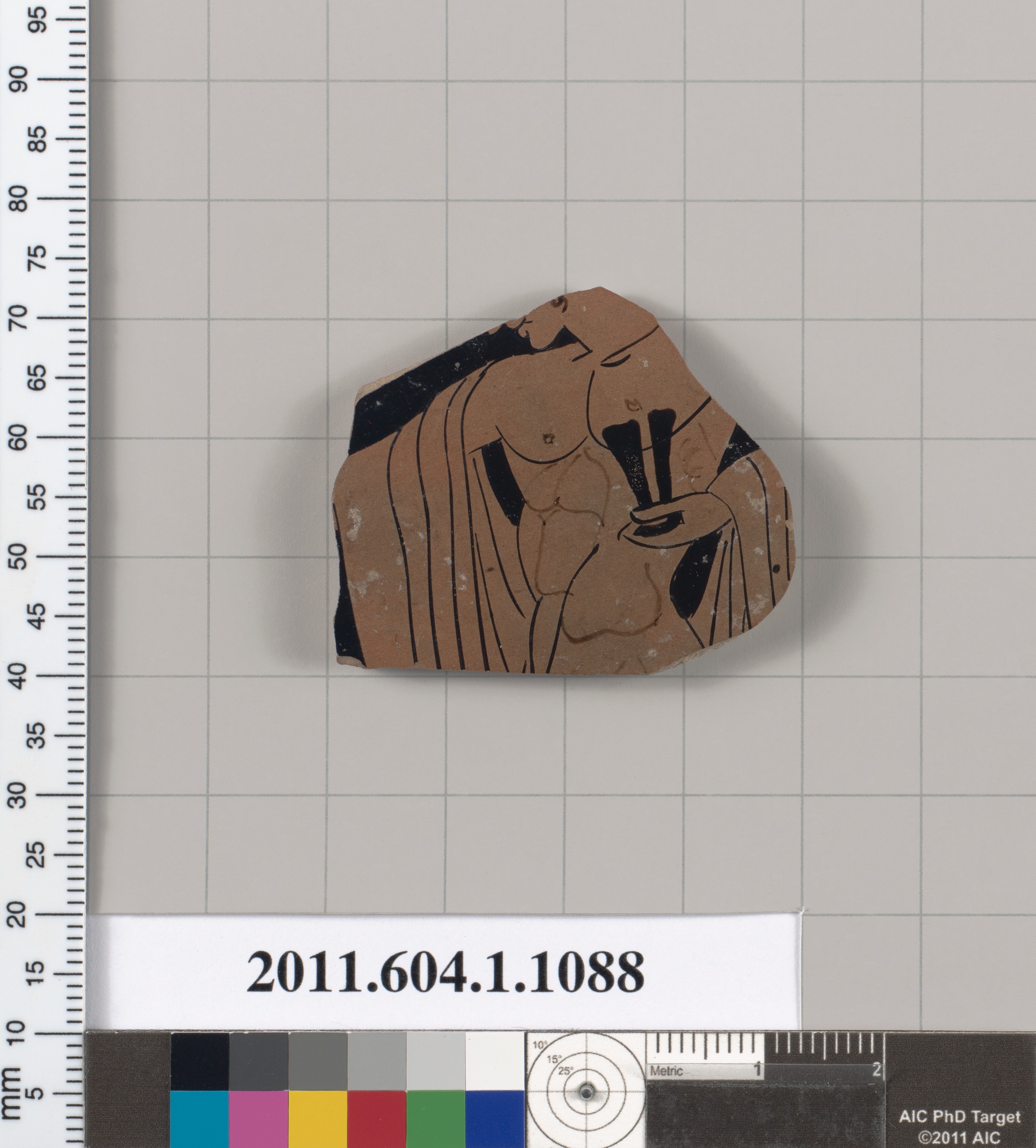
The Dialectic of Vessels: Terracotta Fragments and the Architecture of Old Money in 2026
The terracotta fragment of an Attic kylix—a drinking cup from classical Greece—arrives in the Lauren Fashion Heritage Lab not as a relic of symposium revelry, but as a profound architectural blueprint for the 2026 Old Money silhouette. This shard of fired clay, bearing the faint traces of a lost painter’s hand, speaks a language of disciplined restraint, functional elegance, and the quiet authority of enduring form. Its dialogue with the internal genetic code of our heritage—the ethereal “Udumbara Flower” temple plaque and the exuberant “Beast and Grapevine” bronze mirror—reveals a synthesis that is neither purely Eastern nor Western, but a universal grammar of aristocratic aesthetics. Where the Udumbara embodies transcendent emptiness and the Beast mirror celebrates earthly fullness, the kylix fragment offers a third term: the poised equilibrium of civic virtue, a vessel designed for shared ritual, not solitary contemplation or private accumulation.
From Symposium to Sartorial Structure: The Kylix as Silhouette Blueprint
The kylix, in its original form, was a shallow, wide-mouthed cup with two horizontal handles, designed for the communal drinking of diluted wine at Greek symposia. Its form is deceptively simple: a low, stable foot; a broad, shallow bowl; and handles that invite a specific gesture of lifting and passing. This is not the ornate, vertical chalice of religious transcendence, nor the dense, reflective surface of personal vanity. It is a vessel of *horizontal* expansion—a shape that prioritizes breadth over height, stability over aspiration. For the 2026 Old Money silhouette, this translates directly into a renewed emphasis on the **relaxed shoulder line**, the **generous lapel**, and the **structured yet unconstricted torso**.
The terracotta fragment’s most potent lesson is in its **negative space**. The kylix’s interior, now chipped and faded, was the field for painted narratives—mythological scenes, athletic contests, erotic encounters. But the fragment teaches us that the *shape* of the vessel itself is the primary narrative. The 2026 Old Money silhouette must similarly prioritize *structure as statement*. We are moving away from the aggressive, padded shoulders of the 1980s power suit, which mimicked the vertical thrust of a cathedral spire. Instead, we look to the kylix’s horizontal axis. The new silhouette features a **slightly extended, natural shoulder** that falls without sharp angularity, echoing the cup’s rim. The jacket’s body is cut with a subtle **A-line or soft trapezoid**, referencing the bowl’s gentle flare from foot to lip. This is not a shape that shouts for attention; it is a shape that *contains* presence, much as the kylix contained wine for a circle of equals.
The Materiality of Authority: Terracotta’s Tactile Wisdom
The terracotta itself—fired earth, unglazed, bearing the marks of its making—offers a counterpoint to the polished luxury of silk or the dense warmth of cashmere. Its aesthetic is one of **honest materiality**. The fragment’s surface is matte, slightly porous, and warm to the touch. It does not reflect light; it absorbs it. This is the antithesis of the shiny, logo-driven ostentation that Old Money explicitly rejects. For 2026, this translates into a preference for **textured, matte-finish wools**, **heavy linen-cotton blends**, and **unlined or partially unlined jackets** that allow the fabric to drape with a natural, unforced weight. The “terracotta effect” in tailoring is achieved through fabrics that have a *dry hand*—a crispness that holds a crease without looking stiff, a surface that catches the eye through weave and texture rather than gloss.
Consider the **double-breasted blazer** in a heavy, undyed worsted wool. Its silhouette is not sharp and military, but softly structured, with a gentle roll at the lapel that mimics the kylix’s curved rim. The buttons are horn or dark wood, not polished brass. The pockets are patch pockets, set slightly lower than traditional, echoing the cup’s low center of gravity. This is a garment that *settles* on the body, like the kylix settles on a table. It does not announce arrival; it implies belonging.
The Dialectic of Vessels: East Meets West in the 2026 Collection
The internal genetic code’s dialectic—Udumbara’s emptiness versus the Beast mirror’s fullness—finds its resolution in the kylix’s **communal function**. The Udumbara plaque is a signpost to the transcendent, a symbol of a flower that blooms once in three millennia. It is an object of *vertical* aspiration, pointing toward the heavens. The Beast mirror is a tool of *horizontal* self-regard, a surface for the individual to compose their face for the social world. The kylix, however, is a vessel of *circular* sharing. It is passed from hand to hand, its contents consumed in a ritual of fellowship. Its form—the handles, the wide mouth—is designed for this passage.
The 2026 Old Money silhouette must embody this **ethos of circulation**. It is not a uniform of isolation, but a grammar of social grace. The jacket’s cut allows for ease of movement—to raise a glass, to gesture in conversation, to lean in and listen. The trousers are cut with a **generous, straight leg** that falls cleanly over the shoe, neither pooling on the floor nor cropped to reveal an ankle. This is a silhouette that *moves* through a room, not as a static monument, but as a participant in a living ritual. The color palette, drawn from the terracotta fragment’s ochre, umber, and faded black, reinforces this grounded, communal quality. These are not the bright, assertive colors of the Beast mirror’s grapes and beasts, nor the stark, ascetic white of the Udumbara. They are the colors of earth, of fired clay, of shared meals and enduring gatherings.
Conclusion: The Fragment as Foundation
The terracotta fragment teaches us that the most powerful heritage is not found in pristine, untouched artifacts, but in the **fragments that demand reconstruction**. The 2026 Old Money silhouette is not a nostalgic copy of a 1920s or 1950s suit. It is a reconstruction, built from the principles of the kylix: horizontal stability, honest materiality, and the quiet authority of form that serves function. It synthesizes the Udumbara’s lesson of restraint and the Beast mirror’s lesson of vitality into a third term—the **civic elegance** of the classical symposium. The result is a silhouette that is neither sacred nor profane, but *civilized*: a garment that prepares the wearer not for worship or vanity, but for the serious, graceful work of being in the world with others. This is the heritage of the fragment, and it is the foundation of the 2026 collection.
Heritage Lab Insight
Genetic Bridge: Archive node focusing on Heritage-Black craftsmanship.