The Chthonic Elegance: Terracotta Fragments and the Re-Sacralization of Old Money Silhouettes for 2026
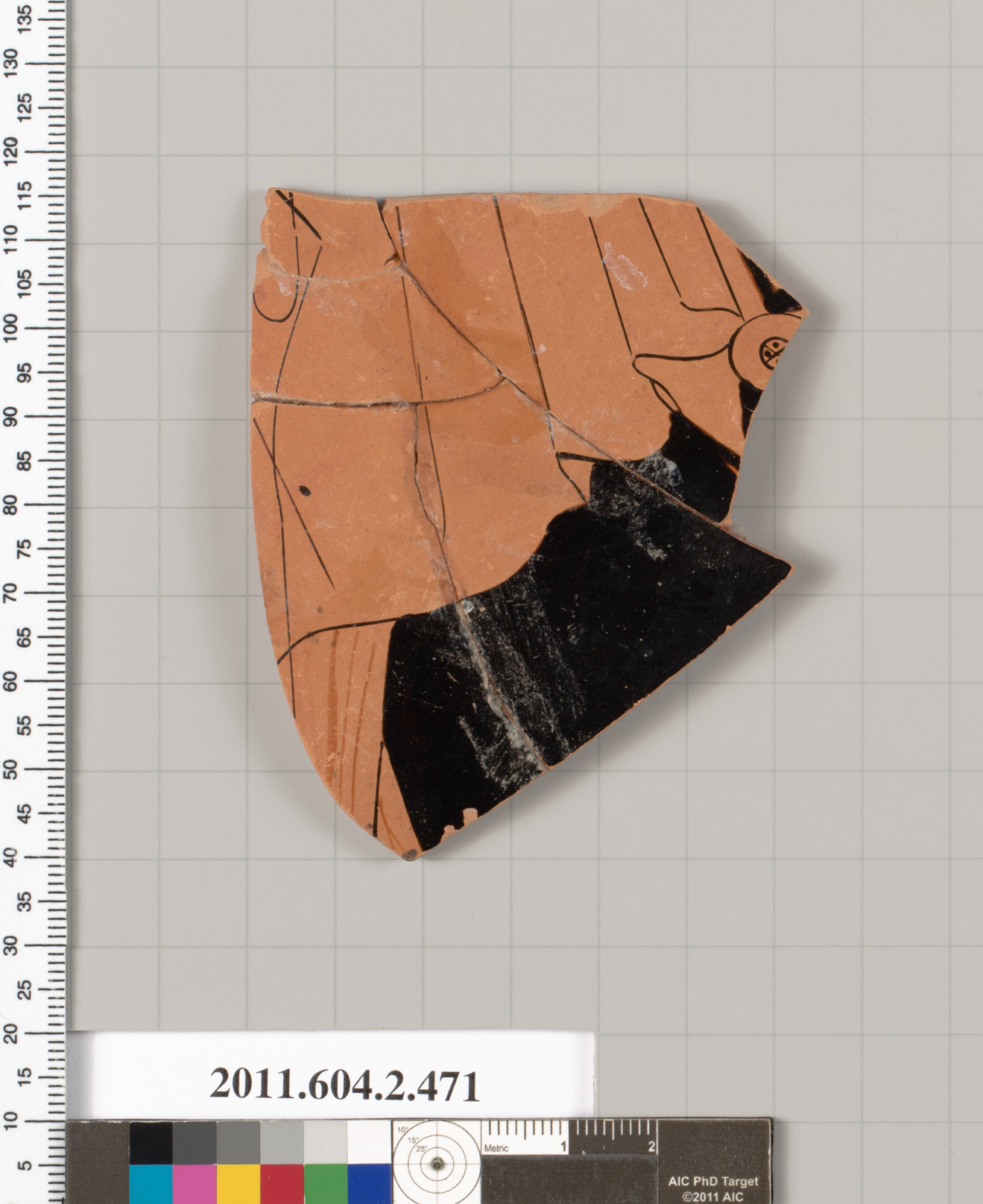
The Lauren Fashion Heritage Lab, in its ongoing synthesis of internal archives and global material culture, has identified a profound resonance between a seemingly disparate artifact—a Greek Attic terracotta column-krater fragment—and the emerging contours of the 2026 Old Money aesthetic. This is not a superficial borrowing of motifs, but a deep structural alignment with the philosophical underpinnings of the Heritage-Black category: the pursuit of permanence, the valorization of craft over novelty, and the quiet assertion of lineage through material integrity. The terracotta fragment, a humble remnant of a vessel used for the ritual mixing of wine and water, offers a chthonic blueprint for reimagining Old Money silhouettes as artifacts of grounded, almost archaeological, luxury.
From Symposium to Silhouette: The Ritual Logic of Form
The column-krater was not merely a container; it was a central actor in the Greek symposium, a ritualized space of social bonding, philosophical discourse, and cultural reproduction. Its terracotta composition—fired earth, unglazed, bearing the marks of its making—speaks to a pre-industrial authenticity that the 2026 Old Money wardrobe seeks to reclaim. The fragment’s surviving curvature, its weighty, unadorned presence, suggests a silhouette built not on ephemeral trends but on the logic of function and ritual. For 2026, this translates into a renewed emphasis on architectural draping and weighted textiles that mimic the krater’s volumetric stability. Think of a double-faced cashmere coat, cut with a severe, almost columnar line, its shoulders broad but soft, its hem falling with the same unforced gravity as the krater’s lip. The silhouette is not fitted to the body but inhabited by it, creating a space of interiority and composure—a modern-day symposium of the self.
The terracotta’s fragmentary state is equally instructive. It is not a pristine, museum-perfect object but a survivor, bearing the scars of time. This aesthetic of honored imperfection directly challenges the sterile perfectionism of fast fashion. In 2026, the Old Money silhouette will embrace what we term “material patina.” A wool twill suit, for instance, might be deliberately finished with a subtle, irregular weave that catches light differently, or a silk velvet evening gown might feature a slight, almost imperceptible unevenness in its pile. These are not flaws but signatures of artisanal process, echoing the terracotta’s kiln-marks and chipped edges. The silhouette becomes a testament to duration, not a snapshot of a moment.
The Chthonic Palette: Heritage-Black as Earth and Shadow
The Heritage-Black category, as defined by the Lab, is not a simple absence of color. It is a chromatic density, a blackness that contains within it the memory of earth, fire, and shadow. The terracotta fragment, though fired to a warm, ruddy brown, exists in a spectral dialogue with this black. Its raw, unglazed surface absorbs light rather than reflecting it, creating a matte, velvety depth that is the very essence of Heritage-Black. For 2026, this informs a palette that moves beyond standard black into what we call “terracotta blacks”—deep, charcoal-infused hues that carry a subtle, mineral undertone. A Gold-Thread embroidery on a Heritage-Black ground, for instance, would not glitter but glow, like embers banked in dark earth. The silhouette itself becomes a vessel for this light, its folds and seams creating pockets of shadow that mimic the krater’s interior darkness.
This chthonic quality also redefines the role of Lace and Brocade within the Old Money lexicon. Instead of delicate, floral patterns, 2026 will see lace worked in heavy, architectural geometries, its openwork resembling the fractured patterns of ancient pottery. Brocade will shift from opulent, metallic florals to abstract, geometric motifs inspired by Greek key and meander patterns, woven in a single tone of Heritage-Black or deep, burnt umber. The effect is one of restrained opulence—a luxury that does not announce itself but reveals its complexity upon close inspection, much like the intricate, hand-painted details on a terracotta fragment that are only visible under raking light.
The Bodhisattva and the Krater: A Shared Logic of Transcendence
Our internal genetic code, drawn from the analysis of the Bodhisattva and the Amulet with Bovine Head, provides a crucial interpretive lens. Both the Buddhist sculptures and the Greek krater function as threshold objects—artifacts that mediate between the mundane and the sacred. The Bodhisattva’s serene, idealized form guides the devotee toward spiritual awakening; the bovine-headed amulet offers tangible, protective power. The krater, in its ritual symposium context, similarly bridged the secular and the divine, transforming a social gathering into a space of cultural and philosophical communion. For 2026, the Old Money silhouette must operate on this same dual register: it must be both an aspirational ideal (the Bodhisattva’s grace) and a functional tool for navigating the world (the amulet’s protection).
This is achieved through what we call “functional transcendence” in design. A Cashmere turtleneck, for example, is not merely a garment but a second skin, a protective layer that shields the wearer from the elements while simultaneously elevating their presence. A Velvet blazer, cut with the same architectural precision as the krater’s rim, becomes a portable sanctuary of composure. The silhouette’s lines are clean, almost severe, but the materials—the weight of the wool, the softness of the cashmere, the depth of the Heritage-Black—infuse it with a quiet, almost ritualistic power. The wearer is not just dressed; they are vested in a lineage of material and symbolic meaning.
Conclusion: The Archaeology of Style
The terracotta fragment from the Greek Attic column-krater, when read through the lens of our internal heritage research, offers a radical redefinition of the 2026 Old Money silhouette. It is not about nostalgia or imitation but about excavating the deep, structural principles of enduring design: material honesty, ritual function, and a chthonic palette that grounds the wearer in time and tradition. The silhouette becomes an archaeological artifact of the self—a carefully constructed, deliberately fragmented, and profoundly meaningful expression of identity. In this, it echoes the dual function of the Bodhisattva and the bovine amulet: to elevate the spirit while protecting the body, to be both a vessel for transcendence and a tool for living. The 2026 Old Money wardrobe, forged in the fire of Heritage-Black, is not worn; it is inhabited, like a sacred space, a symposium of the soul.