← BACK TO ARCHIVES
Heritage-Black
Heritage Synthesis: Terracotta fragment of a kylix (drinking cup)
Curated on May 27, 2026 // Node: LDN-01
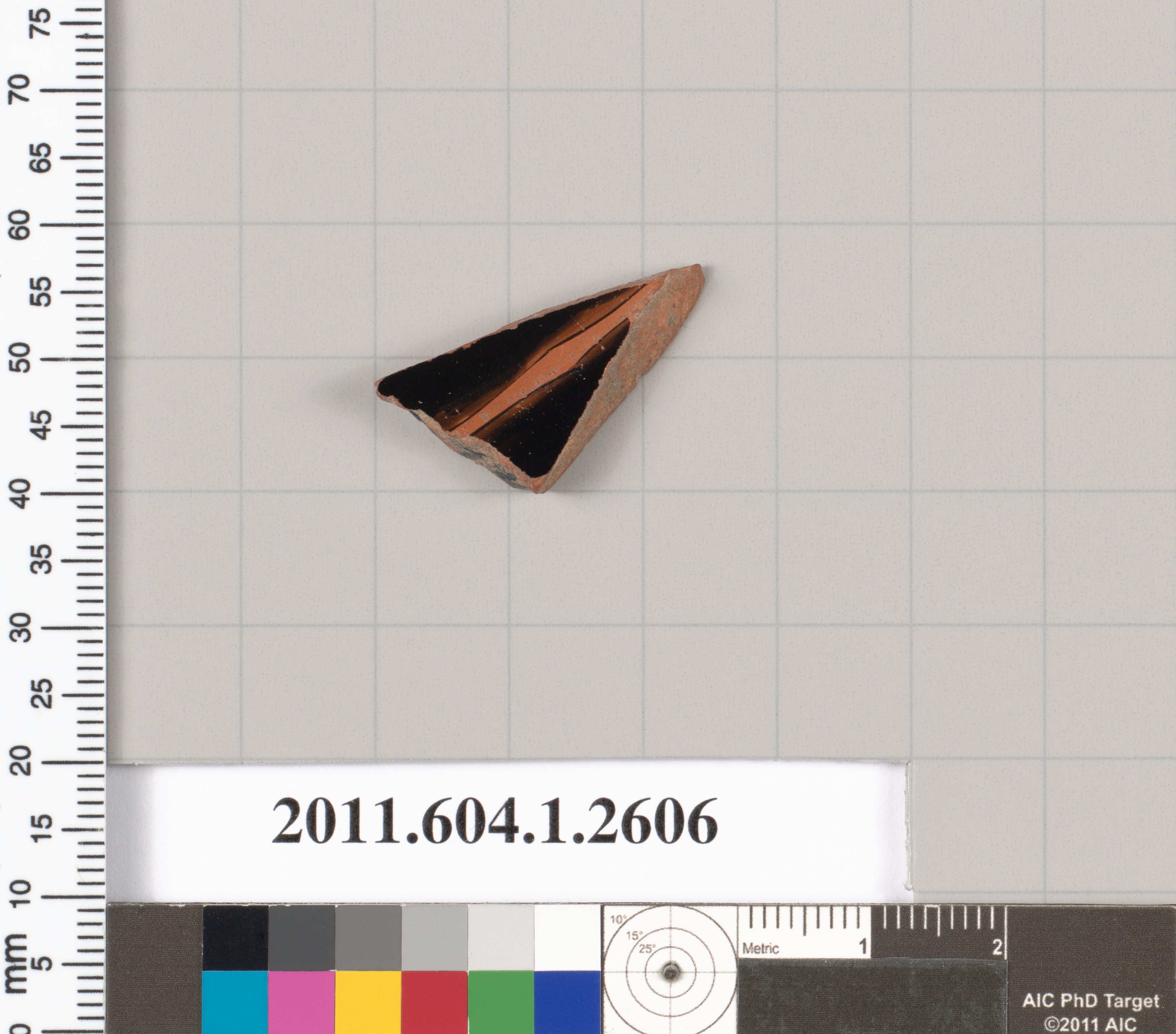
The Terracotta Fragment and the Architecture of Restraint: Re-Reading Attic Form for the 2026 Old Money Silhouette
At the Lauren Fashion Heritage Lab, our mandate extends beyond the preservation of garments; it is the excavation of the genetic code that binds material culture across epochs. The internal research dossier on the “Global Baroque” — tracing the migration of the crowned double-headed eagle from Byzantine regalia to Japanese *Nanban* screens — reveals a profound truth: aesthetic power is born not from novelty, but from the disciplined reinterpretation of inherited symbols. This principle finds an unexpected, yet crystalline, articulation in a seemingly humble artifact: the Greek Attic terracotta fragment of a *kylix* (drinking cup). This shard of fired clay, bearing the residue of symposiums and the geometry of the potter’s wheel, is not merely an archaeological curiosity. It is a foundational text for the 2026 Old Money silhouette, a design philosophy that privileges lineage, restraint, and the quiet authority of form over fleeting ornament.
I. The Kylix as a Manifesto of Structural Integrity
The Attic *kylix* of the 6th to 5th centuries BCE is a masterpiece of functional elegance. Its terracotta body — a warm, iron-rich orange-red — is not hidden beneath layers of pigment but celebrated as the primary aesthetic substance. The fragment we study, likely from the tondo or the lip, reveals a deliberate economy of means. The potter’s wheel has left its concentric, rhythmic grooves; the black-figure or red-figure glaze is applied with surgical precision, defining a zone of narrative without overwhelming the clay’s inherent texture. This is not a surface to be decorated, but a structure to be revealed.
For the 2026 Old Money silhouette, this translates into an unwavering commitment to architectural tailoring. The “terracotta principle” demands that the garment’s foundation — its cut, its seams, its internal construction — be the primary source of visual interest. Just as the *kylix*’s strength lies in the perfect curve of its bowl and the balanced cantilever of its handles, the 2026 jacket or coat must derive its authority from a masterful understanding of the human form. Shoulders are not padded into aggressive cubes but sculpted with a gentle, sloping precision that echoes the *kylix*’s lip. The waist is not cinched but *implied* through a subtle suppression of fabric, a volumetric discipline that recalls the cup’s elegant stem. The silhouette becomes a study in negative space and structural clarity, where every dart and seam is a deliberate act of architectural definition.
II. The Palette of Patina: From Terracotta to Heritage-Black
The internal code speaks of the “order of majesty” in the double-headed eagle textile — a power derived from gold thread on a dark ground. The *kylix* fragment offers a different, yet complementary, chromatic philosophy. Its terracotta is not a bright, new red; it is a color aged by fire, by earth, by the hands of countless symposiasts. This is the palette of patina, of material memory. The 2026 Old Money palette, therefore, moves decisively away from the sterile, the synthetic, and the brand-new. It embraces a spectrum of “earthy blacks” — not a flat, dead black, but a *Heritage-Black* that shimmers with undertones of burnt umber, deep sienna, and charcoal. This is the black of a well-worn leather armchair, of a library’s mahogany shelves, of a terracotta fragment that has absorbed centuries of light.
This chromatic shift is a direct rebuke to the “fast fashion” obsession with hyper-saturated, instantly recognizable colors. The 2026 silhouette, informed by the *kylix*, seeks a color that *withdraws* from immediate legibility. It is a color that demands close inspection, that reveals its complexity only in the interplay of shadow and texture. A double-faced cashmere coat in Heritage-Black, for instance, might have a reverse side in a muted, dusty terracotta — a secret, a nod to the artifact’s origin, visible only when the garment is in motion or turned inside out. This is the “curious translation” of the *Nanban* screen, but applied to color: the familiar black is made strange, made deep, made historical.
III. The Fragment as a Model for Curated Imperfection
The *kylix* fragment is, by definition, incomplete. Its broken edge, its chipped rim, its faded glaze — these are not flaws but narratives. They speak of use, of breakage, of survival. This concept of the “fragment” is crucial for the 2026 silhouette, which must resist the tyranny of the pristine. Old Money style has always understood that true luxury is not about preservation but about *inhabitation*. A garment should bear the subtle marks of a life lived: a slight fading at the elbow, a gentle crease at the knee, a button replaced with a slightly mismatched thread.
The 2026 silhouette, channeling the *kylix*, will embrace a philosophy of curated imperfection. This is not about deliberate distress or manufactured wear, but about a design language that *allows* for the patina of time. Seams may be left slightly raw, not as a deconstructive gesture, but as a quiet acknowledgment of the garment’s making. A jacket’s lining might be a contrasting, unexpected silk — a fragment of a different story, visible only when the garment is opened. The silhouette itself might be slightly asymmetrical, a shoulder dropped a centimeter lower than the other, echoing the *kylix*’s organic, thrown-on-the-wheel asymmetry. This is the “creative misunderstanding” of the Global Baroque — not a slavish copy of the ancient form, but a translation of its *spirit* into a new material language.
IV. Synthesis: The Kylix and the Global Baroque as Twin Pillars
The internal code’s analysis of the double-headed eagle textile and the *Nanban* screen reveals a world in which symbols are uprooted, translated, and re-rooted. The *kylix* fragment performs a similar operation for the 2026 silhouette. It takes the classical ideal of proportion, balance, and functional beauty, and subjects it to a contemporary, globalized sensibility. The result is not a costume, but a new archetype.
The 2026 Old Money silhouette, thus, is a garment that speaks with the authority of the *kylix*’s structural integrity, the chromatic depth of its terracotta patina, and the narrative richness of its fragmentary state. It is a jacket that feels ancient in its construction, yet utterly modern in its restraint. It is a coat that, like the *Nanban* screen, domesticates the foreign — in this case, the foreignness of the past — into a wearable, living form. The double-headed eagle’s gaze is now the lapel’s sharp line; the *kylix*’s broken rim is now the subtle fray of a hand-finished hem. In this synthesis, the Lauren Fashion Heritage Lab finds the blueprint for a silhouette that is not merely *old money*, but *timeless* — a fragment of history, re-fired for the present.
Heritage Lab Insight
Genetic Bridge: Archive node focusing on Heritage-Black craftsmanship.