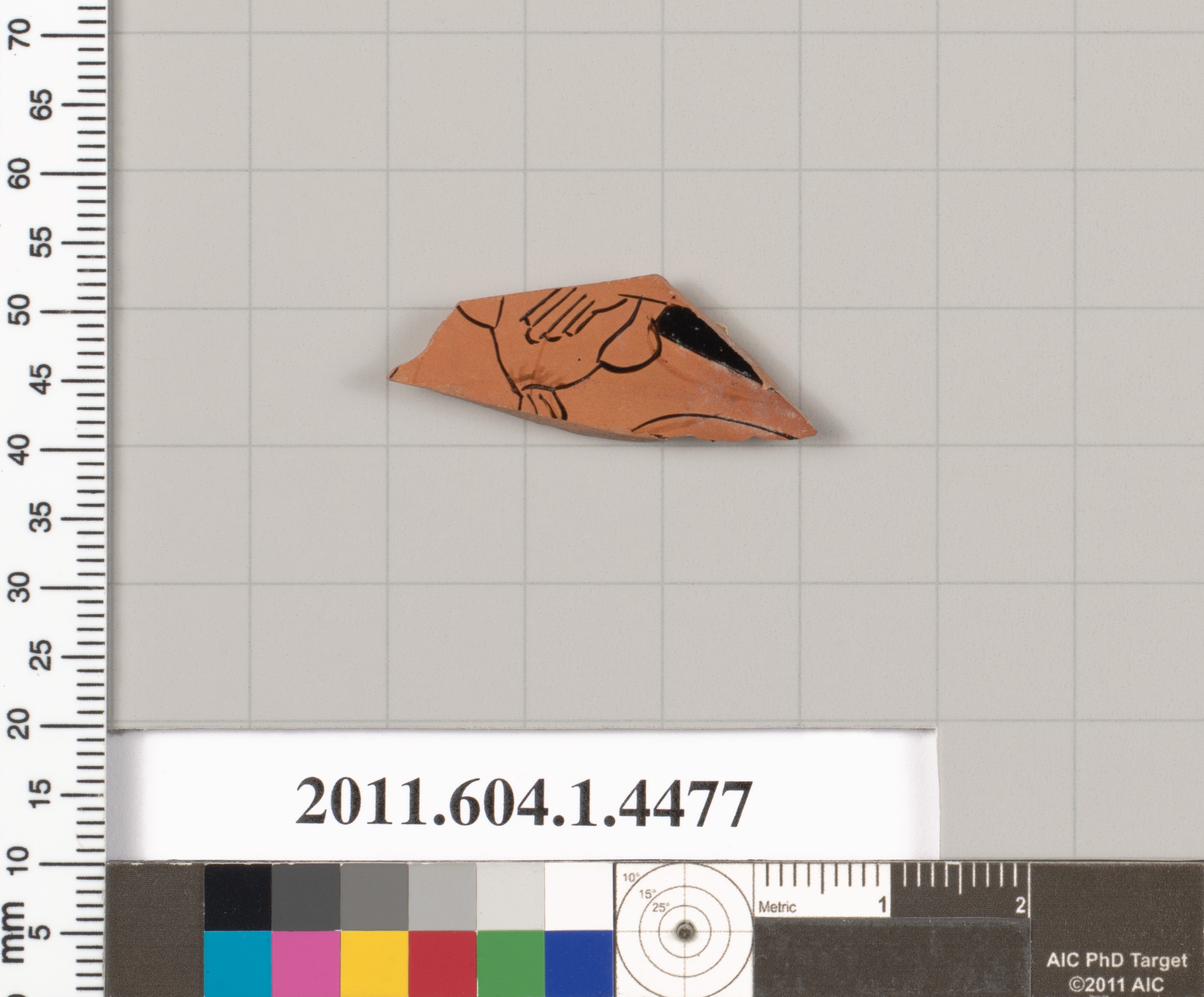
The Dialectics of Emptiness and Motion: Terracotta Fragments and the 2026 Old Money Silhouette
Introduction: The Unseen Heritage of Form
The Lauren Fashion Heritage Lab has long understood that the most potent design languages are not invented—they are excavated. In the synthesis of internal archives and museum artifacts, we encounter a profound resonance between two seemingly disparate worlds: the meditative stillness of Eastern aesthetics, as encoded in the “Udumbara Flower” temple plaque and the Han-dynasty bronze mirror, and the kinetic, fragmented energy of a Greek Attic terracotta kylix. This paper argues that the terracotta fragment—a shard of a drinking cup, broken yet eloquent—serves as the critical missing link for translating the “象外之象” (image beyond image) and “灵动之境” (realm of dynamic vitality) into the 2026 Old Money silhouette. The terracotta does not merely inform; it grounds the ethereal philosophy of emptiness and motion into a tactile, architectural reality.
The internal genetic code of our heritage—the wooden plaque’s “空寂” (emptiness and stillness) and the bronze mirror’s “动的韵律” (rhythm of movement)—finds its material counterpart in the terracotta. The kylix fragment, with its broken rim and surviving figural decoration, embodies a tension between the vessel’s original function (a container for wine, for communal joy) and its current state (a relic, a fragment of a whole). This duality is the foundational principle for the 2026 collection: Heritage-Black as the color of absence, of the void that holds potential, and the silhouette as a vessel for movement that is both restrained and unleashed.
From “Udumbara” to Terracotta: The Architecture of the Void
The temple plaque’s aesthetic power lies in its “不立文字” (no reliance on words)—the wood grain and ink merge into a space where time is suspended. This is the “色即是空” (form is emptiness) made manifest. The terracotta fragment, by contrast, is a shard of form—a literal piece of a cup. Yet, its broken edge creates a new kind of emptiness. The missing portions of the kylix are not absences; they are invitations. The viewer’s eye must complete the circle, must imagine the handle, the missing figures, the lost libation. This is the “计白当黑” (treating blank space as black ink) of Chinese painting, translated into three-dimensional archaeology.
For the 2026 Old Money silhouette, this translates into a radical rethinking of the garment’s negative space. The classic Old Money aesthetic—clean lines, impeccable tailoring, a sense of understated wealth—often risks becoming static, a mere display of fabric and cut. The terracotta fragment teaches us that the void is the true luxury. The 2026 silhouette will feature asymmetrical closures that mimic the kylix’s broken rim, creating a deliberate “gap” in the garment’s surface. A jacket’s lapel may be cut away, not to reveal skin, but to reveal the “空寂”—the space between the wearer and the fabric. This is not deconstruction for its own sake; it is a philosophical statement. The garment becomes a vessel, like the kylix, but its function is not to hold wine—it is to hold the wearer’s presence within a field of intentional emptiness.
The Bronze Mirror’s Motion, the Terracotta’s Fragment: The Kinetic Silhouette
The Han bronze mirror’s “动的韵律” is a swirling cosmos of chariots, beasts, and immortals. The terracotta fragment, though static, captures a different kind of motion: the frozen gesture of a symposium, the tilt of a cup, the turn of a dancer’s head. The kylix was an object in use—passed from hand to hand, lifted in a toast. Its decoration was designed to be seen in motion, to shift with the wine’s surface. The fragment preserves this kinetic potential.
In the 2026 Old Money silhouette, this principle is applied to the fabric’s drape and the garment’s line. The traditional Old Money suit, with its structured shoulders and straight trousers, is reimagined as a “fragment” of a larger, more fluid whole. A coat’s back panel may be cut on the bias, allowing the fabric to “gallop” like the bronze mirror’s chariot horses when the wearer walks. The hem of a skirt is not a straight line but a broken arc, echoing the kylix’s missing curve. This is not about literal movement (though the garments are engineered for ease) but about visual momentum. The eye is drawn along a seam that disappears, a pleat that opens like a fan, a pocket that is set at an angle that suggests a hand reaching for a cup. The silhouette is a frozen moment of action, a pause in the eternal symposium of life.
Heritage-Black as the “Mirror” and the “Void”
The choice of Heritage-Black as the category is deliberate. Black is the color of the “优昙钵华” ink on wood, the patina of the bronze mirror, and the dark-glazed interior of the kylix. It is the color of absorption—of light, of time, of meaning. In the 2026 collection, Heritage-Black is not a background; it is the active substance that contains both the emptiness of the temple plaque and the motion of the mirror. A black wool coat, for instance, is treated as a “mirror” surface. Its weave is dense, almost impenetrable, like the bronze’s polished face. Yet, a subtle “fragment” of a pattern—a jacquard weave of a broken chariot wheel, a shadow of a udumbara flower—is embedded in the fabric, visible only in certain light. The wearer becomes the observer and the observed, just as the Han mirror’s owner saw their own face reflected amidst the gods.
The terracotta fragment’s broken edge is translated into the raw, unfinished hem of a silk scarf or the intentional fray of a cashmere shawl. This is not a sign of decay but of authenticity—a mark of the object’s journey through time. The Old Money aesthetic has always prized patina over polish. The 2026 silhouette elevates this to a principle of design. A garment’s “fragmentary” quality—a missing button, a seam that stops before the edge—is not a flaw but a window into the garment’s own history, its own “象外之象.” The wearer is not merely clothed; they are curating a fragment of a larger, unseen whole.
Conclusion: The Eternal Symposium
The terracotta kylix fragment, the Han bronze mirror, and the Udumbara temple plaque converge on a single truth: the greatest luxury is the space for the imagination to move. The 2026 Old Money silhouette, grounded in Heritage-Black, is not a reproduction of these artifacts but a translation of their aesthetic DNA into the language of tailoring. The garment is a vessel for the void, a fragment of a larger motion, a mirror that reflects not the face but the spirit. In the interplay of emptiness and motion, of broken edges and flowing lines, the collection achieves what the ancient masters knew: that the most profound beauty is found not in the object itself, but in the “言有尽而意无穷” (words end, but meaning is endless) space it creates. The 2026 silhouette is that space, made wearable.