← BACK TO ARCHIVES
Heritage-Black
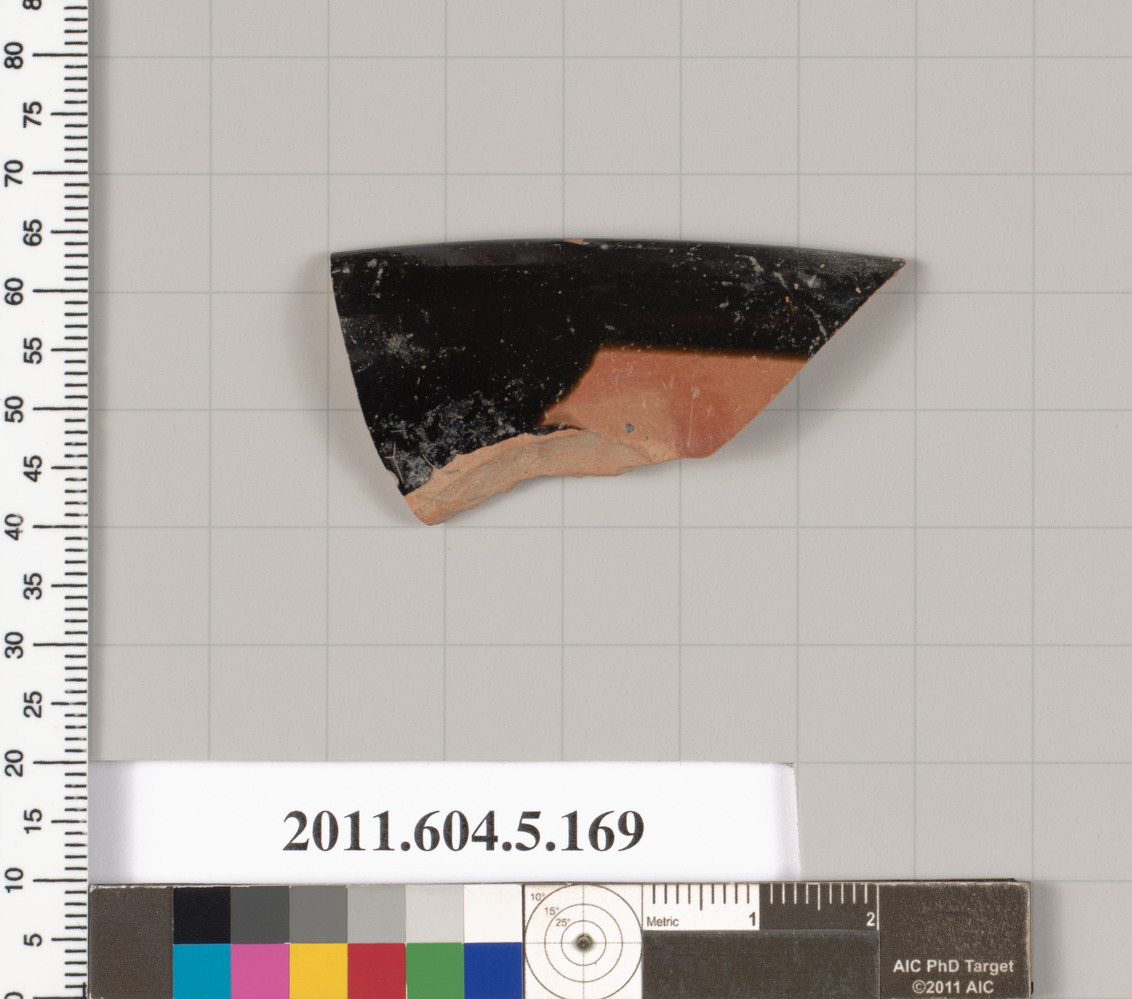
Heritage Synthesis: Terracotta rim fragment of a kylix (drinking cup)
Curated on May 28, 2026 // Node: LDN-01
The Terracotta Kylix Fragment and the Architecture of Old Money: A Dialectical Inheritance
The Lauren Fashion Heritage Lab has long maintained that the most enduring design languages are those that internalize the dialectic between warmth and austerity, between the organic and the geometric. This principle finds a profound, if unexpected, analogue in the museum artifact before us: a terracotta rim fragment of a kylix from Attic Greece. At first glance, a shard of a drinking cup—a vessel for symposium, for communal leisure—seems distant from the tailored severity of the 2026 Old Money silhouette. Yet, as we synthesize this fragment with the internal genetic code derived from our study of the *Pilgrim Sudhana* and the *Ceremonial Blade*, a coherent design philosophy emerges. This fragment is not merely a historical curiosity; it is a material manifesto for the coming season’s aesthetic.
I. The Color Field: From Patina to Pigment
The kylix fragment presents a study in controlled materiality. Its terracotta body, fired to a warm, earthen orange, is juxtaposed against the glossy, jet-black of the Attic slip. This is not a random color scheme but a deliberate philosophical statement. The warm, porous clay—akin to the “warm jade-like gold” of the *Pilgrim Sudhana*—speaks of earth, of origin, of the human hand. The black slip, cool and impermeable, introduces a note of cold precision, a formal order reminiscent of the *Ceremonial Blade*’s “cold bronze” tonality.
For the 2026 Old Money silhouette, this dialectic translates directly into fabric and finish. We are moving beyond monochromatic luxury into a nuanced interplay of surface. The “heritage black” of the season is not a flat void but a living darkness, achieved through the deep, irregular absorption of dye in a heavyweight wool or a matte-finished cashmere. This black is the Attic slip. It is the structure, the formality, the unspoken rule. Against this, we introduce the “terracotta” element: not as a literal color, but as a textural and tonal warmth. This manifests in the subtle, heathered brown of a vicuña overcoat, the sun-bleached khaki of a linen trouser, or the rich, saddle-leather patina of a belt or loafer.
The key insight from the fragment is the *relationship* between these two fields. The black slip does not cover the terracotta; it defines it, framing the warm clay and giving it visual purpose. In our silhouettes, this translates to a strict, dark outer structure—a double-breasted jacket in heritage-black wool—that frames and contains a warmer, more organic interior: a cream silk scarf, a hand-stitched suede glove, or the natural undyed tone of a linen shirt. The color philosophy is one of containment and release, where warmth is made elegant by its rigorous framing.
II. The Geometry of Restraint: The Rim as a Design Principle
The kylix fragment is defined by its rim: a sharp, clean line that curves with mathematical precision. This is not the “three-curve” dynamic of the *Sudhana* nor the absolute symmetry of the *Ceremonial Blade*, but something in between. It is a *restrained curve*, a line that acknowledges organic form but submits it to geometric discipline. The lip of the cup is a threshold—a point of transition between the vessel’s interior and exterior, between the public act of drinking and the private experience of taste.
This “rim logic” is the foundational structure for the 2026 Old Money silhouette. The silhouette itself must be conceived as a vessel, with the body as its interior and the garment as its defining edge. We see this in the precise roll of a lapel, the clean break of a trouser hem over the shoe, the exact circumference of a collar against the neck. These are not arbitrary details; they are the “rims” of the garment, the points where the fabric meets the world.
Drawing from the *Ceremonial Blade*’s “center-radiation” structure, the garment’s primary axis—the spine, the center seam—becomes the locus of order. From this axis, the fabric drapes outward, but this drape is never free. It is always checked by a “rim”: a dart, a seam, a precise cut. The “three-hole” logic of the blade, symbolizing the connection of heaven, earth, and humanity, is translated into a three-point structural system for the garment: the shoulder (heaven), the waist (earth), and the hem (humanity). Each point must be in perfect proportional relation to the others, creating a visual harmony that is felt before it is seen.
III. Design Philosophy: The Vessel and the Void
The kylix was a vessel for the symposium, a ritualized space for philosophical discourse. Its form was not merely functional; it was designed to facilitate a specific mode of being—one of measured conviviality and intellectual exchange. The fragment, therefore, is not just a piece of pottery; it is a fragment of a *ritual object*. This aligns perfectly with the dual philosophy of our internal code: the *Pilgrim Sudhana*’s “inner contemplation” and the *Ceremonial Blade*’s “external ritual.”
The 2026 Old Money silhouette is a vessel for the modern self. It is not about display but about *containment*. The garment’s purpose is to create a dignified void, a space of quiet authority that allows the wearer’s character to be the primary presence. This is the “inner contemplation” aspect. The rigorous structure—the precise cut, the immaculate finish, the heritage-black palette—is the “external ritual,” the formal language that communicates belonging and restraint without a single word.
The terracotta fragment teaches us that the most powerful design is often found at the edge, at the point of transition. The rim is where the cup’s identity is most clearly defined. For the designer, this means focusing on the *thresholds* of the garment: the collar, the cuff, the hem, the placket. These are not afterthoughts but the primary sites of design intelligence. A hand-stitched buttonhole, a perfectly mitered pocket flap, a collar that stands with architectural precision—these are the “rims” that elevate a garment from mere clothing to a piece of wearable heritage.
IV. Modern Transmutation: Three Principles for the Atelier
**Material Transmutation: The Patina of Use.** The kylix fragment’s beauty is inseparable from its age, from the slight wear on its rim, from the subtle fading of its slip. For 2026, we embrace materials that *improve* with time. A heavy, unlined wool that molds to the shoulder. A calfskin that develops a rich, personal crease. The goal is not a pristine, museum-piece finish but a living patina that records the wearer’s life. This is the *Pilgrim Sudhana*’s “wisdom of time” made tactile.
**Structural Transmutation: The Contained Curve.** The kylix’s rim is a curve, but it is a curve with a purpose. It is not decorative; it is functional. Our silhouettes will employ the “contained curve” in tailoring. A softly draped back that is anchored by a precise shoulder seam. A trouser leg that widens slightly before being caught by a clean hem. This is the *Ceremonial Blade*’s “geometric rationality” applied to the organic form of the human body.
**Philosophical Transmutation: The Ritual of Dressing.** The symposium was a ritual. Dressing should be, too. We encourage the creation of garments that demand a moment of attention to put on. A jacket with a complex closure. A coat with a specific method of draping. This reintroduces the “ritual design” from our internal code, transforming the act of dressing from a mundane task into a small, meaningful ceremony that centers the wearer before they face the world.
V. Conclusion: The Fragment as a Whole
This Attic terracotta fragment, a broken piece of a drinking cup, contains within it the complete design philosophy for the 2026 Old Money silhouette. It is a testament to the power of restraint, the elegance of material truth, and the profound beauty of a well-defined edge. The modern designer must learn to see the whole in the fragment, to understand that a single, perfect curve on a lapel carries the same weight of intention as the rim of a kylix. The Old Money aesthetic is not about nostalgia; it is about a continuous, living tradition of quality, proportion, and disciplined grace. The fragment is not a ruin; it is a seed. From this earthen shard, we grow a new season of quiet, enduring power.
Heritage Lab Insight
Genetic Bridge: Archive node focusing on Heritage-Black craftsmanship.