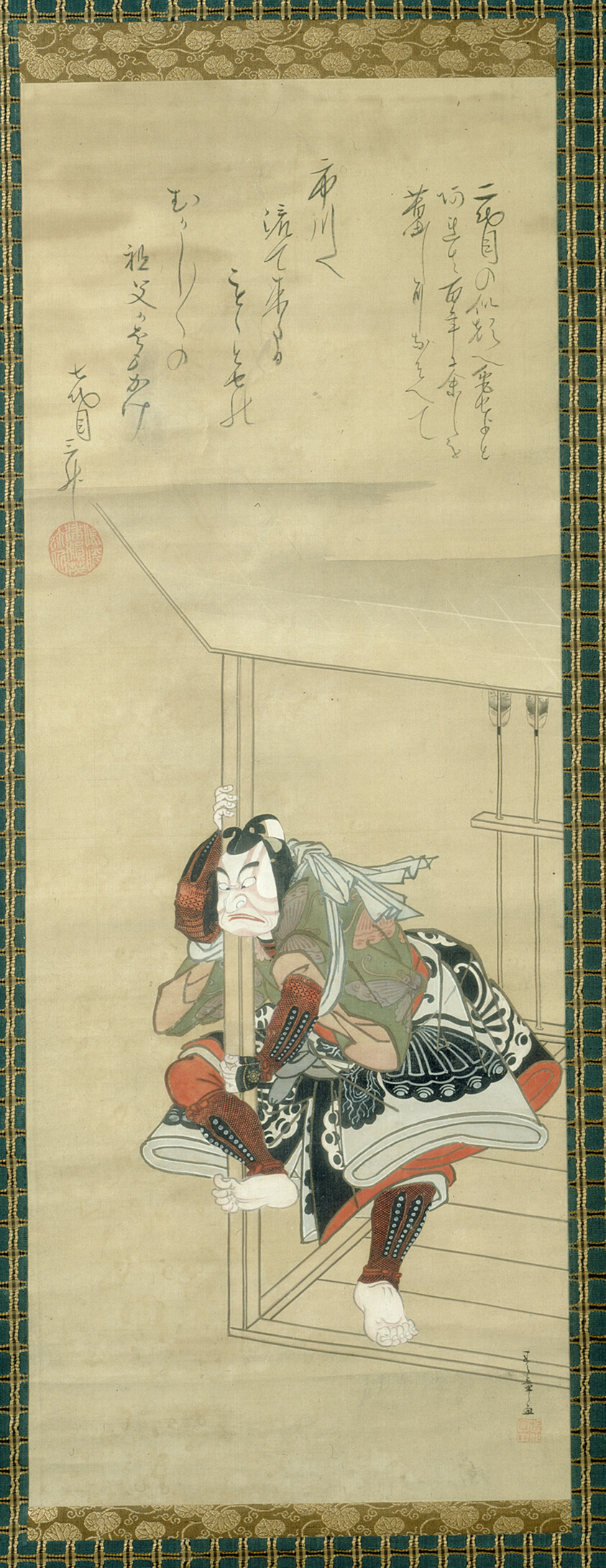
The Kabuki Actor Ichikawa Danjûrô II (1689-1758): A Heritage Artifact Analysis
Introduction: The Confluence of Craft and Performance
In the hallowed corridors of heritage preservation, where materiality meets narrative, the hanging scroll depicting Ichikawa Danjûrô II (1689-1758) stands as a testament to the symbiotic relationship between silk craftsmanship and theatrical legacy. This artifact, executed in ink and colors on silk, transcends mere portraiture; it is a living document of Edo-period Japan’s cultural zenith, where the Kabuki actor’s dynamic presence is immortalized through the fluid elegance of textile art. As a Senior Heritage Specialist at Lauren Fashion Heritage Lab, I approach this piece with the discerning eye of a Savile Row tailor—where every thread, every pigment, and every gesture speaks to a lineage of precision and artistry.
Materiality: The Silk Canvas as a Medium of Legacy
The choice of silk as the substrate for this scroll is not incidental; it is a deliberate invocation of classic silk craftsmanship that defines Japanese aesthetic traditions. Silk, with its inherent luminosity and tensile strength, offers a surface that absorbs ink and pigments with a depth unmatched by paper. The weft and warp of the fabric create a subtle interplay of light and shadow, enhancing the actor’s theatrical presence. In the context of Lauren Fashion Heritage Lab, we recognize silk as a material that embodies both fragility and resilience—much like the Kabuki tradition itself, which balances ephemeral performance with enduring cultural memory.
The hanging scroll format, or kakemono, further amplifies the artifact’s material significance. Designed for display in alcoves (tokonoma), the scroll’s vertical orientation draws the viewer’s eye upward, mirroring the actor’s commanding stage presence. The silk’s natural drape, when mounted, creates a fluidity that echoes the dynamic postures of Kabuki. This is not a static portrait; it is a frozen moment of fluid elegance, where the actor’s mie (a dramatic pose) is rendered with the same precision as a Savile Row tailor’s stitch—each line intentional, each color chosen to evoke emotion.
Ichikawa Danjûrô II: The Actor as Cultural Icon
Ichikawa Danjûrô II, born in 1689, was a scion of the illustrious Ichikawa family, a dynasty that shaped Kabuki’s evolution. His tenure as a leading actor in Edo (modern-day Tokyo) coincided with the genre’s golden age, where aragoto (rough-style) performances captivated audiences with their exaggerated gestures and bold narratives. This scroll captures Danjûrô II in a moment of heightened drama, his kimono adorned with intricate patterns that signify his status as a cultural icon. The ink outlines define his facial features with a sharpness that suggests both vulnerability and strength—a duality central to Kabuki’s appeal.
The actor’s costume, rendered in vibrant colors on silk, reflects the meticulous attention to detail that defines Kabuki’s visual language. The use of kumadori (exaggerated makeup) is subtly implied through the brushwork, while the fabric’s folds are depicted with a fluidity that mimics the actor’s movement. This is not merely a portrait; it is a heritage artifact that documents the intersection of performance art and textile design. For the Lauren Fashion Heritage Lab, such pieces offer invaluable insights into how material culture—from silk to stage—shapes identity.
Artistic Technique: Ink, Colors, and the Mastery of Silk
The technical execution of this scroll reveals the hand of a master artisan, likely from the Kanō school or a similar lineage of painters specializing in figure representation. The ink, applied with varying degrees of saturation, creates a sense of depth and texture on the silk surface. Darker strokes define the actor’s silhouette, while lighter washes suggest the translucency of his garments. The colors—crimson, indigo, and gold—are derived from natural pigments, each chosen for their symbolic resonance. Crimson evokes passion and vitality, indigo suggests nobility, and gold signifies the divine—a palette that aligns with Kabuki’s theatricality.
The silk itself, likely a habutae or rinzu weave, provides a smooth yet absorbent ground. The artisan’s brushwork must have been deliberate and confident, as silk does not allow for erasure. This demands a level of precision akin to a Savile Row tailor cutting a bespoke suit—where every stroke is final, and every color must harmonize. The result is a composition that balances fluid elegance with structural integrity, much like the actor’s performance, which blends improvisation with rigorous training.
Cultural and Historical Significance: A Window into Edo-Period Japan
Beyond its material and artistic merits, this scroll serves as a historical document of Edo-period Japan’s social and cultural dynamics. Kabuki, initially a form of popular entertainment, evolved into a sophisticated art form that reflected the values of the merchant class (chōnin). Danjûrô II’s portrayal in this scroll underscores the actor’s role as a mediator between the sacred and the profane—a figure who embodies both the divine and the human. The silk scroll, displayed in homes and temples, became a talisman of sorts, linking the viewer to the actor’s charisma.
In the context of Lauren Fashion Heritage Lab, this artifact offers a heritage research opportunity to explore how silk craftsmanship intersected with performance culture. The scroll’s preservation—its colors still vibrant, its silk intact—speaks to the care with which such objects were treated. This is not merely a decorative piece; it is a cultural artifact that informs our understanding of textile history, theatrical traditions, and the enduring power of visual storytelling.
Conclusion: The Enduring Legacy of Silk and Stage
The Kabuki Actor Ichikawa Danjûrô II (1689-1758) hanging scroll is more than a relic; it is a masterclass in materiality and narrative. Through the medium of silk, ink, and colors, it captures the essence of a performer who defined an era. For the Lauren Fashion Heritage Lab, this artifact underscores the importance of preserving such pieces as living documents of cultural heritage. As we continue to study the interplay between textile craftsmanship and artistic expression, we are reminded that every thread, every pigment, and every pose tells a story—one that transcends time and place.
In the spirit of Savile Row’s dedication to bespoke excellence, we honor this scroll as a testament to the fluid elegance of silk and the enduring legacy of Kabuki. It is a heritage artifact that demands our reverence, our study, and our stewardship.