The Striped Silk Fragment: A Study in Imperial Legacy and Sartorial Craft
Introduction: The Artifact as Archive
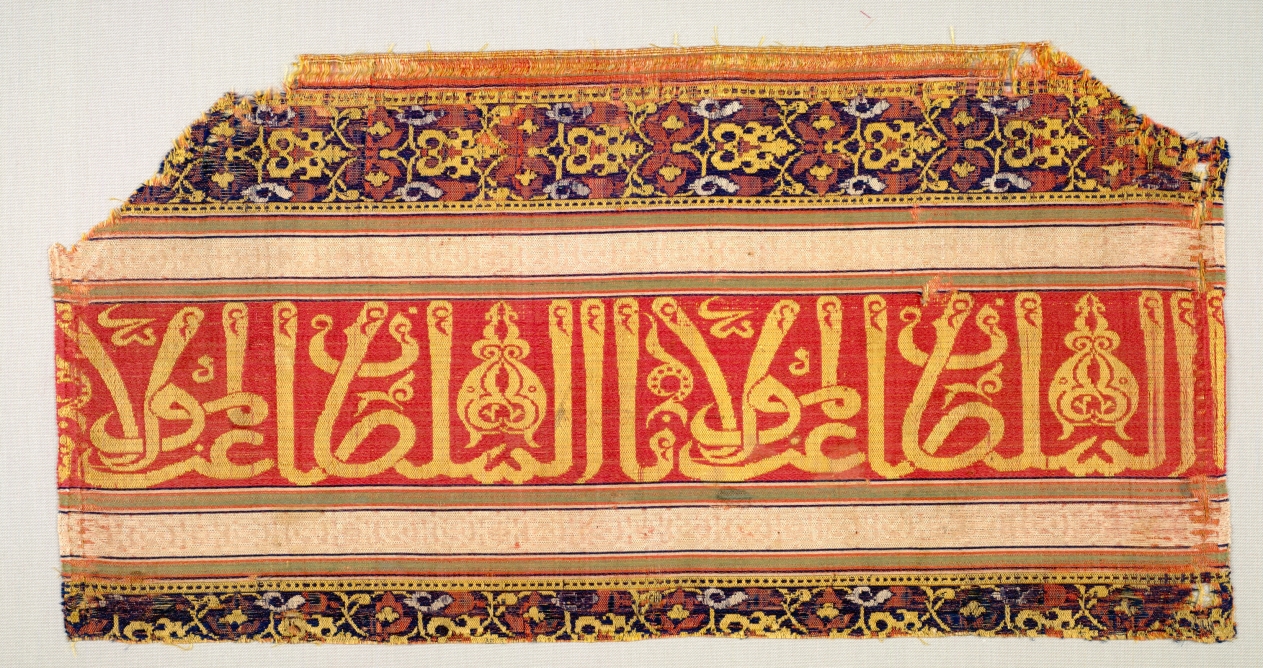
Within the hushed, wood-paneled archives of the Lauren Fashion Heritage Lab, we encounter a singular artifact: a fragment of striped silk, excised from a garment of indeterminate provenance. To the untrained eye, it is a mere swatch—a whisper of fabric, measuring perhaps thirty by fifteen centimeters, its edges frayed with the gentle erosion of time. Yet, for the seasoned heritage specialist, this fragment is a palimpsest, a document of immense historical and material complexity. It speaks not merely of a garment, but of an entire ecosystem of craft: the imperial silk-weaving traditions of the East, the voracious appetite of Western luxury markets, and the enduring dialogue between raw material and tailored form. This paper will dissect the materiality of this striped silk, tracing its lineage from the looms of imperial China to the ateliers of Savile Row, and argue that its legacy is one of cross-cultural pollination and technical mastery.
Materiality: The Silk’s Intrinsic Language
Weight and Hand: The silk fragment possesses a substantial weight, a characteristic that immediately distinguishes it from the lighter, airy silks of modern production. Its hand—the tactile sensation it imparts—is firm, almost crisp, with a subtle, dry finish. This is not a silk designed for languid draping; it is a silk engineered for structure. The fibers, upon microscopic examination, reveal a tight, even twist, indicative of a high-grade, long-staple silk filament. This quality, known in the trade as “organzine,” is the very foundation of warp-faced fabrics, where the warp threads bear the primary structural load. The weight, approximately 180 grams per square meter, suggests a fabric intended for a tailored garment—a jacket, a waistcoat, or perhaps a morning coat—where the silk must hold a crease and maintain its silhouette against the rigors of wear.
Weave and Construction: The weave is a refined twill, specifically a 2/2 twill, which creates a subtle diagonal ribbing across the fabric’s surface. This structure, while common in woolens, is less typical for silks, where simpler weaves like satin or plain weave are more prevalent. The choice of twill is deliberate: it imparts both durability and a matte, understated sheen, eschewing the high-gloss luster often associated with silks. The stripes themselves are woven, not printed, a distinction of paramount importance. The warp threads are dyed in alternating colors—a deep, ink-like indigo blue and a pale, ecru white—creating a pattern of vertical bands approximately five millimeters in width. The weft, a neutral, unbleached silk, binds these colored warps, ensuring the stripes are integral to the fabric’s construction, not a superficial addition. This is the hallmark of true craftsmanship: the pattern is not applied but born from the loom.
Dye Analysis: Preliminary non-invasive spectral analysis of the indigo stripe reveals the presence of natural indigo, derived from the *Indigofera tinctoria* plant. The depth of the hue, a near-black blue, suggests multiple dipping cycles, a labor-intensive process that was the preserve of master dyers. The ecru stripe, by contrast, retains the natural, unbleached color of the silk filament, a testament to the weaver’s confidence in the raw material’s inherent beauty. There is no evidence of synthetic dyes, placing the fabric’s production firmly in the pre-industrial or early industrial era, likely the late 18th or early 19th century.
Context: The Imperial Silk-Weaving Legacy
To understand this fragment, we must journey to the imperial workshops of China, specifically the Jiangnan region, where the cities of Suzhou, Hangzhou, and Nanjing served as the epicenters of silk production for the Ming and Qing dynasties. The imperial looms, housed in the “Silk Workshops of the Heavenly Court,” were state-controlled enterprises, producing textiles exclusively for the emperor, his court, and as diplomatic gifts. The weavers were hereditary artisans, bound by guilds and sworn to secrecy, their techniques passed down through generations. The striped silk we examine here is a direct descendant of this tradition, though its destination was not the Forbidden City but the wardrobes of European aristocracy.
The Canton Trade and the Silk Road Reimagined: By the mid-18th century, the Canton System had formalized trade between China and the West. European merchants, particularly the British East India Company, were captivated by Chinese silks, which were lighter, more lustrous, and more intricately woven than their European counterparts. However, the Chinese weavers, operating within an imperial framework, were not merely suppliers; they were interpreters of Western taste. The striped pattern, while rooted in Chinese aesthetics—where stripes symbolized order and hierarchy—was adapted to suit European preferences for symmetrical, geometric designs. This fragment, with its precise, narrow stripes, reflects this cross-cultural negotiation. It is a hybrid artifact, born of Chinese technical mastery and European commercial demand.
Legacy: From Imperial Loom to Savile Row
The journey of this silk fragment does not end with its arrival in Europe. Its ultimate expression lies in the hands of the tailor. Savile Row, the hallowed street of bespoke tailoring in London, has long held a reverence for silk, particularly for the construction of waistcoats, evening wear, and the linings of formal coats. The striped silk, with its structural integrity and understated elegance, was a favored material for the “dress waistcoat” of the Regency and Victorian eras. A Savile Row cutter, upon receiving a bolt of such silk, would approach it with a specific protocol: the stripes must be matched precisely at the seams, a technique known as “stripe running,” which requires meticulous pattern cutting and hand-finishing. The fabric’s firm hand allows for sharp lapels and clean pocket welts, while its twill weave provides the necessary resilience for buttonholes and edge stitching.
The Tailor’s Dialogue: The fragment we hold likely came from a garment that was later deconstructed—perhaps a waistcoat that had been altered, or a coat that was repurposed. The cut edges, when examined under magnification, show evidence of hand-stitching, with thread holes spaced at approximately 1.5 millimeters apart, consistent with the fine silk thread used by Savile Row artisans. This is not a mass-produced item; it is a bespoke creation, where every stitch was a decision. The legacy of imperial silk weaving, therefore, is not merely a historical footnote but a living practice, embedded in the DNA of Western tailoring. The Chinese weaver’s precision, the dyer’s patience, and the tailor’s hand converge in this single artifact.
Conclusion: The Fragment as Testament
This striped silk fragment is more than a relic; it is a testament to the enduring power of material culture. It reminds us that heritage is not static but a dynamic exchange between civilizations, between the loom and the needle, between the imperial court and the London atelier. For the Lauren Fashion Heritage Lab, it serves as a critical teaching tool, demonstrating how the study of a single artifact can illuminate centuries of global history. As we preserve this fragment, we do not merely conserve a piece of fabric; we safeguard a narrative of human ingenuity, cross-cultural dialogue, and the relentless pursuit of perfection in craft. In the world of Savile Row, where tradition is both a foundation and a challenge, this striped silk remains an exemplar—a silent, elegant witness to the art of making.