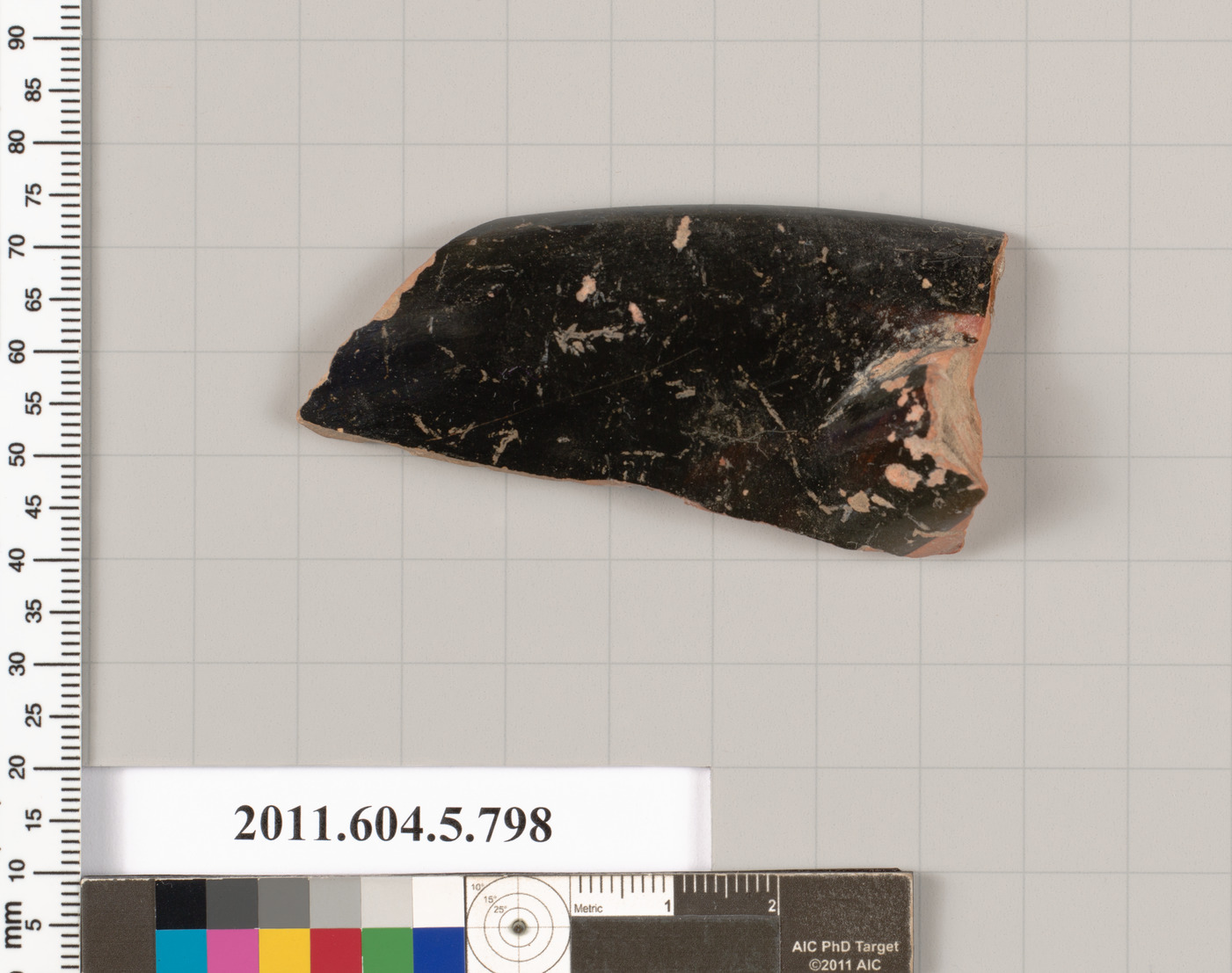
The Sacred Geometry of the Kylix: Terracotta Fragments and the 2026 Old Money Silhouette
In the rarefied discourse of luxury heritage, the 2026 Old Money silhouette emerges not from novelty but from a profound re-engagement with archaeological permanence. The terracotta rim fragment of a Greek Attic kylix—a drinking cup central to symposia and ritual libations—offers an unexpected yet rigorous architectural lexicon for this aesthetic. While the internal genetic code of the Lauren Fashion Heritage Lab juxtaposes the Bodhisattva’s inward transcendence with the Amulet in the Form of a Seated Figure with Bovine Head’s outward protection, the kylix fragment occupies a third, equally vital space: the ceremonial vessel of the public self. It is neither a guide to enlightenment nor a talisman against chaos, but a container for the performance of cultivated identity—a role that directly informs the 2026 Old Money wardrobe’s emphasis on restrained, sculptural form and the quiet authority of provenance.
I. The Kylix as Architectural Blueprint: Form, Function, and the Silhouette of Power
The kylix is defined by its shallow bowl, wide rim, and two horizontal handles. Its terracotta rim fragment, when examined as a design artifact, reveals three critical principles for the 2026 silhouette: radial symmetry, horizontal emphasis, and controlled volume. The Old Money aesthetic, historically rooted in the understated opulence of WASP aristocracy and European noblesse, has long favored garments that suggest lineage rather than trend. The kylix’s geometry translates directly into a jacket or coat’s shoulder line—a broad, unbroken horizontal that echoes the vessel’s rim, creating a silhouette that is both commanding and serene. This is not the aggressive power shoulder of the 1980s, but a ceremonial width that implies the wearer occupies space with the same natural authority as a symposium host presiding over a ritual.
Consider the 2026 double-breasted peak-lapel blazer in a dense, matte wool—a material that mirrors the terracotta’s earthy, unglazed tactility. The lapels, cut with a deliberate angularity, reference the kylix handles’ outward sweep. The garment’s hem falls just below the hip, maintaining the vessel’s proportion of depth to width. The internal structure—canvas interfacing, hand-stitched armholes—becomes the invisible kiln that shapes the fabric into a living vessel. This is heritage as engineering: the wearer does not simply put on a jacket; they inhabit a form that has been refined across millennia.
II. The Terracotta Palette: Earth, Fire, and the Patina of Time
The kylix fragment’s terracotta—a fired clay ranging from ochre to burnt sienna—offers a chromatic counterpoint to the black-figure or red-figure decoration that once adorned it. For 2026 Old Money, this translates into a color theory of archaeological restraint. The palette is not the stark black-and-white of modern minimalism, but a spectrum of fired earth tones: clay, rust, umber, and taupe. These shades evoke the vessel’s journey from raw earth to functional artifact, a narrative that resonates with the Old Money ethos of inherited quality—clothes that have been “fired” by time, wear, and careful stewardship.
A cashmere turtleneck in a deep, dusty rose—reminiscent of Attic clay’s iron oxide content—becomes the foundation piece. Over it, a herringbone wool coat in a blend of charcoal and burnt amber suggests the fragment’s original painted bands. The trousers, cut with a gentle taper and a single crease, echo the kylix’s stem—a supporting element that never distracts from the bowl’s primary volume. Accessories are minimal: a leather belt in a saddle tan that has been burnished to a low sheen, and a watch with a ceramic bezel that mimics the fragment’s fired finish. Every element is material-first, prioritizing the sensory experience of texture over the shock of color.
III. The Kylix in Ritual: Symposium, Status, and the Performance of Restraint
The kylix was not merely a drinking vessel; it was a stage for social performance. In the Greek symposium, participants reclined and passed the cup, engaging in philosophical discourse, poetry, and the negotiation of social hierarchies. The cup’s wide rim allowed for the display of painted scenes—mythological, erotic, or political—that served as conversation starters and status markers. For 2026 Old Money, the garment becomes the kylix: a vessel for the wearer’s narrative, but one that demands restraint in its decoration.
Unlike the Bodhisattva’s ornate jewelry or the Amulet’s symbolic density, the Old Money silhouette inspired by the kylix fragment is deliberately under-ornamented. The “decoration” is structural: a subtle pinstripe that reads as a painted line on the terracotta surface; a mother-of-pearl button that catches light like a fragment of mica in the clay; a silk lining in a deep, muted red that is glimpsed only when the jacket is removed. This is the hermetic luxury of the initiated—those who understand that true status is not broadcast but discovered. The wearer does not need to explain their clothes; the clothes speak through their archaeological correctness.
IV. The Fragmented Body: Deconstruction as Heritage
The kylix rim fragment is, by definition, incomplete. Yet its partiality is not a flaw but a source of aesthetic power. It invites the viewer to reconstruct the whole, to imagine the symposium, the hands that held it, the wine that stained it. This principle of productive incompleteness informs the 2026 silhouette’s approach to deconstruction. Unlike the distressed, raw-edged garments of 1990s grunge or the conceptual voids of avant-garde fashion, this deconstruction is archaeological: it suggests a garment that has been worn, repaired, and passed down through generations.
A 2026 herringbone wool overcoat might feature a deliberately unfinished hem—not frayed, but cut with a clean, sharp line that references the fragment’s broken edge. The interior seams are left exposed, but meticulously finished, like the cross-section of a terracotta shard that reveals the clay’s composition. A double-faced cashmere scarf is left unhemmed at the ends, the two layers of fabric visible as a deliberate design choice. This is not negligence but curatorial precision: the garment is presented as an artifact in progress, its history written into its construction.
V. Synthesis: The Kylix and the Eternal Return of Form
In the final analysis, the terracotta kylix fragment offers the 2026 Old Money silhouette a grammar of permanence. While the Bodhisattva teaches the dissolution of self into compassion, and the Amulet fortifies the self against external threat, the kylix teaches the art of holding—of containing one’s presence with the same grace that the vessel once held wine. The 2026 silhouette is thus a ceremonial container: broad-shouldered, earth-toned, and structurally rigorous, it does not seek to transform the wearer into a deity or a warrior, but into a participant in a timeless ritual of cultivated being.
The heritage of this silhouette lies not in its novelty but in its fidelity to archaeological truth. The kylix fragment, unearthed from the Attic soil, carries the memory of hands that shaped it, lips that touched its rim, and eyes that admired its painted scenes. The 2026 Old Money garment, in its wool, cashmere, and silk, carries a similar memory—of the weaver, the tailor, the wearer. It is a vessel for the human form, and in its quiet, earth-bound dignity, it offers a counterpoint to the digital ephemerality of our age. The kylix endures because it was made to last; the 2026 silhouette endures because it is made to be inherited.