← BACK TO ARCHIVES
Silk
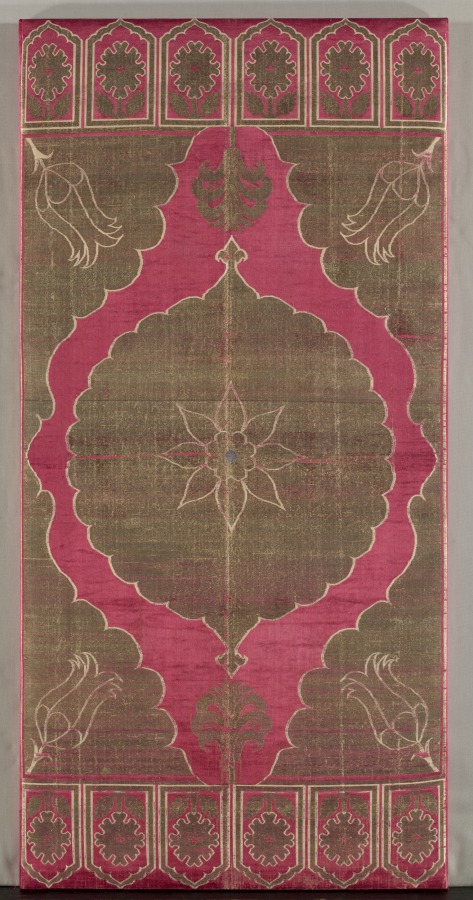
Heritage Synthesis: Brocaded Silk Cushion Cover & Iranian Striped Silk Surround
Curated on Jun 04, 2026 // Node: LDN-01
Category: Silk
The Weft of Empire: A Study in Materiality and Legacy
In the hushed, wood-panelled ateliers of London’s Savile Row, where the air is thick with the scent of wool, linen, and the quiet hum of centuries-old craft, one learns to read the language of cloth. It is a language of tension, of warp and weft, of light and shadow. Today, we turn our attention to a singular pairing: a brocaded silk cushion cover and its surrounding Iranian striped silk surround. These are not mere decorative objects; they are artifacts of imperial ambition, woven from the very threads of global power. Their materiality—pure silk—speaks of a lineage that stretches from the courts of the Safavids to the drawing rooms of Victorian England, and ultimately, to the discerning hands of a modern connoisseur.
The Materiality of Silk: A Thread of Power
Silk is not a fabric of utility; it is a fabric of aspiration. Its production, a closely guarded secret for millennia, demanded an almost monastic discipline. The silkworm, *Bombyx mori*, spins a single, continuous filament of protein, a thread so fine and lustrous that it has been likened to frozen light. The labor required to cultivate these creatures, to unwind their cocoons, and to twist the filaments into a usable yarn was immense. This inherent scarcity and the extraordinary skill required to transform it into cloth made silk a currency of empires. From the Han Dynasty’s Silk Road to the Byzantine imperial workshops, silk was a marker of status, a diplomatic gift, and a symbol of divine right.
The brocaded cushion cover before us is a testament to this legacy. Brocading, a technique where supplementary weft threads are woven into the fabric to create a raised, patterned design, is a process of immense complexity. It is not printed; it is built, thread by thread, on a loom that might have required two or more weavers to operate. The design—likely a stylized floral or geometric motif, perhaps a *paisley* or *boteh*—is not merely decorative. It is a coded language of power. In Safavid Iran (1501-1736), silk weaving reached an apotheosis. The Shahs of Isfahan commissioned vast workshops, or *karkhanas*, where master weavers produced textiles for the court, for religious institutions, and for export to a hungry European market. These silks were not just cloth; they were instruments of soft power, projecting the wealth, sophistication, and artistic prowess of the Persian Empire.
The Iranian Striped Silk Surround: A Dialogue of Light and Line
Surrounding the brocaded panel is a field of Iranian striped silk. This is a masterful counterpoint. Where the brocade is dense, tactile, and assertive, the stripe is linear, rhythmic, and optical. The stripes, likely in alternating bands of deep indigo, madder red, and a pale, undyed silk, create a sense of movement and depth. This is not a simple stripe; it is a study in tension. The varying widths and the subtle shifts in hue—achieved through natural dyes that have mellowed over centuries—create a visual vibration. This technique, known as *haft-rangi* (seven colors) in Persian, demonstrates a profound understanding of color theory and optical illusion.
The striped silk serves a dual purpose. Structurally, it frames and contains the more complex brocade, providing a visual rest for the eye. Conceptually, it speaks to a different aspect of imperial identity. The stripe, a motif found in Persian textiles from the Achaemenid period onward, is associated with order, discipline, and the linear logic of the court. It is the fabric of the *divan* (the royal council), of the military standard, and of the architectural tile work that defines Isfahan’s Naqsh-e Jahan Square. Together, the brocade and the stripe form a dialogue: the organic, almost painterly flourish of the brocade against the structured, architectural logic of the stripe. It is a conversation between the artist and the engineer, the poet and the mathematician.
The Legacy of Imperial Silk Weaving: From Isfahan to Savile Row
The journey of these silks from the looms of Isfahan to the hands of a London collector is a story of global trade and cultural appropriation. By the 17th century, the East India Company was importing vast quantities of Persian silks into England. These textiles were not simply admired; they were dissected, copied, and reimagined. The British textile industry, particularly in Spitalfields, began to produce its own brocades and damasks, often directly inspired by Persian and Indian prototypes. The cushion cover we examine today may well be a product of this cross-pollination—a Persian design woven on an English loom, or an English design using Persian techniques.
This legacy is not a relic. It lives on in the DNA of Savile Row. The principles of balance, proportion, and material integrity that govern the creation of a bespoke suit are the same principles that guided the weavers of Isfahan. The way a stripe can elongate a silhouette, the way a subtle pattern can add depth to a solid cloth, the way a single thread can catch the light—these are the lessons of imperial silk weaving, passed down through generations of craftsmen. When a cutter on Savile Row selects a length of silk for a lining or a waistcoat, they are engaging with a tradition that is centuries old and continents wide.
In conclusion, this brocaded silk cushion cover and its Iranian striped silk surround are more than a decorative pairing. They are a material archive. They hold within their threads the labor of the silkworm, the artistry of the weaver, the ambition of the Shah, and the curiosity of the merchant. They are a testament to the fact that true luxury is never accidental; it is the result of an unbroken chain of knowledge, skill, and a deep respect for the material. To hold this silk is to hold a fragment of empire, woven in light.
Heritage Lab Insight
Lab Insight: CMA Silk Archive Node integration.