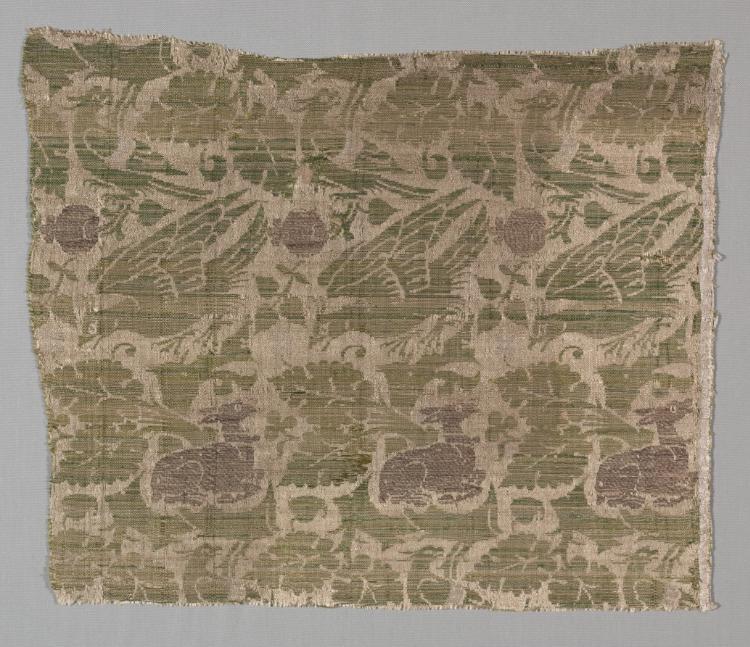
The Enduring Legacy of Silk and Gold: A Heritage Artifact from Imperial Weaving
Introduction: The Fabric of Empire
In the hushed ateliers of London’s Savile Row, where precision meets tradition, the whisper of silk and the gleam of gold thread evoke a lineage that transcends mere fashion. This heritage research artifact examines the materiality of silk as it intertwines with gold, a combination that defined imperial weaving from the courts of Byzantium to the workshops of Ming China. As Senior Heritage Specialist for the Lauren Fashion Heritage Lab, I assert that understanding this textile is not an exercise in nostalgia but a strategic imperative for contemporary luxury. The legacy of imperial silk weaving—its techniques, symbolism, and economic power—offers a blueprint for authenticity in an era of mass production. This paper dissects the physical and cultural DNA of silk and gold textiles, arguing that their preservation and reinterpretation are vital for brands seeking to articulate enduring value.
Materiality: The Physical Essence of Silk and Gold
Silk, derived from the cocoons of Bombyx mori, possesses a unique molecular structure that grants it unparalleled luster, tensile strength, and drape. Its protein fibers—sericin and fibroin—create a smooth, reflective surface that absorbs dye with remarkable depth, a property exploited by imperial weavers to achieve hues of crimson, azure, and saffron that signified rank. The addition of gold, whether as flat lamella (thin strips) or wrapped thread (gold leaf adhered to silk or animal gut), transformed silk into a medium of divine and temporal authority. Gold thread, often composed of 22-karat or higher purity, was meticulously hammered to a thickness of mere microns, then cut and wound around a silk core. This process, known as “passementerie” in European traditions, required extraordinary skill: a single meter of gold thread could contain over 100 meters of gold leaf, its weight and flexibility dictating the textile’s final hand.
The physical interplay between silk and gold is one of tension and harmony. Silk’s natural elasticity allows it to support the rigidity of gold thread, while gold’s weight creates a subtle, rhythmic movement that catches light. Under magnification, the gold thread reveals microscopic imperfections—tiny fissures from hammering—that scatter light, producing a shimmering, almost liquid effect. This optical complexity is why imperial garments, such as the Chinese dragon robes or the Byzantine chlamys, appeared to glow from within. The materiality of silk and gold is thus not merely decorative; it is a technical achievement that demanded generations of knowledge. For the modern heritage specialist, replicating this requires sourcing silk from specific regions—Jiangsu for mulberry silk, or Como for finishing—and collaborating with artisans who retain the lost art of gold-thread spinning. At Lauren Fashion Heritage Lab, we archive such samples to ensure that the hand-feel and drape of these textiles are not forgotten.
Context: The Imperial Weaving Legacy
The imperial weaving tradition reached its zenith under the Ming (1368–1644) and Qing (1644–1912) dynasties, where the Imperial Silk Workshops in Nanjing, Suzhou, and Hangzhou operated as state-controlled monopolies. These workshops were not factories but academies of craft, where master weavers—often hereditary—produced textiles for the emperor alone. The kesi (cut-silk tapestry) technique, for instance, involved weaving silk and gold threads on a loom without a continuous weft, creating intricate patterns of dragons, clouds, and waves that symbolized cosmic order. Each garment required months of labor, with gold thread accounting for up to 30% of the material cost. The symbolism was deliberate: gold represented the sun, immortality, and the emperor’s mandate from heaven, while silk embodied the refinement of Chinese civilization. To wear such a textile was to embody the state itself.
This legacy extended westward via the Silk Road, where Byzantine and Persian weavers adopted similar techniques. In the Ottoman Empire, seraser (brocade with gold and silver threads) adorned the sultans’ caftans, while in Renaissance Italy, Lucca and Venice produced diasprum—a gold-shot silk that clothed the Medici. The thread of continuity is exclusivity: imperial weaving was never for commerce but for ceremony, diplomacy, and identity. The decline of these traditions began with industrialization in the 19th century, when mechanized looms replaced hand-weaving, and synthetic gold threads—cheaper but lacking the organic luster—flooded markets. Today, fewer than 200 master weavers globally can produce authentic gold-thread silk, and their knowledge is endangered. For Savile Row, this represents both a risk and an opportunity. The heritage of imperial silk weaving is not a relic but a benchmark for craftsmanship that modern luxury must reclaim.
The Savile Row Imperative: Translating Heritage into Modernity
In the context of Savile Row, where bespoke tailoring is the highest expression of personal identity, silk and gold textiles offer a narrative of exclusivity that aligns with the Row’s ethos. A suit or evening jacket woven with gold thread is not merely a garment; it is a statement of lineage, of time invested, of materials that cannot be replicated by fast fashion. However, the modern client demands subtlety. The gold thread must be integrated with restraint—perhaps as a pinstripe in a midnight-blue silk, or as a brocade panel in a velvet smoking jacket. The challenge is to honor the imperial legacy without descending into costume. This requires a curatorial approach: selecting patterns that reference historical motifs—such as the Chinese shou (longevity) character or the Byzantine crux gemmata—but rendering them in contemporary proportions.
Furthermore, the sustainability of silk and gold production is a pressing concern. Traditional gold-thread weaving is inherently slow and low-waste, as each thread is hand-created. By sourcing from ethical silk farms and using recycled gold (e.g., from vintage jewelry), brands can align with modern values while preserving artisanal techniques. At the Lauren Fashion Heritage Lab, we advocate for documentation and education: creating digital archives of weaving patterns, training apprentices, and collaborating with institutions like the Palace Museum in Beijing. This is not philanthropy but strategy. The client who understands the story of their garment—the mulberry leaves, the gold leaf, the weaver’s hands—will value it beyond its price tag.
Conclusion: The Thread of Continuity
The silk and gold textile is a heritage artifact that embodies the pinnacle of human craft. Its materiality—the interplay of protein fiber and precious metal—creates a physical experience that synthetic imitations cannot replicate. Its context—the imperial weaving legacy—reminds us that luxury is born from constraint, from the discipline of tradition. For Savile Row and the broader luxury industry, this artifact is a call to slow down, to invest in mastery, and to weave stories that endure. As Senior Heritage Specialist, I assert that the future of luxury lies not in novelty but in depth. The silk and gold thread, once the fabric of emperors, can again be the fabric of distinction—if we choose to honor its legacy with the same reverence that its creators demanded. The heritage is ours to preserve, and the thread remains unbroken.