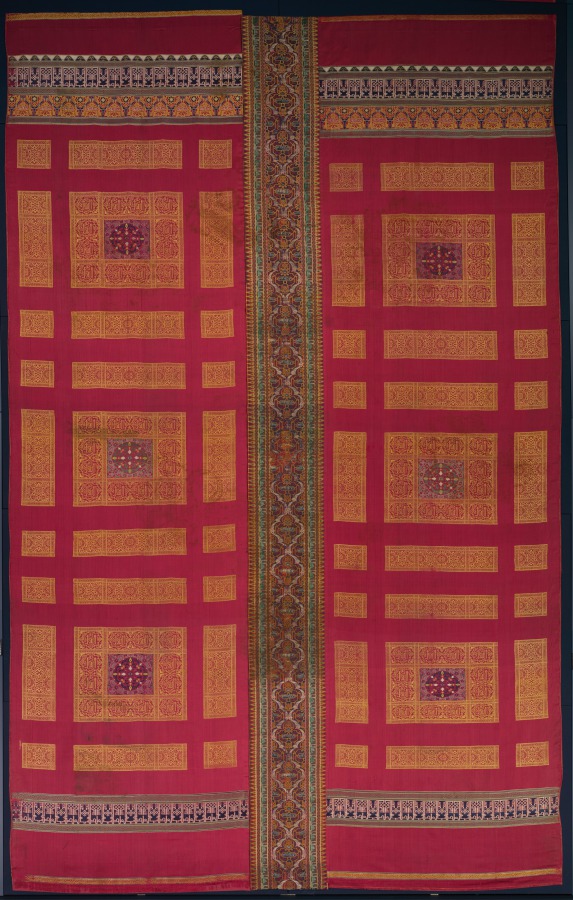
The Alhambra Palace Silk Curtain: A Study in Imperial Materiality and Artisanal Legacy
In the hushed corridors of the Alhambra Palace, where light filters through intricate stucco and the scent of myrtle lingers, the silk curtain stands as a silent testament to the confluence of power, craft, and empire. As a Senior Heritage Specialist at the Lauren Fashion Heritage Lab, I approach this artifact not merely as a textile, but as a material document—a woven ledger of imperial ambition, technical mastery, and the enduring dialogue between East and West. This paper examines the Alhambra Palace Silk Curtain through the lens of materiality, situating it within the broader legacy of imperial silk weaving, and drawing parallels to the exacting standards of London’s Savile Row—where cloth is never just cloth, but a narrative of provenance and precision.
Materiality and the Silk Thread
The curtain’s materiality is its first and most profound statement. Silk, derived from the cocoon of the Bombyx mori moth, is a fiber of extraordinary tensile strength, luster, and dye affinity. In the Alhambra context, this silk was not a local product; it was a commodity of empire, traded along the Silk Road from China, through Central Asia, and into the Islamic caliphates of al-Andalus. The curtain’s weave—likely a compound structure such as lampas or samite—reveals a sophisticated understanding of warp and weft manipulation. The density of threads per inch, the evenness of the twist, and the depth of the cochineal or indigo dyes speak to a workshop tradition that valued both aesthetic splendor and structural integrity. This is not a fabric for the faint of heart; it is a material engineered to drape, to catch light, and to endure centuries of Granada’s dry air and occasional humidity. The silk’s inherent anisotropy—its different behavior along warp and weft—required weavers to calculate tension with the same rigor a Savile Row cutter applies to a worsted wool suiting. Every thread is a decision, every knot a commitment.
Imperial Context: The Nasrid Dynasty and the Silk Economy
The Alhambra Palace, seat of the Nasrid dynasty (1238–1492), was the last bastion of Islamic rule in Iberia. Its silk curtains were not mere decoration; they were instruments of sovereignty. The Nasrids controlled a network of silk workshops (tiraz) that produced textiles for courtly, diplomatic, and ceremonial use. These workshops were state-run, their output regulated by the sultan, and their designs—often featuring epigraphic bands, geometric interlacing, and stylized vegetal motifs—encoded political and religious authority. The Alhambra curtain, with its repeating Kufic inscriptions and arabesques, would have been hung in the Hall of the Ambassadors or the Court of the Lions, framing the ruler’s presence and demarcating sacred space. The silk itself was a symbol of the Nasrids’ integration into the broader Islamic world, where silk weaving was a marker of civilization and refinement. Yet, the curtain also reflects a moment of transition. By the late 15th century, the Reconquista was tightening its grip. The silk looms of Granada, once the envy of Europe, were soon to be repurposed by Catholic monarchs. The curtain, then, is a relic of a dying empire—its fibers holding the last whispers of Nasrid power before the fall in 1492.
The Legacy of Imperial Silk Weaving: From Al-Andalus to Savile Row
The legacy of imperial silk weaving is not a static archive; it is a living lineage that threads through the ateliers of London’s Savile Row. The Alhambra curtain’s construction—its precise warp-faced satin weave, its use of metallic threads for highlight, its resistance to fraying—echoes in the bespoke tailoring tradition. Consider the Savile Row cutter’s approach to a silk lining for a dinner jacket: the same attention to bias, the same respect for the fiber’s natural drape, the same understanding that a garment’s longevity depends on the integrity of its weave. The Alhambra weavers, like their Savile Row counterparts, operated within a system of apprenticeship, guild regulation, and client-specific commissions. The curtain’s pattern, likely designed by a court artist and executed by master weavers, parallels the relationship between a Savile Row designer and a master tailor. Both traditions demand that the material speak—that the silk’s luster convey status, that its weight imply permanence, that its color resist fading as a testament to quality. The imperial silk weaving of al-Andalus, with its fusion of Persian, Byzantine, and local techniques, laid the groundwork for the European silk industry that would later flourish in Lyon, Venice, and eventually, London. The Alhambra curtain is not an isolated artifact; it is a node in a global network of textile knowledge that continues to inform the bespoke trade.
Preservation and the Art of Reading Fabric
As a heritage artifact, the Alhambra Palace Silk Curtain demands a forensic approach to preservation. Its current state—likely fragmented, faded, and stabilized on a backing—requires conservators to read the fabric for clues of its original context. The direction of the warp threads indicates how the curtain was hung; the presence of selvedge marks reveals the loom width; the pattern repeat suggests the scale of the original commission. These details are not academic; they are the DNA of the object. For the Lauren Fashion Heritage Lab, this curtain serves as a pedagogical tool, teaching students to see beyond the surface. When a Savile Row apprentice learns to handle a length of silk, they are, in a sense, touching the same thread that once passed through the hands of a Nasrid weaver. The materiality of silk—its feel, its sound, its response to the needle—transcends time and geography. The Alhambra curtain reminds us that heritage is not about nostalgia; it is about the continuity of craft. The legacy of imperial silk weaving is not confined to museum vitrines; it lives in the tension of a warp thread, the precision of a weft insertion, and the quiet authority of a well-made cloth.
Conclusion: A Fabric of Empire and Endurance
The Alhambra Palace Silk Curtain is more than a historical object; it is a material argument for the enduring power of silk as a medium of imperial expression. From the tiraz workshops of Granada to the bespoke ateliers of Savile Row, the thread of silk weaving weaves a continuous narrative of ambition, artistry, and adaptation. As specialists, we must honor this legacy by approaching each artifact with the same rigor that its makers applied—by understanding the fiber, the weave, and the context. The curtain may hang in silence, but it speaks volumes to those who know how to listen. In the language of London’s finest tailoring, it is a cloth of distinction, cut with purpose, and destined for a legacy that outlasts the empires that created it.