← BACK TO ARCHIVES
Heritage-Black
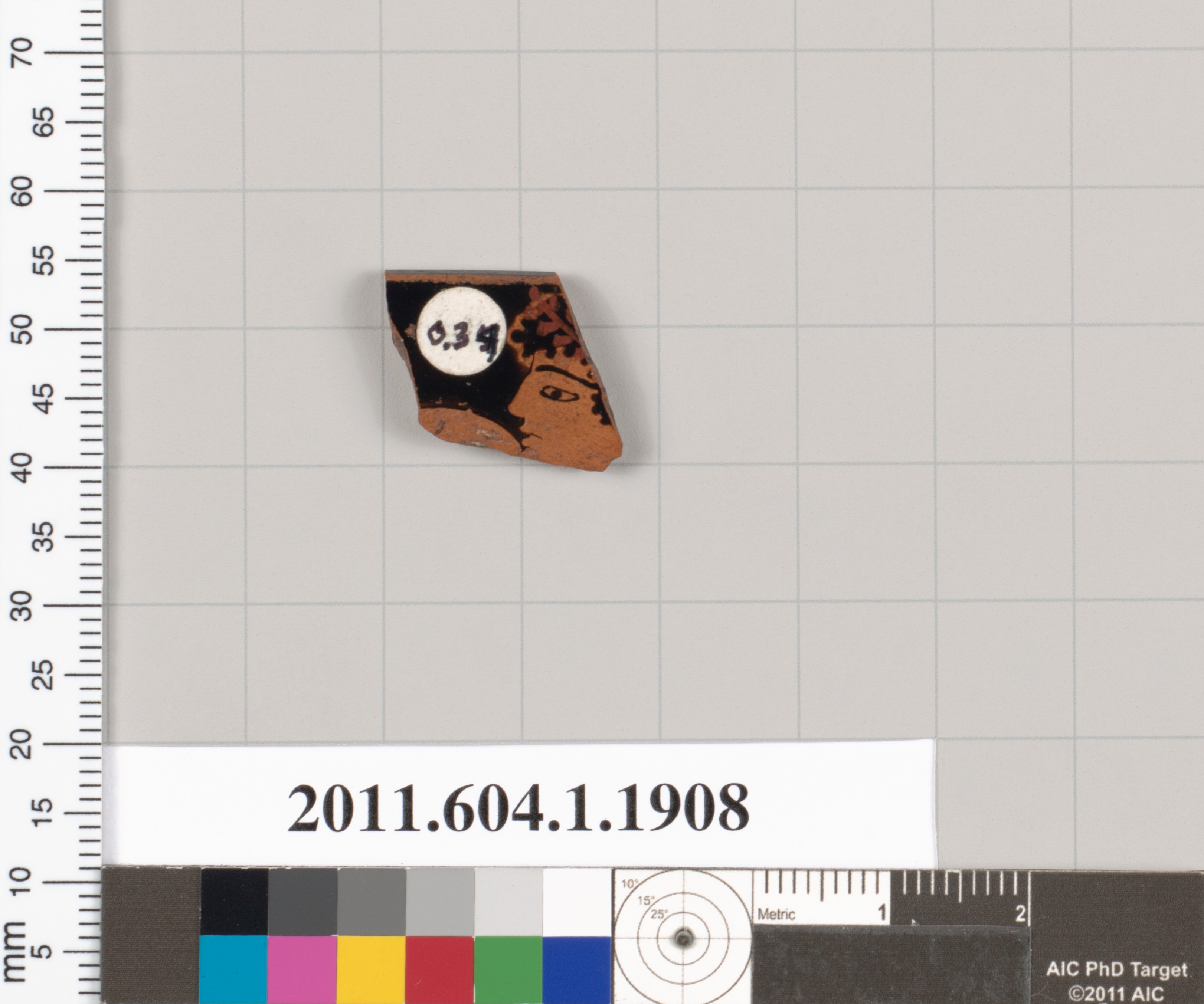
Heritage Synthesis: Terracotta rim fragment of a kylix (drinking cup)
Curated on Jun 04, 2026 // Node: LDN-01
Fragments of Eternity: The Terracotta Kylix and the Architecture of Old Money in 2026
The Lauren Fashion Heritage Lab’s internal genetic code—the dialectic between the ethereal *Udumbara* temple plaque and the worldly *Beast-and-Grape* bronze mirror—reveals a foundational tension within Eastern aesthetics: the negotiation between transcendent emptiness and immanent fullness. This same dialectic, when applied to the Western classical tradition, finds a startlingly parallel expression in a humble artifact: the terracotta rim fragment of an Attic kylix (drinking cup). This shard, broken yet resonant, is not merely a relic of sympotic conviviality but a philosophical blueprint for the 2026 Old Money silhouette. It teaches us that true heritage—what we call *Heritage-Black*—is not about pristine preservation but about the eloquent power of the fragment, the dignity of wear, and the silent authority of form over ornament.
I. The Kylix as a Vessel of Contained Excess
The Attic kylix, in its original context, was the quintessential vessel of the Greek symposium—a ritualized space of wine, poetry, and philosophical discourse. Its wide, shallow bowl and two horizontal handles were designed for a specific social choreography: the reclining drinker would hold the cup by one handle, sip, and pass it to the next participant. This is not a cup for solitary consumption but for shared, measured indulgence. The terracotta fragment, with its sharp, clean break, preserves the curve of the rim and the subtle lip where the drinker’s mouth once touched. In its materiality—the warm, porous, unglazed terracotta—it speaks of an earth-bound honesty. There is no gilding, no precious stone, no baroque flourish. The beauty lies entirely in the ratio: the relationship between the diameter of the rim, the depth of the bowl, and the ergonomic logic of the handles.
This is the first lesson for the 2026 Old Money silhouette. The kylix rejects the aesthetic of conspicuous accumulation that defines fast fashion and nouveau-riche display. Instead, it embodies what the Greeks called *sophrosyne*—a balanced, harmonious self-restraint. The 2026 silhouette must be a vessel of contained excess. The broad, generous shoulder of a double-breasted overcoat, the deep pleat of a trouser, the generous sweep of a cashmere shawl—these are not gestures of opulence but of architectural generosity. They are the “bowl” of the garment, designed to hold the body with dignity, not to shout for attention. The terracotta fragment teaches us that the most powerful statement is often the one left unsaid, the line left unbroken.
II. The Fragment as a Signifier of Duration
The internal genetic code’s analysis of the *Udumbara* plaque emphasizes its “emptiness” as a “summoning structure”—a void that invites the viewer to complete the meaning through spiritual imagination. The kylix fragment operates on a similar principle, but in a secular, materialist key. The break is not a flaw; it is a chronograph. It records the passage of time, the accidents of history, the physical reality of use and decay. In the world of Old Money, this is the ultimate signifier: duration. A garment that looks new is suspect; a garment that bears the subtle marks of wear—a faded elbow, a softened collar, a slight sheen on the seat of the trousers—is authentic.
For 2026, this translates into a deliberate embrace of imperfect materials and tactile aging. Think of a heavy wool flannel that develops a natural luster over years of brushing, or a linen shirt that softens into a second skin. The silhouette should not be crisp and sharp like a newly minted coin; it should be weathered like the rim of the kylix. This is not about “distressing” in the fashion sense—a manufactured faux-patina—but about designing for a lifecycle. The 2026 Old Money garment must be conceived as an heirloom, a fragment that will one day tell its own story of dinners, journeys, and quiet afternoons. The terracotta teaches us that the most luxurious thing a garment can possess is the evidence of having been lived in.
III. The Sympotic Line: From the Kylix to the Silhouette
The kylix’s profile—a shallow, expanding bowl that tapers to a stable foot—offers a specific geometric lesson. The rim is the point of contact, the interface between the vessel and the world. In the 2026 silhouette, this translates to the shoulder line. Just as the kylix’s rim defines the cup’s character—whether it flares outward in a welcoming gesture or turns inward in a more reserved manner—the shoulder of a jacket or coat defines the wearer’s presence. The terracotta fragment, with its clean, unadorned edge, suggests a natural shoulder: soft, unpadded, following the body’s own architecture. This is the antithesis of the aggressive, armored shoulder of the 1980s power suit. It is a shoulder that says, “I have nothing to prove.”
Furthermore, the kylix’s handles—the *otai*—are not decorative appendages but functional extensions of the form. In the 2026 silhouette, this principle manifests in the pocket, the cuff, the vent. These details must be integral, not applied. A patch pocket should feel as if it grew from the fabric; a cuff button should be placed with the same precision as the kylix’s handle attachment. The terracotta fragment reminds us that every element must serve the whole, that ornament is only justified by use. The Old Money silhouette is not a canvas for decoration; it is a tool for living.
IV. The Dialectic of the Fragment and the Whole
Returning to the internal genetic code’s dialectic: the *Udumbara* plaque represents the “empty” and “still,” while the *Beast-and-Grape* mirror represents the “full” and “dynamic.” The kylix fragment, in its broken state, occupies a third position: it is both a fragment and a whole. It is a complete object in its incompleteness, a testament to the fact that meaning is not destroyed by time but transformed. For the 2026 Old Money silhouette, this is the ultimate philosophical insight. The garment is not a perfect, static object; it is a fragment of a life. The wearer completes it through posture, gesture, and history.
The terracotta’s earthy, unglazed surface also speaks to a chromatic austerity that defines *Heritage-Black*. This is not the black of mourning or of rebellion, but the black of earth and ash—a black that absorbs light rather than reflecting it. In 2026, this translates to a palette of deep, matte tones: charcoal, iron, basalt, and the warm, brown-black of fired clay. These are colors that do not compete with the wearer but provide a ground for presence. They are the visual equivalent of the kylix’s silence.
Conclusion: The Eternal Fragment
The terracotta kylix fragment, when read through the lens of the Lauren Heritage Lab’s Eastern aesthetic dialectic, reveals that the 2026 Old Money silhouette is not a revival of a past style but a philosophical stance. It is a stance of restraint over excess, of duration over novelty, of the fragment over the whole. The kylix teaches us that the most powerful garments are those that acknowledge their own impermanence, that bear the marks of time with grace, and that serve as vessels for a life well-lived. In the coming season, the most discerning eye will not look for the newest thing but for the oldest gesture—the curve of a shoulder that echoes the rim of a cup broken two millennia ago, yet still holds the promise of a shared toast. This is the heritage of *Heritage-Black*: not a color, but a way of being in time.
Heritage Lab Insight
Genetic Bridge: Archive node focusing on Heritage-Black craftsmanship.