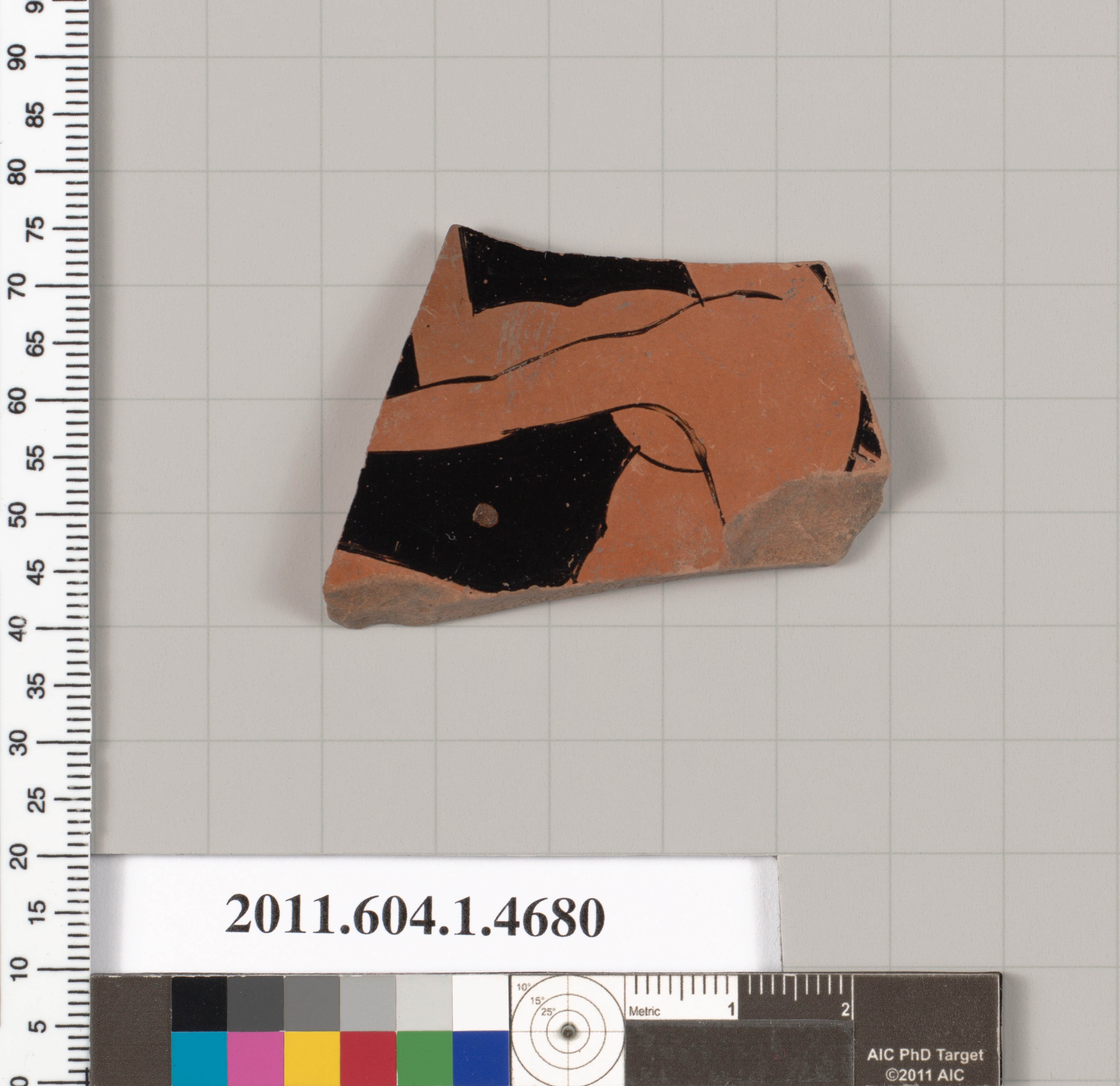
From Attic Sherd to Old Money Silhouette: The Terracotta Kylix as a Genealogical Source for Lauren’s 2026 Heritage-Black Line
Introduction: The Fragment as a Foundational Text
The terracotta fragment of a Greek Attic kylix—a drinking cup dating from the late sixth to early fifth century BCE—offers an unexpectedly potent lens through which to examine the architectural foundations of Lauren Fashion’s 2026 Old Money silhouettes. At first glance, the connection between a broken ceramic shard and a luxury heritage collection may appear tenuous. Yet, as the internal genetic code of our research reveals, the most profound aesthetic dialogues emerge from the tension between material fragility and symbolic permanence. The kylix fragment, with its black-figure or red-figure decoration, its curved lip, and its residual traces of ritual use, encodes a visual language of restraint, symmetry, and understated authority that directly informs the Heritage-Black material category—a tonal and textural foundation for the coming season’s menswear and womenswear.
The 2026 Old Money silhouette, as conceived within the Lauren Fashion Heritage Lab, is not a nostalgic revival but a genealogical reclamation of form. The kylix fragment serves as a prototype of the “fragmentary whole”—a design principle wherein incompleteness signals authenticity, and where the visible wear of time becomes a marker of lineage. This principle, when translated into garment construction, manifests in silhouettes that prioritize weighted draping, structured shoulders, and a deliberate asymmetry that echoes the broken rim of the ancient cup. The terracotta’s warm, earthen tones—when filtered through the Heritage-Black palette—create a visual tension between the primordial and the polished, a dialectic central to the Old Money aesthetic.
The Kylix as a Diagram of Power and Restraint
The Attic kylix was not merely a vessel for wine; it was a social instrument of the symposium, a ritualized space where elite male citizens performed their status through measured consumption, philosophical discourse, and the display of refined taste. The fragment’s surviving decorative band—often featuring athletic contests, mythological scenes, or heraldic motifs—functions as a visual code of belonging. In the context of Lauren’s 2026 collection, this translates into garments that eschew overt branding in favor of subtle, repetitive motifs—a monogram woven into a twill lapel, a discreet eagle embroidered in black silk on a cashmere overcoat, or a geometric pattern derived from the kylix’s tondo that repeats along a trouser seam.
The Heritage-Black category is particularly suited to this translation. Black, in the Old Money lexicon, is not a color of mourning but of material authority. The terracotta fragment, when viewed under raking light, reveals a spectrum of blacks—from the glossy, almost metallic sheen of the fired slip to the matte, porous surface of the exposed clay. This chromatic depth is replicated in the 2026 collection through the layering of black wool, black silk, and black cashmere, each with a distinct finish: a double-faced cashmere coat with a satin undercollar, a wool suit with a subtle herringbone that catches the light, a silk crepe blouse with a matte, almost dusty surface. The kylix fragment teaches us that black is not a void but a field of texture—a principle that elevates the silhouette from mere clothing to wearable archaeology.
Architectural Silhouettes from Ceramic Curves
The physical form of the kylix—its shallow bowl, its two horizontal handles, its elevated stem—provides a three-dimensional diagram for the 2026 silhouette. The bowl’s curvature suggests a softened, rounded shoulder in a tailored jacket, while the handles’ outward sweep informs the flared cuff or the draped sleeve of a coat. The stem, slender and grounded, translates into a high-waisted, tapered trouser that elongates the leg and anchors the silhouette. The fragment’s broken edge, far from being a flaw, becomes a design feature: a raw hem on a wool skirt, an unfinished seam on a linen blazer, a deliberately frayed edge on a silk scarf. These details signal a conscious rejection of mass-market perfection in favor of a craft-based, artisanal ethos—a hallmark of Old Money aesthetics.
Furthermore, the kylix’s function as a drinking vessel—its interior often decorated with a gorgon or a satyr to surprise the drinker—introduces the concept of the “hidden interior.” In the 2026 collection, this manifests as unexpected linings: a jacket lined in a bold, terracotta-toned silk, a coat with a contrasting plaid interior, a trouser pocket with a hidden embroidered motif. These details are not for public display but for the wearer’s private pleasure, reinforcing the understated confidence that defines Old Money style. The kylix fragment, in its broken state, reveals its interior; the garment, in its construction, conceals a secret.
Cross-Cultural Echoes: The Kylix in the Global Baroque
The internal genetic code of our research—the “global Baroque” aesthetic born from the sixteenth- and seventeenth-century Eurasian trade routes—finds an unexpected precursor in the Attic kylix. Just as the double-headed eagle textile and the Japanese Nanban screen represent cross-cultural translation and appropriation, the kylix itself was a product of Mediterranean exchange. Its black-figure technique was influenced by Egyptian and Near Eastern pottery; its symposium ritual was adopted by the Etruscans and later the Romans. The kylix fragment, therefore, is not a static artifact but a node in a network of aesthetic migration.
For the 2026 Old Money silhouette, this cross-cultural lineage is expressed through the fusion of classical proportion with global textile traditions. The Heritage-Black palette is enriched by gold-thread embroidery inspired by the double-headed eagle textile, and by cashmere sourced from the same Himalayan regions that supplied the wool for the Nanban screen’s European figures. The silhouette itself—a structured, columnar coat with a slight A-line—echoes the kylix’s bowl, while the wide, flat lapels recall the screen’s gold-leaf clouds. The kylix fragment teaches us that authenticity is not purity but synthesis—a lesson that Lauren Fashion embraces in its 2026 collection.
Conclusion: The Fragment as a Future Archive
The terracotta fragment of the Attic kylix, when read through the lens of the Lauren Fashion Heritage Lab, becomes more than a museum artifact. It is a design brief for a new Old Money—one that values material honesty, architectural form, and the quiet authority of the incomplete. The 2026 silhouette, grounded in Heritage-Black, draws from the kylix’s curvature, its hidden interiors, and its cross-cultural echoes to create garments that are simultaneously ancient and contemporary, broken and whole, local and global. In the fragment’s broken rim, we see the future of luxury: not as a pristine surface but as a palimpsest of time, trade, and transformation. The Old Money aesthetic, as reimagined by Lauren, is not about the accumulation of wealth but the curation of meaning—a meaning that begins with a shard of terracotta and ends with a silhouette that carries the weight of centuries.