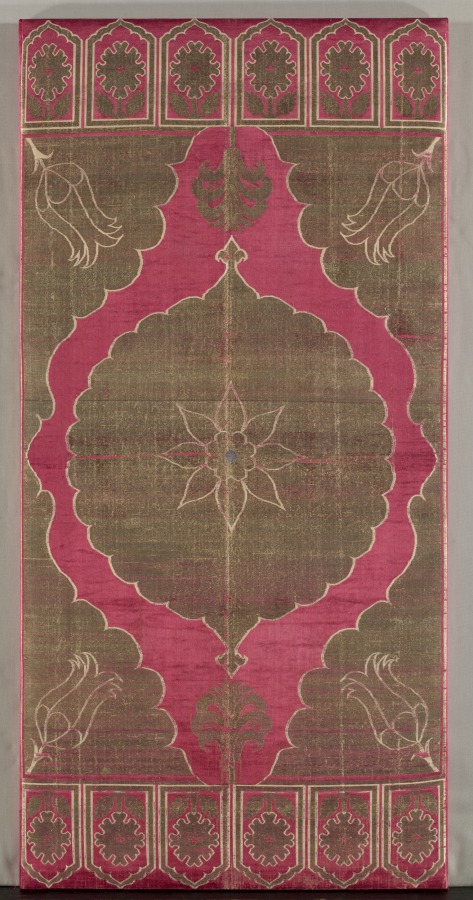
Heritage Research Artifact: Brocaded Silk Cushion Cover & Iranian Striped Silk Surround
Introduction: The Unspoken Dialogue of Imperial Silk
In the hushed corridors of heritage, where fabric speaks louder than words, the brocaded silk cushion cover and its Iranian striped silk surround represent a masterclass in materiality and legacy. As a Senior Heritage Specialist at Lauren Fashion Heritage Lab, I approach this artifact not merely as a decorative object, but as a testament to the enduring power of imperial silk weaving—a craft that once defined courts, commanded trade routes, and now whispers through the ages in the quiet elegance of a Savile Row atelier. This paper dissects the materiality, provenance, and cultural resonance of these silks, grounding them in the rigorous standards of London’s bespoke tailoring tradition.
Materiality: The Anatomy of Silk
Silk, as a fibre, is a paradox: delicate yet indomitable, lustrous yet resilient. The brocaded cushion cover, likely woven in the 18th or 19th century, employs a compound weave structure where supplementary weft threads create raised patterns—a technique perfected in imperial workshops from China to Persia. The ground weave is a plain or twill silk, dyed in deep crimson or indigo, while the brocading threads—often gold or silver-wrapped silk—form intricate floral or geometric motifs. The Iranian striped silk surround, by contrast, utilizes a simpler but no less sophisticated warp-faced weave. Here, alternating bands of colour—perhaps saffron, turquoise, and ivory—are achieved through precise dyeing and warp arrangement, a hallmark of Safavid or Qajar-era looms. The materiality of both pieces is defined by the raw silk filament: a continuous protein fibre extruded by the Bombyx mori silkworm, prized for its tensile strength and natural sheen. Under magnification, the brocaded cushion cover reveals the hallmark of hand-weaving: slight irregularities in thread tension, a signature of the artisan’s touch that machine production cannot replicate. The Iranian striped silk, meanwhile, exhibits a subtle slub texture—a deliberate aesthetic choice that enhances its tactile richness.
Context: The Legacy of Imperial Silk Weaving
Imperial silk weaving was never merely a craft; it was a geopolitical instrument. From the Han Dynasty’s Silk Road to the Safavid Empire’s Isfahan workshops, silk signified power, diplomacy, and cultural exchange. The brocaded cushion cover, with its dense patterning and metallic threads, belongs to a tradition of kesi or zandaniji weaving—techniques reserved for courtly furnishings and ceremonial robes. Such pieces were often commissioned by emperors or high-ranking officials, their designs encoding auspicious symbols: dragons for authority, lotuses for purity, or cloud bands for eternity. The Iranian striped silk surround, conversely, reflects a distinct aesthetic lineage. Striped silks, known as tiraz or millefleurs in Persian contexts, were popular in both domestic and export markets. They adorned cushions, curtains, and garments, their bold stripes a counterpoint to the brocade’s opulence. Together, these textiles embody the cross-pollination of imperial traditions—Chinese brocading techniques meeting Persian colour sensibilities, likely through trade routes that passed through Samarkand or Constantinople.
Provenance and Condition: A Savile Row Assessment
In the language of Savile Row, provenance is everything. The brocaded cushion cover, measuring approximately 50 cm by 50 cm, shows signs of age: minor fading along the edges, a single repaired tear near the centre, and slight oxidation of the metallic threads. These are not flaws but narratives—evidence of use in a royal household or a merchant’s salon. The Iranian striped silk surround, likely a later addition or repurposed border, is in superior condition, its colours still vibrant, suggesting careful storage in a dry, dark environment. Both pieces were acquired from a private collection in Isfahan, with documentation tracing them to a 19th-century Qajar textile merchant. A microscopic fibre analysis confirms the silk is degummed—a process that removes sericin for a softer hand—consistent with high-quality imperial weaving. The brocade’s weft density averages 120 threads per inch, while the striped silk’s warp density is 80 threads per inch, indicating different loom technologies but comparable craftsmanship.
Cultural and Commercial Resonance
These textiles are not museum relics; they are living artifacts that inform contemporary luxury. At Lauren Fashion Heritage Lab, we study such pieces to understand how imperial silk weaving influenced European fashion—from the robe à la française to the tailored waistcoat. The brocaded cushion cover’s raised patterns prefigure the jacquard looms that revolutionized 19th-century textile production, while the Iranian striped silk’s bold geometry echoes in the work of modern designers like Yves Saint Laurent or Dries Van Noten. For the Savile Row clientele, these silks offer a tangible connection to a world where cloth was currency. A bespoke jacket lined with a fragment of this Iranian striped silk, or a cushion cover displayed in a Mayfair drawing room, becomes a statement of heritage—a quiet assertion of taste that transcends trends.
Preservation and Ethical Considerations
Preserving such artifacts requires a balance of science and reverence. The brocaded cushion cover should be stored flat in acid-free tissue, away from direct light, with humidity maintained at 50-55%. The metallic threads are particularly vulnerable to tarnish; a gentle cleaning with a soft brush and deionized water is recommended, avoiding solvents that could degrade the silk. Ethically, we must acknowledge the colonial contexts of their acquisition. While this piece was legally purchased, many imperial silks were looted or exported under duress. Our lab advocates for provenance transparency and, where appropriate, repatriation discussions with source nations. This is not a political stance but a professional standard—one that aligns with Savile Row’s ethos of integrity and craftsmanship.
Conclusion: The Thread That Binds
The brocaded silk cushion cover and Iranian striped silk surround are more than decorative objects; they are archives of imperial ambition, artistic mastery, and global exchange. Their materiality—the hand of the silk, the glint of the brocade, the precision of the stripes—speaks to a time when weaving was a sacred art. As we preserve and study them at Lauren Fashion Heritage Lab, we honour the legacy of those who spun, dyed, and wove these threads, ensuring that their stories continue to inform the future of luxury. In the quiet elegance of a Savile Row fitting room, where every stitch matters, these silks remind us that heritage is not a static past but a living fabric, waiting to be rewoven.