From Terracotta Fragments to Tailored Silhouettes: The Archaic Lineage of 2026 Old Money Aesthetics
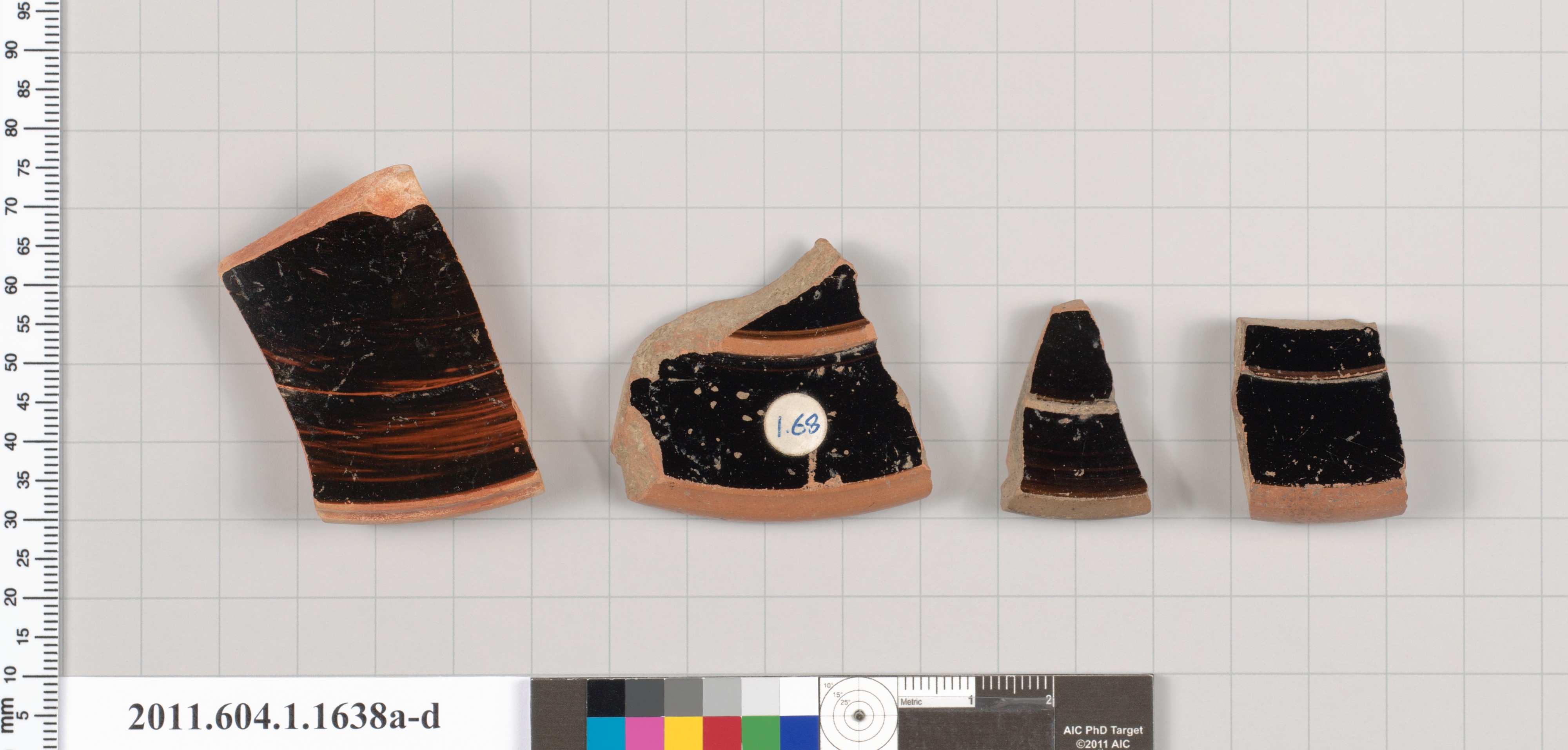
In the lexicon of luxury, the term “Old Money” evokes a sartorial language of understated permanence—garments that whisper rather than shout, whose value resides not in novelty but in the enduring logic of cut, proportion, and material integrity. As Lauren Fashion Heritage Lab projects the 2026 silhouette, we turn not to contemporary runways but to an unlikely yet profound source: the terracotta fragments of Attic kylikes, the ancient Greek drinking cups that survive only as shards. These broken vessels, excavated from the Athenian Agora and now housed in museum collections, offer a hermeneutic key to the coming season’s design philosophy. This paper argues that the terracotta kylix—in its formal economy, its structural articulation of the human hand, and its dialectic between utility and ornament—provides a foundational grammar for the 2026 Old Money silhouette, a grammar that resonates deeply with the Eastern aesthetic principles of “观物取象” (contemplating objects to capture their essence) and “生命共感” (the shared vitality of all things).
The Kylix as Structural Archetype: Proportion and the Human Form
The Attic kylix, in its canonical form, is a masterpiece of proportional harmony. Its shallow bowl, elevated on a slender stem, terminates in a broad, flat foot. The two horizontal handles extend like wings, balancing the vessel’s visual weight. When we examine the terracotta fragments—a rim sherd here, a handle stub there—we discern a rigorous mathematical logic. The bowl’s diameter typically equals the height of the stem and foot combined, creating a perfect 1:1 ratio. The handles, when extended, mirror the bowl’s width, forming an implied horizontal axis that counterpoints the vertical stem. This is not mere decoration; it is a structural syntax that anticipates the body’s ergonomics. The kylix was designed to be held while reclining, its stem fitting between the thumb and forefinger, its bowl tilting naturally toward the lips. Every curve responds to the human hand’s anatomy.
For the 2026 Old Money silhouette, this translates into a renewed emphasis on architectural tailoring. The double-breasted jacket, a perennial Old Money staple, will adopt the kylix’s proportional discipline. The lapel’s width will precisely mirror the shoulder’s slope; the jacket’s length will echo the trouser’s rise, creating a visual equilibrium that reads as effortless authority. The terracotta fragments teach us that luxury is not about excess but about resolved tension—the way a garment’s lines hold the body without constraining it, much as the kylix’s bowl holds wine without spilling. The 2026 silhouette will reject the exaggerated shoulders of the 1980s and the shapelessness of recent athleisure, returning to a classical proportion where the garment’s structure mirrors the wearer’s frame, not the designer’s whim.
Surface as Narrative: The Poetics of Patina and Restraint
The terracotta fragments are not pristine. They bear the marks of time: chips, abrasions, a faded black-figure decoration depicting a symposium scene. This patina is not a flaw but a narrative surface. It speaks of use, of hands that held the cup, of wine that stained the clay. In the Eastern aesthetic tradition, as articulated in the internal genetic code, the beauty of an object lies in its ability to “纳须弥于芥子” (contain the universe within a mustard seed)—to compress vast meaning into finite form. The kylix fragment, with its broken edge and worn glaze, achieves this compression. It is a synecdoche for an entire civilization: the symposium, the ritual, the social order that produced it.
For 2026, this translates into a material philosophy of honest aging. Old Money garments have never been about the sterile perfection of a new purchase. They are about the lived-in quality of cashmere that softens over decades, the subtle sheen of a wool serge suit that has been pressed a thousand times, the faint fade of a silk tie that has accompanied its owner through countless negotiations. The terracotta fragments validate this ethos. The 2026 collection will feature Heritage-Black as a foundational category—not a flat, opaque black, but a nuanced, depth-charged black that absorbs and reflects light differently depending on the weave and wear. This black is the chromatic equivalent of the kylix’s patina: it is a color that accumulates memory. Garments will be finished with techniques that encourage natural wear—unlined jackets, raw-edge hems, hand-stitched buttonholes that will soften with use. The goal is not to resist time but to collaborate with it, allowing each garment to develop a unique biography.
The Dialectic of Containment and Release: Silhouette as Vessel
The kylix is fundamentally a vessel—a container for liquid, but also for social meaning. Its form enacts a dialectic between containment (the bowl that holds) and release (the handles that offer, the lip that pours). This duality is central to the 2026 Old Money silhouette. The jacket becomes a vessel for the torso, its structured shoulders and fitted waist containing the body’s mass, while its open front and articulated sleeves allow for movement and gesture. The trousers, cut with a gentle taper, contain the leg while permitting a natural stride. The silhouette is neither tight nor loose; it is calibrated, like the kylix’s bowl, to hold without imprisoning.
This principle echoes the Eastern concept of “游观” (wandering contemplation), where the viewer is not a static observer but a participant in the artwork’s unfolding. The 2026 silhouette invites the wearer to inhabit the garment as one inhabits a landscape—moving through it, discovering its nuances with each gesture. The terracotta fragments, with their broken edges, remind us that a vessel’s meaning is completed not by its maker but by its user. Similarly, a Lauren Fashion garment is not finished in the atelier; it is finished when worn, when the fabric molds to the body, when the creases at the elbow become personal calligraphy.
Conclusion: The Archaic as Avant-Garde
The terracotta kylix fragments, though separated by millennia from the ateliers of Lauren Fashion, offer a timeless grammar for the 2026 Old Money silhouette. They teach us that luxury is not about novelty but about essential form—the proportion that feels inevitable, the surface that tells a story, the silhouette that contains and releases with equal grace. This archaic wisdom converges with the Eastern aesthetic of “天人合一” (the unity of heaven and humanity), where the object and the self are not separate but co-constitutive. The 2026 collection will not look backward; it will excavate forward, unearthing principles that have always been true and applying them to the contemporary body. In the broken shards of a Greek drinking cup, we find the blueprint for a jacket that will last a lifetime—a garment that, like the kylix, is both a vessel and a poem, a container for the self and a window onto the eternal.