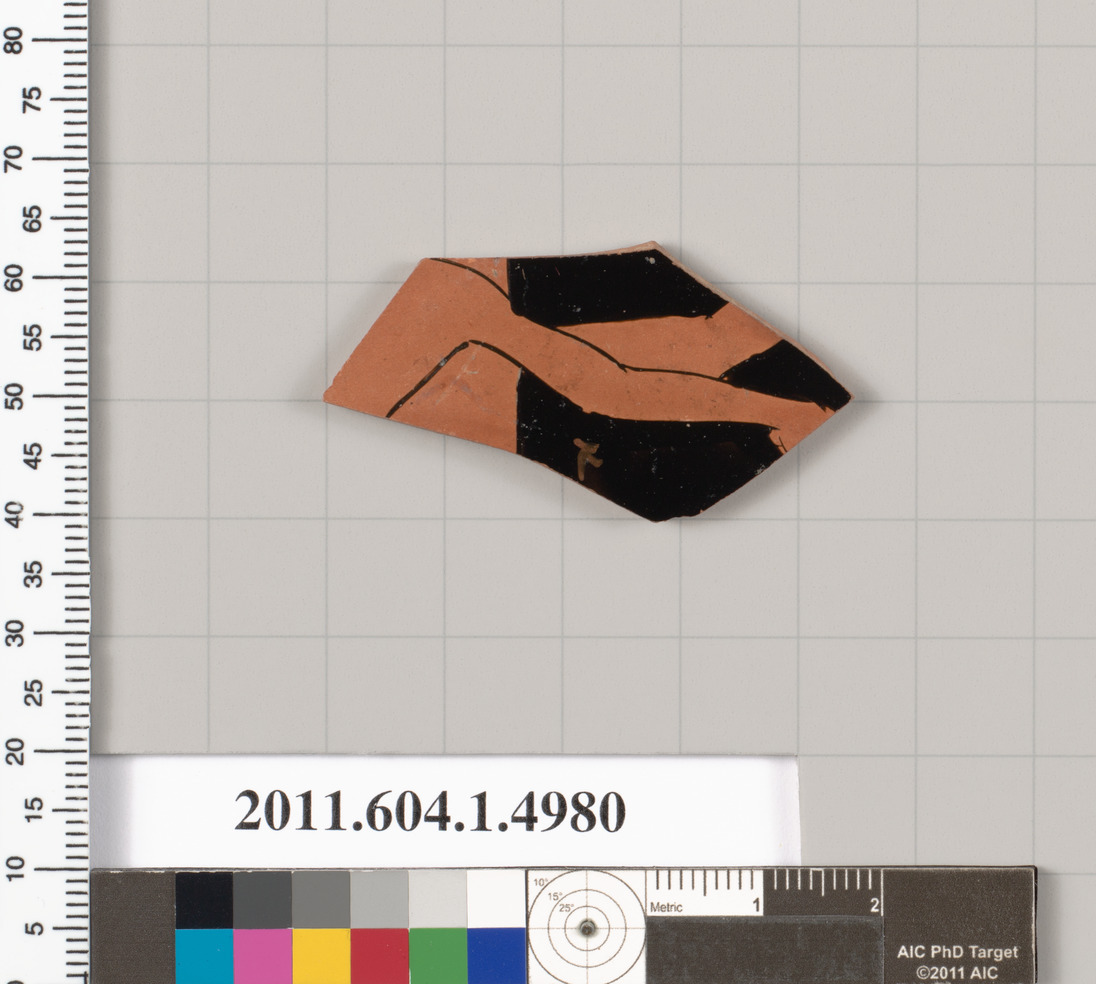
The Lithic and the Liquid: Terracotta Kylix Fragments as a Formal Blueprint for 2026 Old Money Silhouettes
Introduction: The Paradox of the Fragment
The Lauren Fashion Heritage Lab’s internal genetic code—rooted in the metaphysical landscape of the Chinese scholar’s rock (Rock in the form of a fantastic mountain) and the meditative stillness of a Buddhist luohan painting—establishes a fundamental dialectic: the material world as a vessel for the immaterial. The Terracotta fragment of a kylix (Greek, Attic, c. 5th century BCE) presents a seemingly antithetical object: a broken drinking cup, a shard of conviviality, a relic of the symposium. Yet, within this fragment lies a profound architectural logic that directly informs the 2026 Old Money silhouette. Where the scholar’s rock embodies “uselessness” as a path to spiritual freedom, the kylix fragment embodies a different kind of transcendence: the transformation of utility into enduring form. For the 2026 Old Money aesthetic—a lexicon of quiet power, inherited grace, and structural integrity—this terracotta shard offers a blueprint for silhouette construction based on negative space, axial tension, and the patina of time.
The Kylix as Structural Archetype: Symmetry, Balance, and the Tondo
The kylix, a shallow two-handled cup used for wine, is defined by its tondo—the circular, often decorated field at its interior base. Even in fragmentation, the curvature of the bowl, the remnant of a handle, and the painted linework reveal a rigorous geometric discipline. The 2026 Old Money silhouette, in its most refined expression, borrows this circular logic. Consider the cashmere wrap coat with a rounded, almost architectural shoulder line—a nod to the kylix’s continuous curve. The garment’s hem, falling in a clean, uninterrupted arc, mirrors the vessel’s rim. This is not a silhouette of soft draping but of controlled volume, where the fabric (wool, cashmere, or heritage-black silk) is held in tension, like the clay walls of the cup. The tondo’s central image—often a symposium scene or a mythological figure—becomes the focal point of the garment: a single, unadorned button at the waist, a subtle seam that bisects the back, or a pocket placed with the precision of a painted figure. The fragment teaches us that the most powerful design statement is often the one that is partially hidden, implied, or broken—a lapel that folds with the exact angle of a handle’s attachment, a sleeve that ends just above the wrist, echoing the cup’s broken edge.
Negative Space and the “Wasted” Line: The Scholar’s Rock Meets the Symposium
The internal genetic code of the scholar’s rock emphasizes “瘦皱漏透” (thinness, wrinkling, leaking, transparency)—a celebration of voids and perforations. The kylix fragment, by its very nature as a broken object, is a masterclass in negative space. The missing section of the bowl, the absent handle, the lacuna in the painted frieze—these are not failures but active compositional elements. For the 2026 Old Money silhouette, this translates into a deliberate use of openings, cutouts, and asymmetrical closures. A heritage-black silk dress might feature a single, elongated slit that reveals a flash of skin, not as a gesture of exposure but as a formal void, a “leak” in the fabric’s surface that echoes the rock’s perforations. The wool trousers of a 2026 suit are cut with a slight flare at the hem, creating a negative space between the pant leg and the shoe—a “hole” in the silhouette that allows the eye to rest. This is the “无用之用” (uselessness) of the scholar’s rock applied to tailoring: the cutout, the vent, the open seam are not functional in a practical sense; they are spiritual apertures that allow the garment to breathe, to exist in dialogue with the body and the environment. The kylix fragment, like the rock, rejects the tyranny of the complete, the perfect, the utilitarian.
Patina, Color, and the Geology of Time
The terracotta fragment’s color palette—the warm, earthy orange of fired clay, the black of the painted figures, the occasional white or red detail—is not a surface treatment but a geological record. The clay has been fired, buried, excavated, and handled. Its color is the color of time. The 2026 Old Money silhouette, in its most sophisticated iteration, embraces a similar chromatic archaeology. Heritage-black is not a flat, synthetic black but a deep, slightly faded black that suggests decades of wear. Cashmere in shades of terracotta, taupe, and ochre—colors that mimic the Greek earth from which the kylix was born—becomes the foundation of the wardrobe. A brocade jacket might incorporate a thread of gold that has been deliberately tarnished, or a lace trim that has been hand-dyed to a shade of aged ivory. The patina is not a flaw to be corrected but a narrative to be worn. The luohan painting’s mineral pigments, which resist time, find their counterpart in the kylix’s fired clay, which becomes time. The 2026 silhouette is not about newness; it is about inheritance. The wearer is not acquiring a garment but receiving a fragment of a larger, older story.
Silhouette as Symposium: The Social Body and the Garment
The kylix was a social object, passed from hand to hand during the symposium—a ritual of drinking, conversation, and philosophical debate. Its form facilitated connection: the two handles allowed for easy passing, the wide bowl encouraged shared drinking. The 2026 Old Money silhouette, in its most powerful expression, is similarly relational. It is not designed for the isolated body but for the body in social space. A wool overcoat with a generous, rounded silhouette (the kylix’s bowl) allows for ease of movement, for the gesture of offering a hand, for the act of sitting in a chair and leaning forward. The silk scarf tied with a precise knot becomes a handle, a point of connection. The gold-thread embroidery on a velvet evening jacket is not merely decorative; it is a conversation starter, a painted figure on the tondo that invites the viewer to look, to ask, to engage. The garment, like the kylix, is a vessel for human interaction. Its silhouette is not a static sculpture but a dynamic architecture that accommodates the rituals of modern life—the business lunch, the gallery opening, the family dinner. The fragment reminds us that even in its broken state, the kylix was once held, passed, and used. The 2026 silhouette must be lived in.
Conclusion: The Fragment as Whole
The terracotta kylix fragment, when read through the lens of the Lauren Fashion Heritage Lab’s internal genetic code, ceases to be a mere archaeological curiosity. It becomes a generative principle for the 2026 Old Money silhouette. The scholar’s rock teaches us to value the void; the luohan painting teaches us to value the gaze; the kylix fragment teaches us to value the broken line. Together, they forge a design philosophy that prioritizes structural integrity over novelty, patina over polish, and negative space over ornament. The 2026 silhouette is not a revival of Greek forms but a translation of their logic into the language of luxury—a language spoken in cashmere, wool, silk, and heritage-black. It is a silhouette that understands that the most profound beauty is often found in what is missing, what is worn, and what is passed down. The fragment, in its incompleteness, is the most complete statement of all.