The Dialectics of Stillness: Terracotta Fragments and the Architecture of Old Money Silhouettes
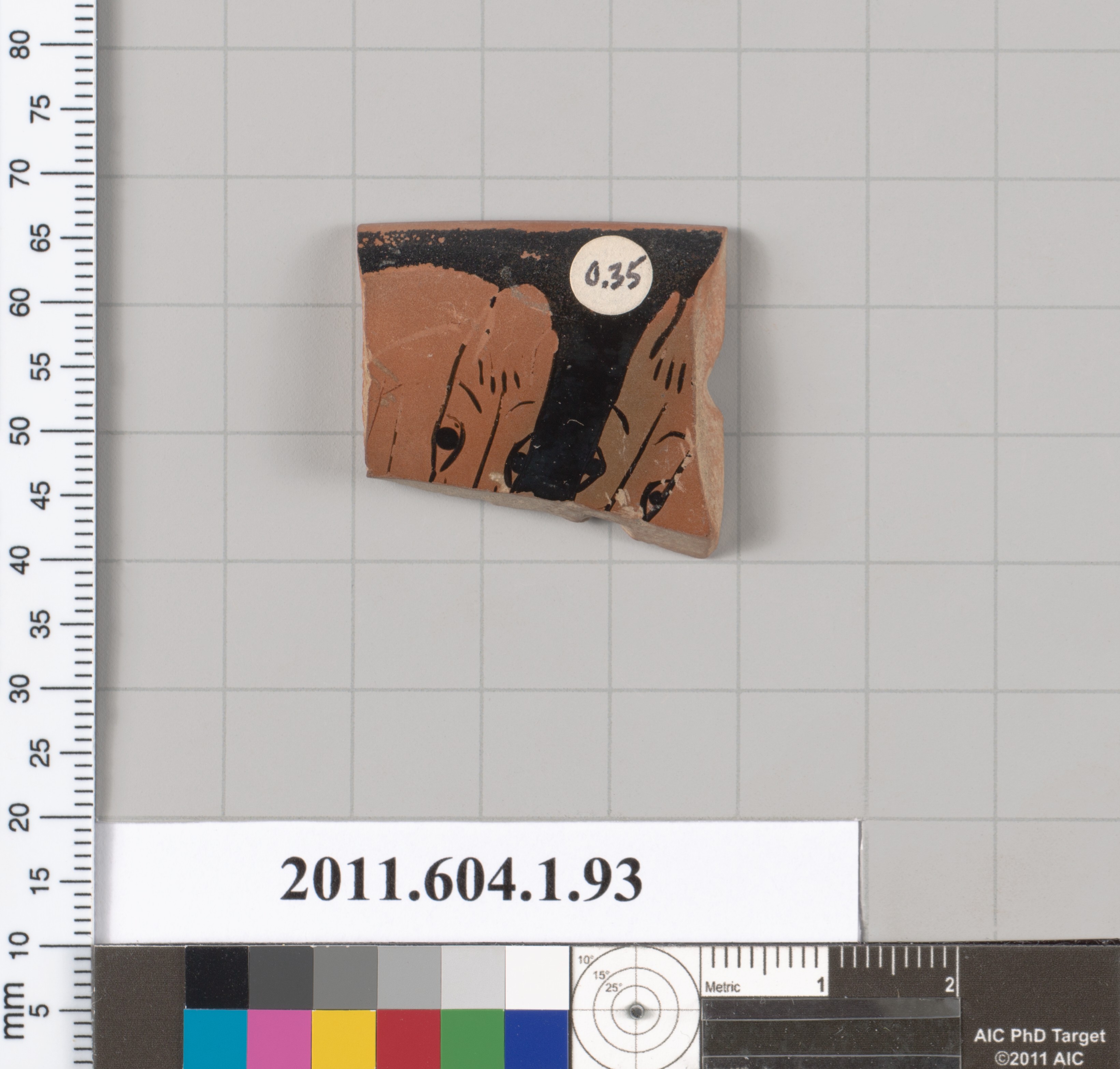
In the Lauren Fashion Heritage Lab, the synthesis of internal archives with external museum artifacts reveals a recurring truth: the most enduring expressions of luxury are not those that shout, but those that whisper across centuries. The terracotta rim fragment of a Greek Attic kylix, a humble drinking cup from the 5th century BCE, stands as a profound counterpoint to the internal genetic code’s meditation on Pilgrim Sudhana and the Harpist. Where those works explore a “deeply condensed aesthetic of stillness” through religious introspection and secular divinity, this ceramic shard embodies a different stillness—one born of utility, ritual, and the quiet dignity of the everyday. For the 2026 Old Money silhouette, this artifact offers a blueprint for a restrained, architectural elegance that transcends transient trends, rooted in the material honesty and compositional gravity of classical antiquity.
Materiality as Moral Philosophy: The Terracotta Imperative
The kylix fragment, with its warm, earthen hue and unglazed surface, speaks to a pre-industrial ethos of material authenticity. Unlike the polished perfection of later porcelain or the gilded opulence of Baroque metalwork, terracotta is unapologetically of the earth. Its color is not applied but inherent—a spectrum of ochre, sienna, and burnt umber that results from iron oxides in the clay and the vagaries of the kiln. This is not a color that performs; it is a color that is. For the Old Money aesthetic, which prizes lineage and substance over spectacle, this translates into a wardrobe built on fabrics that declare their origins: undyed cashmere, raw silk, woolen tweeds that retain the lanolin-rich scent of the Scottish Highlands. The 2026 silhouette will reject synthetic sheens in favor of matte finishes, where light is absorbed rather than reflected, creating a visual stillness that mirrors the kylix’s quiet presence.
Furthermore, the fragment’s broken edge—a jagged, three-dimensional map of its history—introduces the concept of honorable wear. In Old Money circles, a garment’s patina is its biography. A cashmere blazer with a mended elbow or a linen shirt softened by decades of laundering carries more cultural capital than a pristine, off-the-rack counterpart. The terracotta shard teaches us that imperfection is not a flaw but a narrative device. The 2026 silhouette will embrace this through deliberate construction details: hand-stitched seams that allow for future repairs, reinforced elbows and knees, and fabrics that develop a desirable “hand” over time. This is not the distressed aesthetic of streetwear, but a quiet acceptance of mortality and use—a philosophical stance that aligns with the Stoic undertones of Old Money identity.
Compositional Gravity: The Architecture of the Kylix and the Silhouette
The kylix’s form—a shallow bowl on a slender stem, with two horizontal handles—is a masterclass in dynamic equilibrium. Its rim fragment, though incomplete, reveals the vessel’s original logic: a wide, open mouth that invites communal drinking, balanced by a narrow, stable base. The handles, often decorated with simple palmettes or geometric bands, create a visual tension between the horizontal and vertical axes. This is not the static symmetry of a temple pediment, but a living balance that anticipates movement—the hand reaching, the cup tilting, the wine flowing. For the 2026 silhouette, this translates into a new emphasis on architectural tailoring that borrows from classical proportion.
Consider the double-breasted blazer as a direct descendant of the kylix’s structure. The wide lapels echo the vessel’s rim, framing the face and drawing the eye upward. The waist suppression creates a narrow “stem,” while the hem—whether cropped or extended—grounds the garment like the kylix’s foot. The buttons, often arranged in a 6×2 or 4×1 configuration, function as the handles: small, repetitive accents that break the vertical line and introduce a subtle rhythm. In 2026, this silhouette will be rendered in heavy, felted wools or double-faced cashmere, fabrics that hold their shape like fired clay. The shoulders will be slightly extended but unpadded, creating a soft, rounded cap that recalls the kylix’s curved profile—a nod to the Greek ideal of the kouros, the youthful male figure in a state of poised readiness.
For women’s wear, the kylix informs the A-line coat and the column dress. The coat’s wide, bell-like silhouette, often cut from a single length of fabric, mimics the kylix’s bowl. Its lack of waist definition creates a continuous, unbroken line from shoulder to hem, emphasizing volume and presence over the body’s contours. This is a silhouette that commands space without revealing its occupant—a form of inverse seduction that aligns with Old Money’s preference for discretion. The column dress, meanwhile, takes its cue from the kylix’s stem: a narrow, elongated shape that skims the body without clinging, often in a single color (ivory, charcoal, or the earthen tones of the terracotta itself). The hemline, like the kylix’s foot, provides a visual anchor, often weighted with a subtle band of grosgrain or a chain-stitched edge.
Color as Chronology: The Terracotta Palette in 2026
The kylix fragment’s color is not a single hue but a stratigraphy of time. The surface may bear traces of black slip—the Greek melanosis—applied to create contrast in figural scenes, now faded to a ghostly gray. The clay itself may show variations in tone where it was exposed to the kiln’s flame. This is a palette that refuses to be fixed; it is a record of process. For the 2026 Old Money wardrobe, this translates into a color system based on natural dyes and unbleached foundations. The core palette will be drawn from the earth: terracotta, burnt umber, raw sienna, and ivory, accented with the deep, matte black of obsidian or the blue-black of aged indigo. These colors do not compete with the wearer but provide a neutral ground for the play of light and shadow.
This is a radical departure from the “quiet luxury” trend of the early 2020s, which often relied on a narrow range of beige and gray. The terracotta palette introduces warmth and depth, a connection to the Mediterranean landscape that has long been a source of inspiration for Lauren Fashion’s heritage. It is a palette that speaks of sun-baked hillsides, ancient olive groves, and the patina of centuries. In practice, this means a 2026 collection might feature a terracotta cashmere turtleneck paired with a raw silk trouser in unbleached ivory, or a double-faced wool coat in burnt umber over a linen shirt in faded indigo. The effect is not of costumery but of a deep, unspoken knowledge—a sense that the wearer understands the history of these colors, their origins in the earth and the loom.
The Ritual of Dressing: From Kylix to Silhouette
Finally, the kylix fragment reminds us that clothing, like a drinking cup, is an object of ritual. The Greek symposium was not merely a drinking party but a structured social performance, where the kylix was passed from hand to hand, each participant taking a measured sip of wine mixed with water. The vessel’s design—wide enough to share, narrow enough to require a deliberate grip—shaped the rhythm of the event. In the same way, the 2026 Old Money silhouette is designed for a life of ritual: the morning commute, the business lunch, the evening soiree. Each garment is constructed to facilitate a specific mode of being—the blazer that sits perfectly when one leans forward in conversation, the coat that drapes elegantly when one pauses at a doorway, the dress that moves with the body’s natural gait.
This is the deepest lesson of the terracotta fragment: that stillness is not the absence of movement but its containment. The kylix, broken and incomplete, still holds the memory of the hand that held it, the lips that touched its rim. The 2026 silhouette, in its turn, will hold the memory of the body that inhabits it—not as a display of wealth or status, but as a quiet testament to the enduring power of form, material, and time. In the words of the internal genetic code, “the deepest beauty is born of silence and focus.” The terracotta kylix, in its fragmentary state, speaks that language fluently.