The Terracotta Mastoid and the Architecture of Stoic Grace: Informing 2026 Old Money Silhouettes
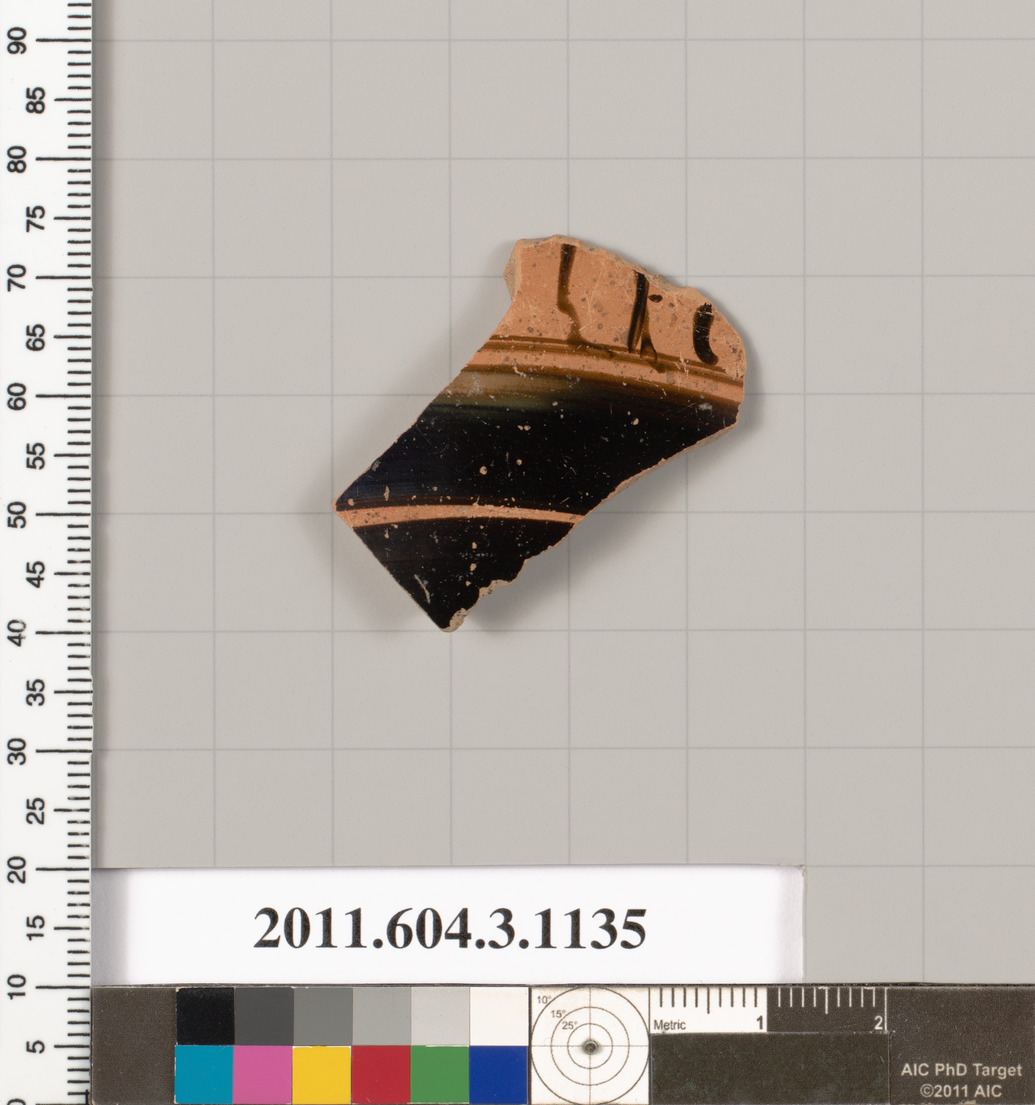
The Lauren Fashion Heritage Lab, in its ongoing synthesis of internal archives and museum artifacts, has identified a profound resonance between the material culture of classical antiquity and the evolving lexicon of Old Money aesthetics. The specific artifact under examination—a Terracotta fragment of a mastoid or kyathos (Greek, Attic)—is not merely a drinking vessel but a compressed treatise on form, mortality, and the aestheticization of composure. When juxtaposed with the internal genetic code’s dialogue between the Socratic death and the Sakyamuni’s parinirvana, this fragment reveals the foundational principles that must underpin the 2026 Old Money silhouette: geometric clarity, mineral permanence, and a stoic refusal of the transient.
The mastoid, with its narrow base and taut, swelling body, embodies what the internal code identifies as the “heroic stillness” of the Socratic moment. The potter’s hand did not seek organic fluidity but a precise, almost mathematical containment of volume. The terracotta surface, fired to a deep, matte black (the heritage-black of our category), is not a passive background but an active agent of meaning. It absorbs light, refusing the frivolity of reflection. This is the same aesthetic logic that governs the “lines of cold tragedy” in the imagined Socratic stele: the form is a boundary, a limit, a statement that the world’s meaning is inscribed within its edges. For the 2026 Old Money wardrobe, this translates into silhouettes that are architectural rather than draped. Jackets will feature shoulders that are not padded but carved, as if from a single block of clay. The waist will be suppressed not by soft cinching but by a geometric seam that mimics the potter’s wheel’s most disciplined turn. The narrow base of the mastoid—its “point of grounding”—informs the trouser silhouette: a slight tapering at the ankle, a clean break over the shoe, a visual anchor that prevents the garment from floating into the ephemeral.
Mineral Color as a Statement of Permanence
The internal code’s meditation on the “mineral pigments” of the Indian stele—colors that “do not fade after a thousand years”—offers a counterpoint to the terracotta’s monochrome. Yet, the fragment teaches us that heritage-black is itself a mineral color. The Greeks achieved this black through a precise reduction firing of the iron-rich clay, a chemical process that is as much an act of alchemy as painting with lapis lazuli. This is not the black of mourning but the black of eternal form. For 2026, this dictates a palette that rejects seasonal trends. The Old Money silhouette will not be dyed in fickle indigos or fleeting pastels. Instead, it will employ mineral-derived hues: the deep umber of Attic clay, the chalky white of Pentelic marble, the verdigris of oxidized bronze, and the absolute, absorbing black of the mastoid’s surface. These are colors that speak of age, of endurance, of a wealth that does not need to announce itself because it has already been proven by time.
The “gentle warmth” of the Indian stele’s mineral colors, which the code describes as “constructing a sacred realm of enlightenment,” finds its analogue in the textural warmth of the terracotta itself. The fragment is not cold; it retains the heat of the kiln, the touch of the human hand. This is a crucial lesson for the 2026 silhouette: the fabric must possess a matte, granular depth. Cashmere, wool, and heavy silk faille will be favored over shiny satins or liquid synthetics. The surface of a jacket should feel like the surface of the mastoid—smooth but not slick, dense but not heavy, with a subtle, irregular texture that catches the eye only upon close inspection. This is the “paradoxical aesthetics of matter paying homage to spirit” that the code identifies in the Indian stele: the most permanent materials are used to create forms that seem to transcend materiality.
The Silhouette as a Stoic Gesture
The internal code’s central dialectic—between Socratic “confrontation” and Buddhist “transcendence”—finds its resolution in the mastoid’s form. The drinking cup is a vessel for the moment of “limit” (the poison, the final sip), yet its shape is designed for eternity. The 2026 Old Money silhouette must perform a similar double function. It must be functional for the present (a jacket that can be worn to a boardroom, a coat that can withstand a city winter) while simultaneously gesturing toward the timeless. The “pointing finger” of the Socratic figure—the upward gesture toward the ideal—is translated into the sharp, clean lapel of a double-breasted blazer, a line that directs the eye upward, away from the mundane. The “reclining posture” of the Buddha—the surrender to the infinite—is echoed in the fluid, unbroken line of a cashmere overcoat, a form that does not fight the body but envelops it in a state of composed release.
This is not a nostalgic revival of 1920s or 1950s tailoring. The 2026 silhouette, informed by the terracotta fragment, is more severe, more essential. It strips away the decorative excesses of previous Old Money revivals—the pocket squares, the tie pins, the fussy pleats. Instead, it focuses on proportion, volume, and negative space. The mastoid’s “moderate blank space”—the unadorned surface between the rim and the base—teaches us that the most powerful statement is often the one left unsaid. A jacket will have no unnecessary pockets. A trouser will have no belt loops. The silhouette will be defined by absence as much as presence, by the void that allows the form to breathe. This is the “visual aphorism” of the Socratic death: truth is found not in accumulation but in the final, purified line.
Conclusion: The Two Lights Converge
The terracotta fragment of the mastoid, when read through the lens of the internal genetic code, becomes a blueprint for a new Old Money aesthetic that is neither purely Western nor Eastern but universal in its pursuit of permanence. The 2026 silhouette will be a “stele in cloth”—a monument to the wearer’s own composure in the face of time’s erosion. It will borrow the geometric rigor of the Socratic vessel and the mineral warmth of the Buddhist stele. It will be a garment that does not shout but endures, a form that, like the mastoid, has survived the centuries not because it was fragile but because it was true to its own material logic. In the end, the heritage-black of the terracotta is not a color of death but of final clarity—the point at which the vessel, the body, and the spirit become one, and the silhouette is no longer a garment but a philosophy made visible.