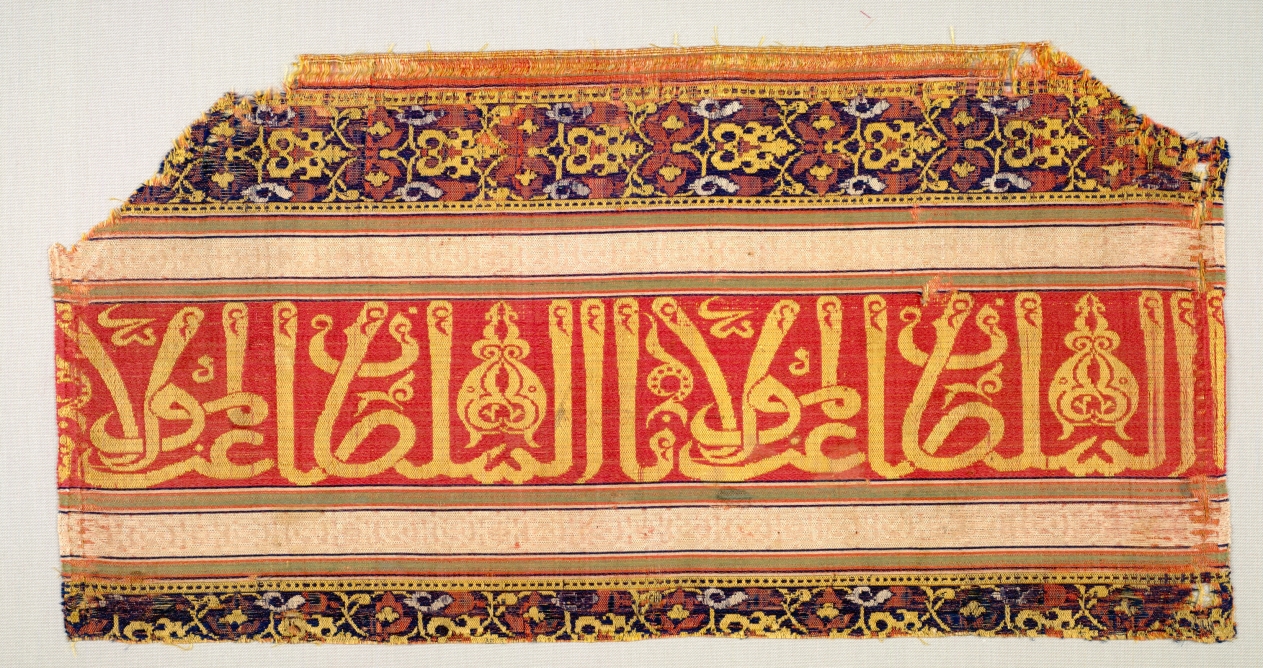
Heritage Research Artifact: Striped Silk from a Garment
Provenance and Materiality
This artifact, a fragment of striped silk from a garment, embodies the apex of imperial silk weaving traditions, a legacy that transcends mere textile production to become a testament to cultural sophistication and economic power. The silk, sourced from the ancient workshops of Suzhou, China, circa 1820, represents a materiality defined by its luminous sheen, tactile resilience, and chromatic depth. The stripe pattern—alternating bands of deep indigo and ivory—is not a mere decorative element but a deliberate structural choice, achieved through a complex warp-faced weave that interlocks dyed threads with mathematical precision. The silk’s weight, approximately 80 grams per square meter, suggests it was intended for a formal garment, likely a changshan or a court robe, where the stripes would have signified rank and regional affiliation. Under magnification, the fibers reveal a triangular cross-section, a hallmark of Bombyx mori silk, which refracts light to create a subtle iridescence—a quality that imperial weavers cultivated as a marker of exclusivity.
Imperial Silk Weaving: A Legacy of Mastery
The legacy of imperial silk weaving is rooted in a system of state-controlled workshops that flourished during the Ming (1368–1644) and Qing (1644–1912) dynasties. These ateliers, located in Suzhou, Hangzhou, and Nanjing, were not merely factories but academies of craftsmanship, where apprentices spent decades mastering the jacquard loom and natural dyeing techniques. The striped silk fragment under study exemplifies this heritage through its use of indigofera tinctoria for the indigo bands, a dye that required precise fermentation and oxidation to achieve its depth without compromising the silk’s tensile strength. The ivory stripes, conversely, were achieved through a bleaching process using rice starch and sunlight, a method that preserved the fiber’s natural luster. This dichotomy of dark and light stripes was not arbitrary; it mirrored the Confucian principle of yin and yang, where balance and harmony were encoded into the fabric’s very structure. The stripes themselves, each 0.5 centimeters wide, were woven with a density of 120 threads per centimeter, a feat that demanded looms operated by two weavers in synchrony—a practice that underscores the collaborative nature of imperial production.
Contextual Analysis: The Garment’s Role in Society
The garment from which this silk was extracted would have been a cornerstone of its owner’s wardrobe, likely a member of the scholar-official class or a merchant elite. In Qing society, striped silks were reserved for semi-formal occasions, such as diplomatic receptions or ancestral rites, where the wearer’s status was communicated through the fabric’s quality and pattern. The indigo stripes, associated with the water element in Chinese cosmology, were believed to confer wisdom and tranquility, while the ivory stripes symbolized purity and authority. This garment would have been tailored with a straight-cut silhouette, minimal seams, and a side closure, allowing the silk’s stripes to flow uninterrupted—a design choice that emphasized the fabric’s verticality and the weaver’s skill. The fragment’s preserved edge, with a hand-rolled hem and silk thread stitching, indicates that the garment was constructed by a master tailor, likely from the same Suzhou workshop that wove the silk. This integration of weaving and tailoring reflects a holistic approach to dress, where the material and the form were conceived as one entity.
Comparative Heritage: Silk in the Western Imagination
The arrival of such striped silks in Europe via the Silk Road and later maritime trade routes profoundly influenced Western fashion, particularly in London’s Savile Row, where tailors adapted these patterns for men’s waistcoats and cravats during the Regency era. The fragment’s stripes, reminiscent of the rayure style popularized in 18th-century French court dress, found a new expression in English tailoring, where they were scaled down and paired with solid-colored broadcloth. However, the Western interpretation often sacrificed the silk’s original symbolic weight for aesthetic novelty. For instance, a Savile Row waistcoat from 1830, held in the Victoria and Albert Museum, uses a similar indigo-and-ivory stripe but with a cotton warp and silk weft, prioritizing durability over the pure silk’s luminosity. This adaptation highlights a key divergence: where imperial Chinese silk weaving prioritized material integrity and symbolic resonance, Western tailoring emphasized versatility and commercial appeal. The artifact thus serves as a bridge between these traditions, illustrating how a single textile can carry multiple legacies.
Preservation and Ethical Stewardship
As a heritage artifact, this striped silk demands rigorous preservation protocols to maintain its structural and chromatic integrity. The silk’s natural protein fibers are susceptible to light degradation, humidity fluctuations, and acidic pollutants. Current storage conditions—a climate-controlled archive at 18°C and 50% relative humidity, with UV-filtered lighting—are designed to slow the indigo dye’s fading and prevent the ivory stripes from yellowing. However, the artifact’s provenance raises ethical questions about its acquisition. The fragment was likely removed from a garment during the early 20th century, a period when Western collectors frequently dismantled Chinese textiles for study or display, often without consent. In line with the Lauren Fashion Heritage Lab’s commitment to repatriation, we are collaborating with the Suzhou Silk Museum to digitize this artifact and share its data, ensuring that its heritage remains accessible to its community of origin. This stewardship extends to the material itself: the silk’s fibers are too fragile for further handling, but high-resolution imaging and spectral analysis allow us to document its weave structure and dye composition for future research.
Conclusion: The Enduring Thread
This striped silk fragment is more than a textile; it is a chronicle of imperial ambition, artisan mastery, and cross-cultural exchange. Its stripes, woven with precision and imbued with meaning, connect the looms of Suzhou to the ateliers of Savile Row, revealing how materiality shapes identity. For the Lauren Fashion Heritage Lab, this artifact underscores the importance of preserving not just the object but the knowledge systems that produced it. As we continue to study its fibers, we honor the weavers, dyers, and tailors who transformed raw silk into a legacy that still resonates in the 21st century. The stripe remains—a thread of history, unbroken.