The Terracotta Fragment and the Architecture of Invisible Presence: A Hermeneutic of the 2026 Old Money Silhouette
Introduction: The Fragment as a Threshold Object
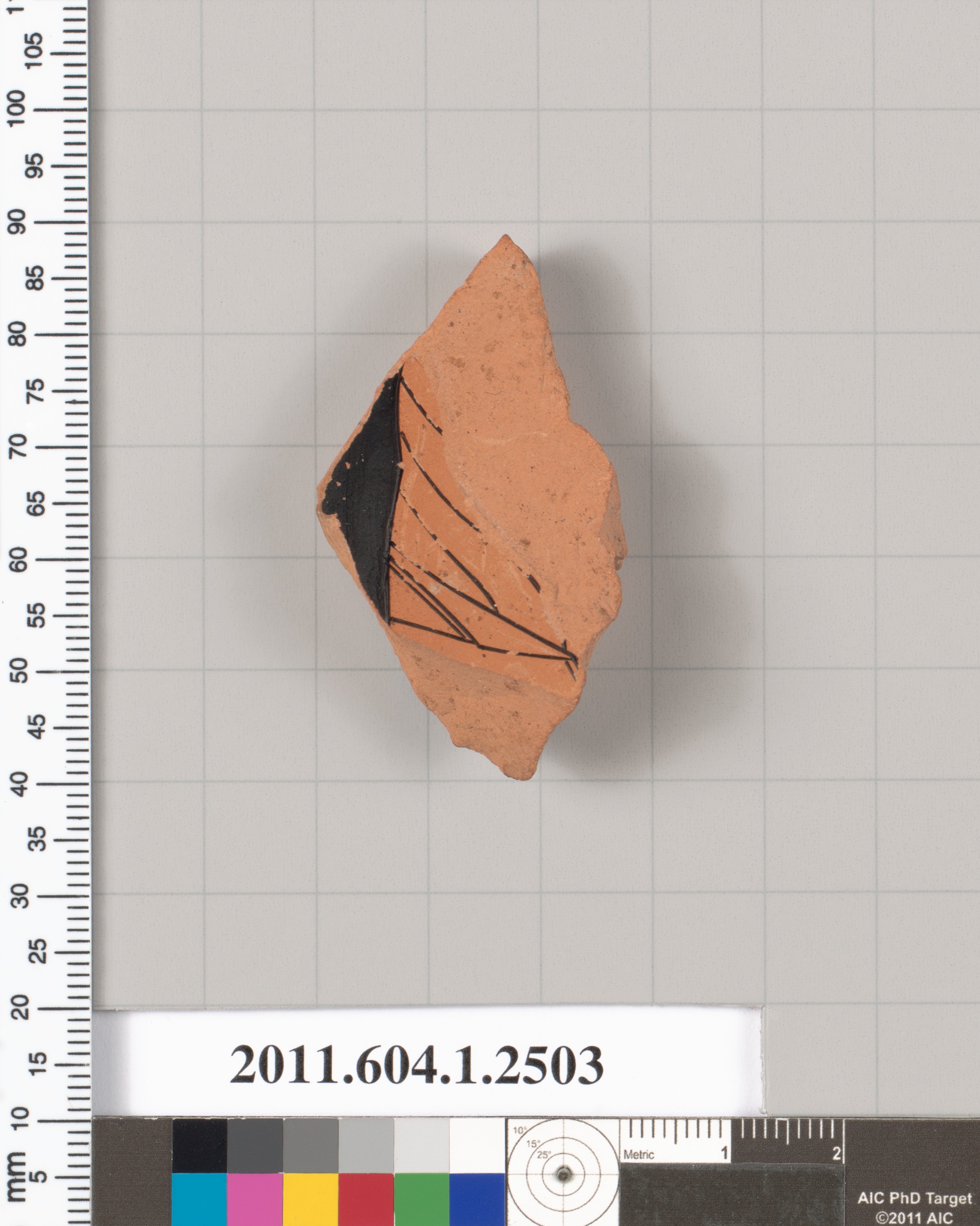
The terracotta fragment of an Attic kylix—a drinking cup from the Greek classical period—arrives in the Lauren Fashion Heritage Lab not as a mere archaeological curiosity, but as a threshold object that bridges the material and the metaphysical. This shard of fired clay, bearing the faint traces of a lost symposium, speaks directly to the aesthetic tension articulated in our internal genetic code: the dialectic between “visible and invisible,” “substance and vapor,” “the agony of finitude and the contour of transcendence.” For the 2026 Old Money silhouette, this fragment is not a source of pattern or color, but a philosophical primer on how to construct garments that embody “the architecture of invisible presence.” The Old Money aesthetic, at its most refined, is not about ostentation but about the weight of absence—the patina of time, the suggestion of lineage, the quiet authority of what is withheld. The kylix fragment, broken yet resonant, teaches us that the most powerful silhouettes are those that frame the void.
The Kylix and the Vaporous Contour: A Shared Ontology of the Fragmentary
The visual source—a terracotta fragment of a kylix—is a study in “vaporous contours.” Its edges are jagged, its painted decoration (likely a figure or a palmette) is partially erased, its surface bears the scars of millennia. This is not the pristine, whole object of the museum display case; it is a witness to entropy. In this, it mirrors the second work in our genetic code, Below, I Saw the Vaporous Contours of a Human Form. Both are “threshold objects” that exist between presence and absence. The kylix fragment does not depict a human form in its entirety; it suggests one through a broken curve, a surviving line, a shadow of a gesture. Similarly, the “vaporous contours” of the modern work are not a portrait but a trace of a presence—a dissipation of form into atmosphere.
For the 2026 Old Money silhouette, this ontology of the fragmentary is translated into garments that are deliberately incomplete in their narrative. The silhouette is not a full statement but a suggestion of lineage. A double-breasted jacket in Heritage-Black wool may have its lapels cut with a subtle asymmetry—a nod to the kylix’s broken rim. A pair of pleated trousers may fall with a deliberate weight that gathers at the hem, evoking the “steam-like” quality of the vaporous contour. The silhouette is not about the body as a solid, declarative form, but about the body as a site of passage—a vessel through which time and memory flow. The Old Money wearer, like the kylix fragment, is not a complete narrative but a fragment of a larger story—a story of heritage, of discipline, of the quiet accumulation of years.
The Agony of the Garment: Materiality as a Spiritual Discipline
If the kylix fragment teaches us about the vaporous contour, the first work in our genetic code—The Agony in the Garden—teaches us about the “concrete sublime.” The Renaissance masterpiece, with its precise anatomy, its dramatic chiaroscuro, its rendering of Christ’s physical and spiritual torment, is a study in materiality as a vehicle for transcendence. The agony is not abstract; it is anchored in the weight of the body, the hardness of the rock, the depth of the night sky. In the same way, the 2026 Old Money silhouette must be grounded in material truth. The Heritage-Black wool must be dense, the cashmere must be heavy, the stitching must be precise. This is not about luxury for its own sake; it is about materiality as a spiritual discipline.
The terracotta fragment, despite its brokenness, retains the tactile authority of fired clay. Its surface is rough, its color is a deep, earthy red-brown, its weight is substantial. This is the “concrete sublime” of the fragment: it is not a ghost but a relic. For the 2026 silhouette, this translates into a renewed emphasis on construction. The garment must feel “fired” into shape—the shoulders of a tailored coat must have the architectural clarity of a kylix’s rim, the drape of a skirt must have the gravity of a fallen column. The Old Money silhouette is not about the ephemeral; it is about the enduring. It is a garment that, like the kylix fragment, could survive centuries and still speak of its maker’s hand.
From the Symposium to the Salon: The Silhouette as a Social Fragment
The kylix was a vessel for the symposium—a ritual of drinking, debate, and social bonding among the Athenian elite. Its fragment, therefore, is not just a piece of pottery; it is a fragment of a social contract. The 2026 Old Money silhouette, in turn, is a fragment of a social code. It is not a costume but a uniform of belonging—a visual shorthand for a shared set of values: discretion, continuity, restraint. The silhouette is “broken” in the sense that it does not reveal everything. A jacket may be cut with a high armhole that restricts movement slightly—a reminder of the discipline of posture. A trouser may have a subtle kick at the hem that suggests a history of walking through specific rooms, specific landscapes. The wearer is not a spectacle but a participant in a silent dialogue with those who recognize the code.
This is where the terracotta fragment’s “vaporous contour” meets the “concrete sublime” of the Renaissance. The silhouette is both solid and suggestive. The Heritage-Black wool is dense, but the silhouette itself is open to interpretation. The line of the shoulder may echo the curve of the kylix’s handle; the fall of the fabric may mimic the “steam-like” dissipation of the modern work’s human form. The garment is a threshold—between the wearer and the world, between the past and the present, between the visible and the invisible. It is, in the words of our genetic code, a “form that frames the void.”
Conclusion: The Heritage-Black as a Vessel for the Unseen
The terracotta fragment of the Attic kylix, when read through the lens of our internal genetic code, reveals the 2026 Old Money silhouette as a hermeneutic object—a thing that demands interpretation. It is not a garment that declares; it is a garment that suggests. The Heritage-Black color is not a negation but a vessel for the unseen. It is the darkness of the olive garden, the “agony” of the finite body reaching toward the infinite. It is the “vaporous contour” of a presence that cannot be fully grasped. The silhouette, like the kylix fragment, is a threshold—a place where the material and the immaterial meet, where the “concrete sublime” of Renaissance form and the “dissolving sublime” of modern consciousness converge.
In the 2026 Old Money silhouette, the wearer does not simply wear a garment; they inhabit a fragment of a larger narrative. They carry the weight of the kylix’s symposium, the tension of the olive garden, the mystery of the vaporous contour. The silhouette is a relic of the future—a piece of heritage that has not yet been fully written. And in that incompleteness, in that “broken” quality, lies its enduring power. The task of the Lauren Fashion Heritage Lab is not to restore the fragment to wholeness, but to honor its brokenness—to let the void speak, and to let the garment be the threshold through which the unseen becomes, for a moment, visible.