← BACK TO ARCHIVES
Silk
Heritage Synthesis: Cushion Cover
Curated on Jun 06, 2026 // Node: LDN-01
The Cushion Cover as a Testament to Heritage Craft: Materiality and the Language of Luxury
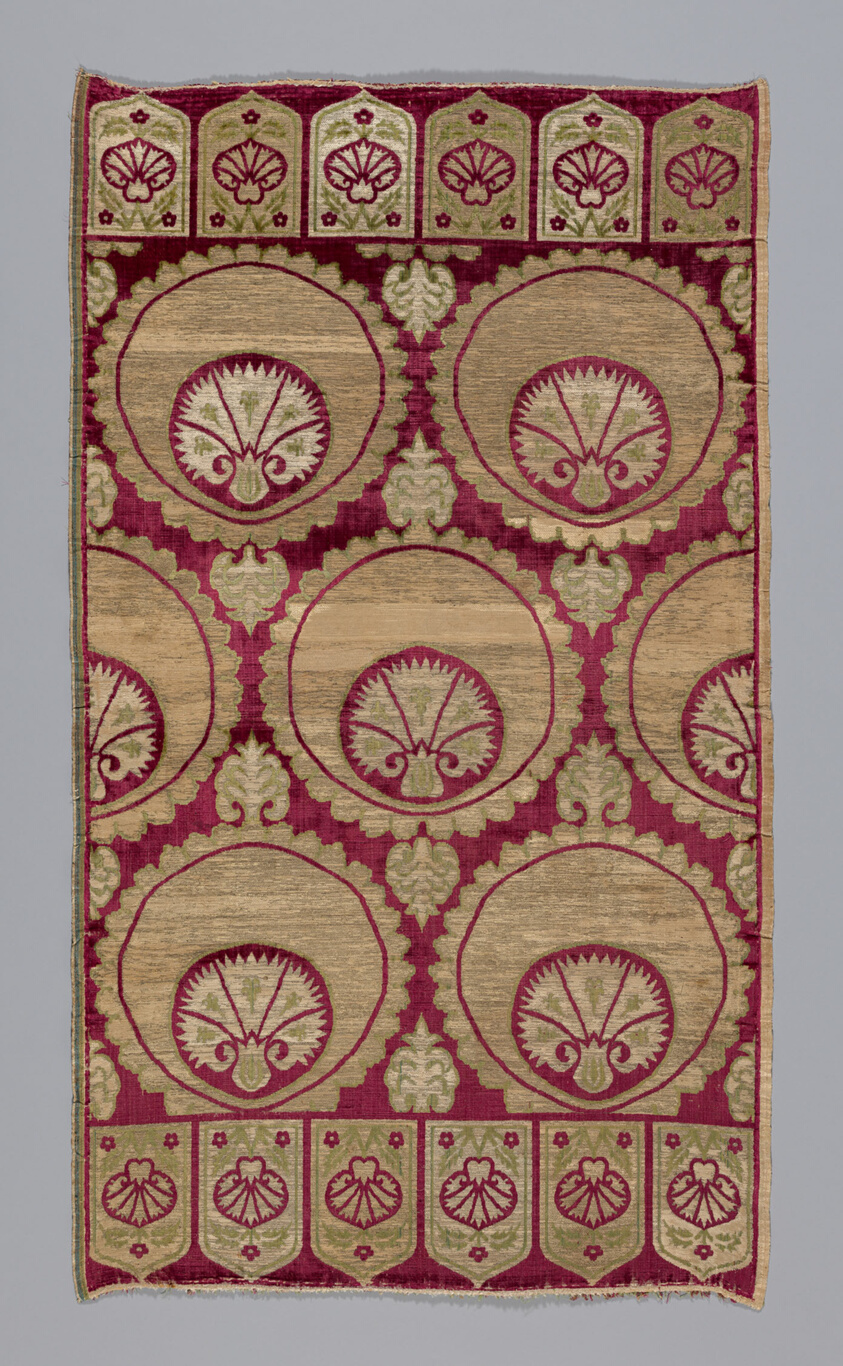
In the rarefied echelons of textile heritage, few objects encapsulate the confluence of technical mastery and aesthetic restraint as profoundly as a cushion cover. Within the Lauren Fashion Heritage Lab, we approach such an artifact not merely as a functional domestic item, but as a concentrated lexicon of material intelligence. This particular cushion cover—a study in warp-float faced satin weave, enhanced by the luminous intervention of “silver” metal-wrapped silk brocading wefts, and further distinguished by cut and voided velvet—offers a singular opportunity to decode the principles of classic silk craftsmanship. It is a document of fluid elegance, where every thread is a deliberate act of artistry.
Materiality: The Triad of Silk, Cotton, and Metal
The foundation of this artifact lies in its material hierarchy. The primary fiber, silk, is the undisputed sovereign of luxury textiles. Its natural triangular prism structure refracts light, creating a depth and luster that synthetic fibers can only approximate. Here, the silk is employed in multiple capacities: as the core of the warp, as the foundation for the satin weave, and as the core for the metal-wrapped threads. This is not a simple silk; it is a silk that has been engineered for both structural integrity and optical brilliance.
The cotton component, while less visually dominant, is equally critical. Cotton provides a necessary counterbalance to silk’s fluidity. It is used in the supplementary binding wefts, ensuring that the intricate brocading and velvet elements remain anchored to the base fabric. This is a lesson in textile engineering: the most opulent surfaces require a humble, resilient substructure. The cotton does not compete with the silk; it serves it, allowing the silk to perform its role as the primary aesthetic agent.
The most arresting material element is the “silver” metal strip. We use the term “silver” advisedly, as historical and heritage contexts often employ silver-gilt or silver-plated copper strips. In this artifact, the metal is wrapped around a silk core. This technique, known as *filé* or *passementerie* wire, is a hallmark of high-status weaving. The metal strip is not a solid wire; it is a thin, malleable ribbon that is spiraled around the silk thread. This construction achieves two critical outcomes: it imparts a reflective, almost liquid sheen, and it retains the flexibility necessary for weaving. The metal does not break or kink; it bends with the silk, creating a surface that shimmers with movement. This is not gilding; it is integration.
Weave Structure: The Architecture of Opulence
The weave structure of this cushion cover is a masterclass in complexity. The base is a warp-float faced satin weave. In a satin weave, the warp threads float over multiple weft threads before interlacing, creating a smooth, unbroken surface. The “float” is the key: it allows the warp to reflect light uniformly, producing the characteristic sheen of satin. By making the warp face the dominant surface, the weaver prioritizes the vertical, structural threads over the horizontal, binding ones. This is a deliberate choice to maximize luster.
Upon this satin foundation, the weaver introduces supplementary elements. The “silver” metal-wrapped silk is used as a brocading weft. Brocading is a technique where additional weft threads are inserted only in specific areas to create pattern and texture. Here, the metal thread is not woven across the entire width; it is introduced selectively, forming motifs that catch the light. This is not a uniform metallic surface; it is a controlled, strategic application of brilliance. The supplementary binding wefts—the cotton threads mentioned earlier—ensure that these metal brocading elements are securely locked into the fabric, preventing them from shifting or snagging.
The most technically demanding element is the cut and voided velvet. Velvet is a pile weave, created by weaving an extra set of warp threads over wires or rods, which are then cut to form the pile. In this artifact, the velvet is both cut and voided. “Cut” means the loops have been severed, creating a dense, plush surface. “Voided” means that in certain areas, the pile is absent, revealing the satin ground beneath. This creates a dramatic contrast: the soft, absorbent velvet against the smooth, reflective satin. The voided areas are not random; they form part of the overall design, creating a dialogue between texture and light. The velvet pile absorbs light, while the satin and metal reflect it. This is a play of shadow and illumination, of depth and surface.
Fluid Elegance: The Aesthetic Principle
The term “fluid elegance” is not a mere descriptor; it is a design philosophy. In this cushion cover, fluidity is achieved through the interplay of the materials and the weave. The satin base provides a continuous, unbroken field of color and light. The metal brocading wefts introduce a dynamic, almost liquid shimmer, as if the fabric is in constant, gentle motion. The velvet pile, with its soft, tactile quality, adds a sense of depth and weight, grounding the piece.
The voided velvet creates a rhythm, a pattern of absence and presence. This is not a static design; it is a composition that changes with the angle of light and the viewer’s perspective. The metal threads catch the light in one moment, only to disappear into the velvet shadows in the next. This is the essence of fluid elegance: a surface that is never fixed, always in a state of subtle transformation.
Conclusion: A Legacy in Thread
This cushion cover is far more than a decorative object. It is a repository of technical knowledge, a demonstration of material mastery, and an expression of a design ethos that values restraint and complexity in equal measure. The silk, cotton, and metal are not just fibers; they are the vocabulary of a language of luxury. The satin, brocading, and velvet are not just weaves; they are the syntax of that language. Together, they create a text that speaks of heritage, of the hands that wove it, and of the enduring power of classic craftsmanship. In the context of the Lauren Fashion Heritage Lab, this artifact stands as a benchmark—a reminder that true elegance is never simple, but always fluid, always luminous, and always deeply considered.
Heritage Lab Insight
Lab Insight: AIC Silk Archive Node #5529.