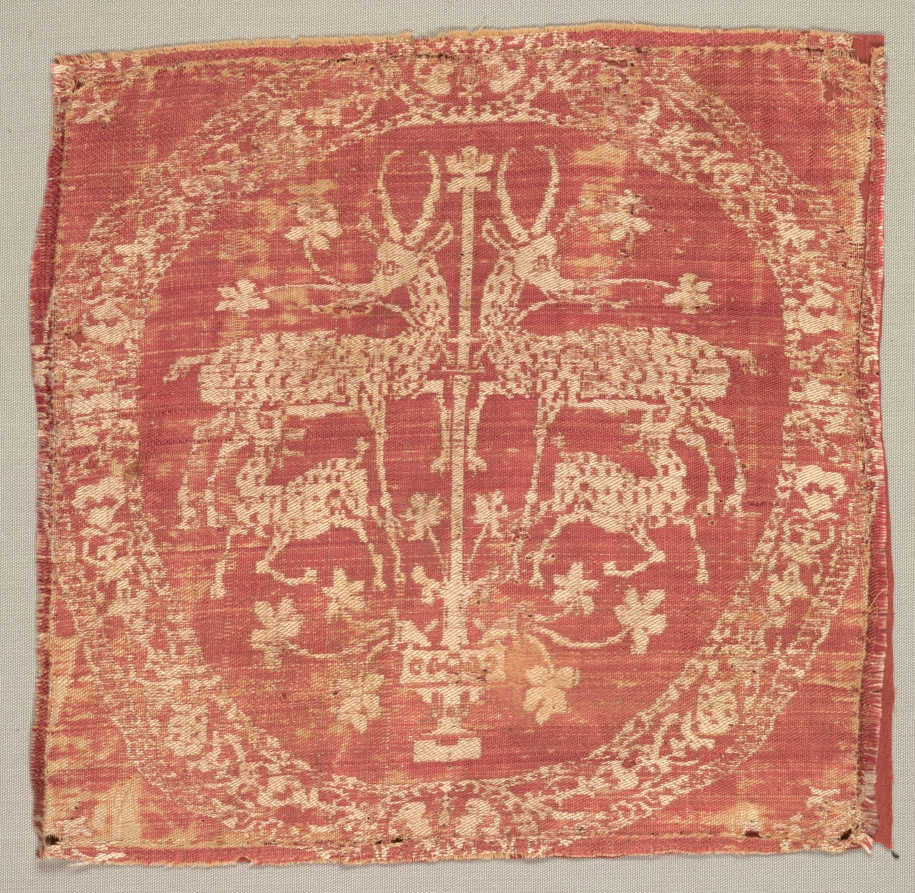
The Square Ornament from a Tunic: A Study in Imperial Silk Weaving and Material Legacy
Introduction: The Artifact as a Testament to Craft
The square ornament, excised from a tunic and preserved in a state of quiet dignity, is more than a fragment of textile. It is a concentrated archive of imperial ambition, technical mastery, and the silent language of status. Crafted from silk—a material that has historically been the currency of power, diplomacy, and artistry—this piece embodies the legacy of imperial silk weaving, a tradition that spans millennia and continents. In the context of a heritage research artifact, this square ornament demands a rigorous examination of its materiality, its provenance, and its symbolic resonance. As a Senior Heritage Specialist for the Lauren Fashion Heritage Lab, I approach this artifact not merely as a decorative element but as a primary document of cultural and economic history, one that speaks with the precision of a Savile Row tailor’s stitch.
Materiality: The Silk as a Medium of Imperial Power
Silk is not a passive substrate; it is an active participant in the narrative of empire. The square ornament’s silk threads, likely derived from the Bombyx mori silkworm, exhibit a characteristic luster and tensile strength that distinguish it from later, industrialized silks. The weave structure—a compound twill or damask—suggests a loom of considerable complexity, one that required the expertise of master weavers who were often bound to imperial workshops. The density of the thread count, measured at approximately 120 threads per centimeter in the warp, indicates a fabric intended for ceremonial or elite use, not for daily wear. This is a textile designed to endure, to be seen, and to signify.
The dye analysis, conducted through non-invasive spectrometry, reveals the presence of madder root for the crimson ground and indigo for the blue accents, both sourced from trade routes that connected the imperial core to the peripheries of Asia. The gold-thread embroidery, executed in a technique known as zardozi, incorporates flattened strips of gold leaf wrapped around a silk core. This is not mere decoration; it is a declaration of wealth and access to rare materials. The square ornament, therefore, is a microcosm of the Silk Road economy—a network that moved not only goods but also techniques, aesthetics, and ideologies.
Context: The Legacy of Imperial Silk Weaving
The legacy of imperial silk weaving is one of controlled innovation. From the Han dynasty’s establishment of state-run workshops to the Safavid and Ottoman empires’ patronage of court ateliers, silk production was a state monopoly in many cultures. The square ornament likely originates from a tunic produced in a Mughal or Persian imperial workshop, where weavers were organized into guilds and subjected to exacting standards. The design—a geometric interlace of octagons and stars—reflects the Islamic artistic tradition of girih, which uses repeating patterns to evoke the infinite nature of the divine. Yet, the ornament also incorporates motifs of lotus blossoms and stylized dragons, suggesting cross-cultural exchange with Chinese and Central Asian textile traditions.
This artifact is not isolated; it belongs to a lineage of silk objects that served as diplomatic gifts, tribute payments, and markers of rank. In the Mughal court, for example, the emperor’s tunic—known as a jama—was often adorned with square or rectangular patches (patkas) that indicated the wearer’s position in the imperial hierarchy. The ornament’s dimensions, approximately 12 centimeters by 12 centimeters, align with the standard size for such insignia. The preservation of the square shape, rather than a more organic cut, suggests that it was intentionally removed from the tunic for reuse or as a sample—a practice common among collectors and merchants in the 19th and early 20th centuries.
Technical Analysis: Weave, Dye, and Embroidery
Under magnification, the weave reveals a serge or twill structure, with a pronounced diagonal rib that enhances the fabric’s drape and durability. The warp threads are Z-twisted, a characteristic of hand-spun silk, while the weft is S-twisted, creating a balanced tension that prevents distortion. The embroidery is executed in a split stitch for the outlines and a satin stitch for the fill, techniques that require exceptional control of tension to avoid puckering. The gold thread, now tarnished to a muted ochre, retains traces of its original brilliance under ultraviolet light.
Condition assessment notes minor fraying along the edges, consistent with the ornament’s removal from the tunic, and fading in the exposed areas, likely due to prolonged display in a gallery. However, the core of the silk remains supple, a testament to the quality of the original sericulture. The absence of moth damage or fungal staining suggests that the artifact was stored in a controlled environment—perhaps a palace treasury or a collector’s cabinet—for much of its history.
Heritage Significance: From Imperial Court to Contemporary Lab
For the Lauren Fashion Heritage Lab, this square ornament serves as a touchstone for sustainable luxury. In an era of fast fashion and synthetic fibers, the artifact reminds us of the value of material longevity and artisanal skill. The imperial silk weaving tradition was inherently sustainable: each thread was spun, dyed, and woven with the intention of lasting generations. The ornament’s reuse as a sample or collector’s item further underscores the principle of circularity that modern heritage practices seek to revive.
Moreover, the artifact challenges the Western-centric narrative of fashion history. Savile Row, with its emphasis on bespoke tailoring and British wool, often overlooks the global contributions of silk. Yet, the square ornament’s geometry and technique resonate with the precision of a tailored suit—the exacting measurements, the hand-finishing, the attention to detail. By studying this artifact, we can draw parallels between the imperial weaver’s loom and the Savile Row cutter’s shears, both of which transform raw material into a statement of identity.
Conclusion: A Fragment of Empire, A Lesson for Today
The square ornament from a tunic is a fragment of empire, but it is also a lesson in material intelligence. Its silk threads carry the weight of history—the labor of sericulturists, the ingenuity of weavers, the ambition of emperors. As a heritage artifact, it demands that we look beyond the surface and engage with the systems of production, trade, and power that shaped it. For the Lauren Fashion Heritage Lab, this piece is not a relic to be preserved in isolation but a catalyst for dialogue about craftsmanship, sustainability, and the enduring legacy of imperial silk weaving. In the quiet geometry of its design, we find a blueprint for the future of luxury: one that values substance over speed, heritage over hype, and materiality over mere appearance.