← BACK TO ARCHIVES
Heritage-Black
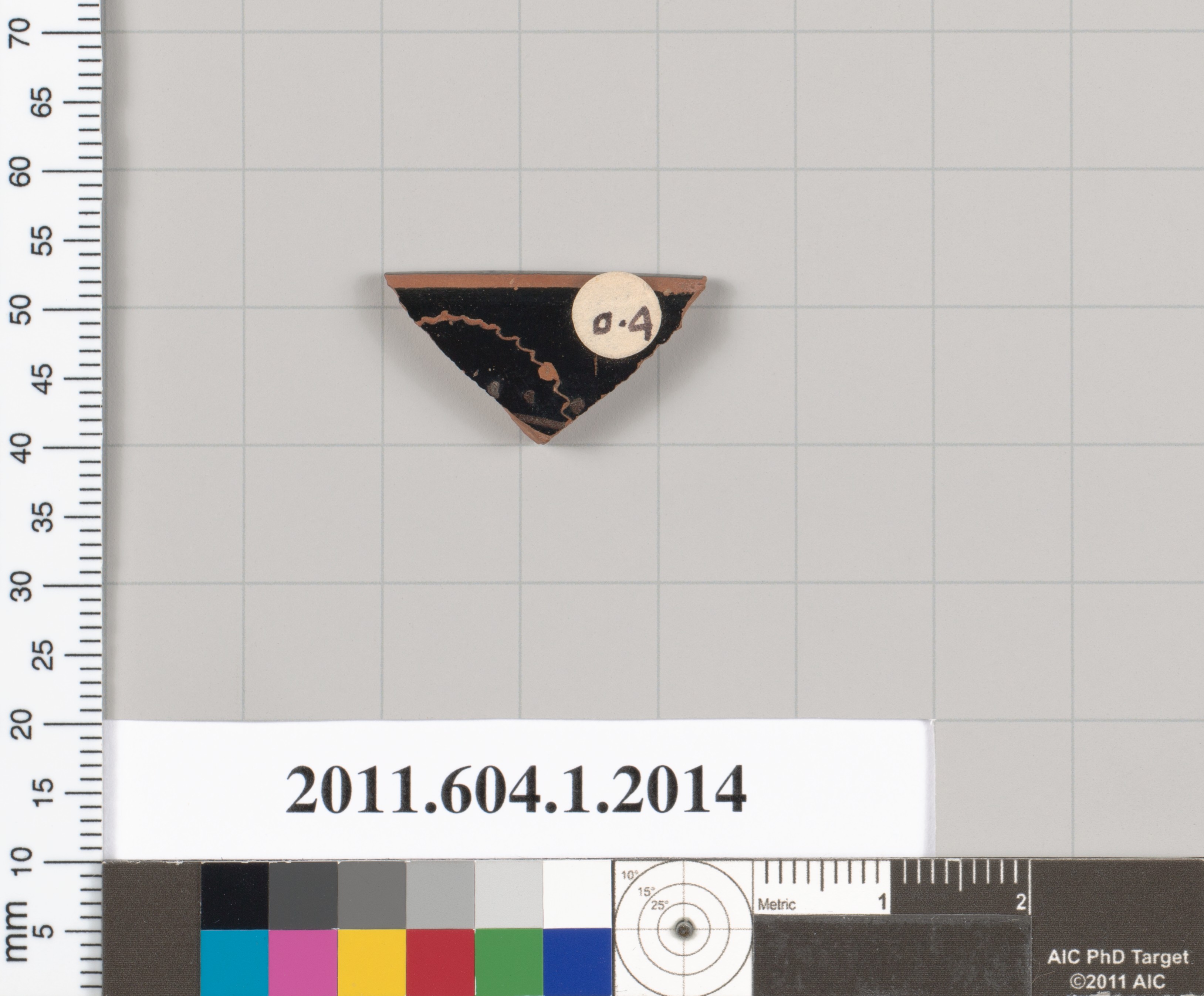
Heritage Synthesis: Terracotta rim fragment of a kylix (drinking cup)
Curated on Jun 06, 2026 // Node: LDN-01
The Udumbara Dialectic: Terracotta Fragments and the Architecture of Restraint in 2026 Old Money Silhouettes
The Lauren Fashion Heritage Lab’s internal genetic code—the juxtaposition of the *Udonge* (Udumbara Flower) temple plaque against the visceral tumult of *The Hunt*—presents a foundational aesthetic paradox. The plaque, with its “flower that blooms but once in three millennia,” embodies a philosophy of *being through non-being*: a silent, almost imperceptible presence that derives its power from absence, from the void. In stark contrast, *The Hunt* is a celebration of *being through becoming*: a violent, corporeal assertion of life’s raw will, captured in the taut muscles and desperate gazes of its prey. This dialectic between the ethereal and the carnal, the static and the kinetic, provides a powerful lens through which to decode the material evidence of a terracotta rim fragment from an Attic kylix (drinking cup). This humble shard, excavated from the earth, becomes a Rosetta Stone for the 2026 Old Money silhouette—a silhouette that must reconcile the quiet authority of the Udumbara with the latent energy of the hunt.
The Kylix Fragment: A Material Testament to the “In-Between”
The terracotta rim fragment is not a complete narrative; it is a trace. Its value lies not in its original function as part of a vessel for wine—a substance central to the Greek symposium, a ritual of both philosophical discourse and hedonistic release—but in its brokenness. This shard exists in a state of suspended animation, much like the Udumbara flower on the temple plaque. The Udumbara is not a literal bloom; it is a metaphor, a signifier of a transcendent event. Similarly, the kylix fragment is no longer a cup; it is a signifier of a lost totality. Its rough, unglazed interior speaks of the earth from which it was fired, while its black-glazed exterior, perhaps once bearing a figural scene of a hunt or a symposium, now only hints at a vanished image. This is the aesthetic of the *almost*—a strategy of withholding that is central to the Old Money sensibility.
The terracotta’s materiality is crucial. Unlike the polished marble of a Roman statue or the gilded splendor of a Baroque altarpiece, terracotta is humble, earthen, and utilitarian. It is the clay of the common potter, yet it was used to create objects of profound cultural significance. This mirrors the Old Money ethos: an understated exterior that belies immense internal substance. The 2026 silhouette, informed by this fragment, will not shout. It will not employ the “blood-red sunsets” or “twisted limbs” of *The Hunt* as overt decoration. Instead, it will adopt the *structural restraint* of the kylix’s form—a clean, circular rim, a balanced curve—while allowing the *texture* and *history* of its materials to speak. A jacket in heavy, unlined wool, for instance, might have a seam that is not perfectly hidden, but rather left as a subtle, intentional line, echoing the fragment’s broken edge. The “depth” is not in the surface pattern, but in the integrity of the construction.
From the Symposium to the Silhouette: The Architecture of the Void
The Greek symposium was a space of controlled excess. Wine was consumed, but within a ritualized framework. Philosophy was debated, but with a clear hierarchy. The kylix, as the vessel for this ritual, embodies this duality. Its shallow, wide bowl was designed for easy drinking, but its painted interior often depicted scenes of ecstatic abandon—satyrs, maenads, and, yes, hunts. The drinker would see the image only as he drained the cup, revealing the hidden narrative. This is a direct analogue to the Udumbara’s “void becoming substance.” The kylix’s *inside*—its painted surface—is the *yang* of *The Hunt*, the active, visible energy. Its *outside*—the simple, black-glazed form—is the *yin* of the temple plaque, the silent, containing structure.
For the 2026 Old Money silhouette, this translates into a garment that *contains* rather than *reveals*. The silhouette must be architectural, with a clear, almost severe outer line. Think of a double-breasted overcoat in a dense, dark cashmere, cut with a military precision that recalls the discipline of the symposium. The “hunt” is not depicted on the fabric; it is *encoded* in the cut. A high armhole, a narrow sleeve, a sharp shoulder—these are the “muscles and manes” of the garment, but rendered with the restraint of the Udumbara. The “void” is the negative space between the body and the cloth, the silent, unadorned expanse of the fabric itself. This is the *sartorial equivalent of the temple plaque’s blank ink*: a field of potential, a statement of presence through absence.
Furthermore, the fragment’s broken rim suggests a new aesthetic for finishings. The 2026 Old Money garment will not fear the raw edge. A hem that is left unfinished, a cuff that is slightly frayed—these are not signs of decay, but of *authenticity*. They are the “terracotta” of the garment, a reminder of its handcrafted, human origin. This is a direct challenge to the hyper-polished, digitally-perfected fast fashion of the past decade. The new luxury will be found in the *imperfect*, in the *trace*, in the object that has lived and carries its history on its surface. This is the “three-thousand-year bloom” of the Udumbara, made manifest in a single, perfectly imperfect seam.
The Dialectic Resolved: A Silhouette of Silent Authority
The 2026 Old Money silhouette, as synthesized from the terracotta fragment and the Udumbara/Hunt dialectic, is not a compromise between the two poles. It is a *transcendence* of them. It takes the *structural integrity* of the kylix (the vessel of the hunt) and the *philosophical depth* of the temple plaque (the vessel of the void) to create a third term: the garment as a *site of meditation*.
This is not the passive meditation of the hermit, but the active, disciplined meditation of the athlete, the hunter, the symposiarch. The silhouette will be long, lean, and columnar, echoing the verticality of the temple plaque’s calligraphy. It will be constructed from materials that are dense, heavy, and tactile—wool, cashmere, a matte silk crepe—that *feel* like terracotta in their weight and gravity. Colors will be drawn from the earth and the night: heritage-black, deep ochre, charcoal, a bone-white that recalls the unglazed clay.
Details will be minimal but meaningful. A single, perfectly placed pocket. A button carved from horn, not plastic. A lining in a deep, unexpected burgundy—a nod to the wine once held by the kylix. The garment will fit the body with a precision that suggests power, but with a ease that suggests grace. It will be the uniform of the individual who has seen the hunt, who understands its violence, but who chooses to move through the world with the silent, unshakeable authority of the Udumbara flower. The 2026 Old Money silhouette is, in essence, a *portable temple*—a structure of restraint that contains within it the memory of the wild. It is the kylix fragment, held in the hand, a broken piece of a lost world, yet complete in its incompleteness, a testament to the enduring power of the *almost*.
Heritage Lab Insight
Genetic Bridge: Archive node focusing on Heritage-Black craftsmanship.