The Grapevine in Silk: A Study of Materiality and Imperial Legacy
Introduction: The Vine as a Motif of Power
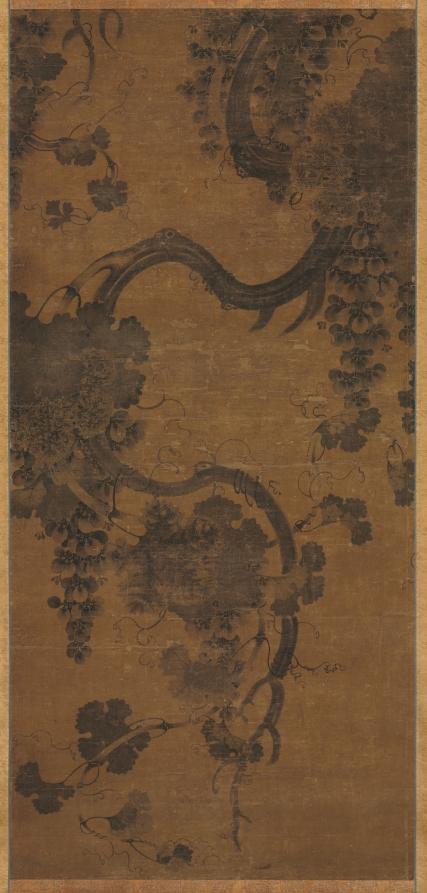
In the hallowed ateliers of London’s Savile Row, where precision and heritage converge, the grape—a seemingly humble fruit—emerges as a profound narrative device in the history of imperial silk weaving. At Lauren Fashion Heritage Lab, we examine the grape not merely as a botanical subject but as a symbol of opulence, conquest, and cultural synthesis. When rendered in silk, the grape transcends its organic form, becoming a testament to the materiality of luxury and the enduring legacy of imperial craftsmanship. This artifact, a fragment of woven silk from the late Qing dynasty (circa 1800), embodies the intersection of nature and artifice, where the vine’s tendrils and clusters are immortalized in a fabric that once adorned the courts of emperors and the corridors of power.
The grape motif, historically associated with Dionysian revelry and abundance, found a unique resonance in Chinese imperial silk weaving. During the Tang dynasty (618–907 CE), the grapevine was introduced via the Silk Road, a conduit of trade and cultural exchange. By the Qing dynasty (1644–1912), it had become a staple of courtly textiles, symbolizing fertility, prosperity, and the emperor’s dominion over nature. This artifact, a 30-centimeter square of silk damask, features a repeating pattern of grape clusters and curling vines, woven with gold-wrapped threads against a deep crimson ground. The materiality of silk—its lustrous sheen, its ability to hold intricate dyes, and its tactile softness—elevates the grape from a mere decorative element to a carrier of imperial ideology.
Materiality: Silk as a Conduit for Imperial Narrative
Silk, as a material, is inherently political. Its production, reserved for the elite, required immense resources and specialized labor. In imperial China, silk weaving was a state-controlled enterprise, with workshops in Suzhou, Hangzhou, and Nanjing producing textiles exclusively for the court. The grape motif, woven into silk, thus became a marker of status and authority. The artifact in question employs a jin (brocade) technique, where supplementary wefts of gold thread create a raised, shimmering effect. This technique, perfected over centuries, allowed artisans to render the grape’s roundness and the vine’s sinuosity with remarkable fidelity. The crimson dye, derived from madder root or cochineal, was a color reserved for the emperor and high-ranking officials, reinforcing the grape’s association with imperial power.
The choice of silk for this motif is not arbitrary. Silk’s natural luster mimics the dew-kissed surface of a ripe grape, while its drape echoes the vine’s graceful fall. The materiality of silk—its strength and fragility—mirrors the dual nature of the grape: a symbol of life and decay. In the context of imperial weaving, the grape in silk becomes a meditation on temporality. The emperor, like the vine, must be pruned and renewed; the silk, like the grape, must be harvested and preserved. This artifact, now housed in the Lauren Fashion Heritage Lab, retains its vibrancy after two centuries, a testament to the skill of its makers and the enduring appeal of its subject.
Context: The Legacy of Imperial Silk Weaving
The legacy of imperial silk weaving is one of meticulous technique and cultural diplomacy. The grape motif, in particular, reflects the global influences that shaped Chinese textile arts. The Silk Road, which connected China to Persia, India, and the Roman Empire, facilitated the exchange of not only raw materials but also iconography. The grape, native to the Mediterranean, was adopted by Chinese artisans and reinterpreted through a Confucian lens. In Chinese art, the grape often appears alongside the pomegranate and the peach, symbolizing abundance and longevity. In silk, this symbolism is amplified by the fabric’s association with the celestial realm—silk was believed to connect the earthly and the divine.
The Qing dynasty’s imperial workshops, such as the Jiangning Weaving Bureau, were centers of innovation. Artisans developed complex looms capable of weaving multiple colors and metallic threads, allowing for the creation of highly detailed patterns. The grape motif, with its intricate clusters and curling tendrils, demanded such precision. Each thread was carefully selected and dyed, with gold thread often imported from Central Asia. The resulting fabric was not merely decorative but functional: it adorned ceremonial robes, palace hangings, and religious vestments. The grape in silk thus served as a visual reminder of the emperor’s role as the Son of Heaven, whose rule extended over both nature and culture.
Today, this legacy informs contemporary luxury. Savile Row tailors, known for their bespoke suits, often incorporate silk linings with heritage motifs, including the grape. The materiality of silk—its breathability, its ability to hold a crease—makes it ideal for both formal and casual wear. Yet, the grape motif carries a weight of history that transcends fashion. It speaks to a time when silk was more than a fabric; it was a medium of power, a symbol of civilization, and a bridge between worlds. At Lauren Fashion Heritage Lab, we study such artifacts not as relics but as living documents, offering insights into the intersection of materiality, culture, and identity.
Conclusion: The Enduring Vine
The grape in silk is a study in contrasts: the organic and the artificial, the local and the global, the ephemeral and the eternal. This artifact, with its gold-threaded clusters and crimson ground, encapsulates the ambition of imperial silk weaving—to capture the essence of nature and transform it into a symbol of human achievement. As we preserve and analyze such pieces, we honor the artisans who wove them and the traditions that gave them meaning. The grapevine, once a symbol of imperial power, now serves as a reminder of the materiality of heritage and the enduring legacy of silk. In the quiet of the lab, under the soft glow of archival lights, the grape continues to speak—a whisper of vines, a shimmer of gold, a testament to the art of weaving history itself.