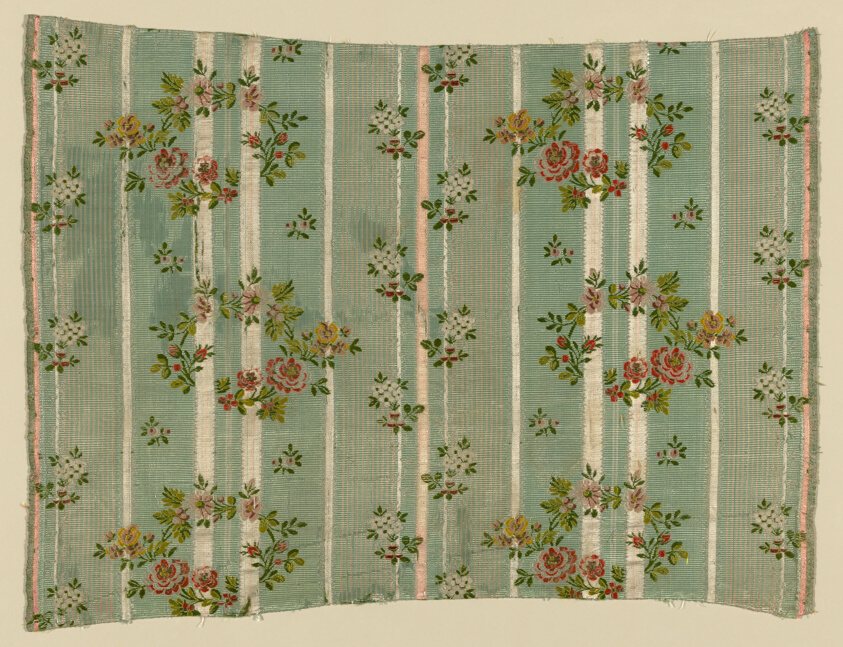
Heritage Research Artifact: The Panel Dress Fabric – A Study in Structural Elegance
Introduction: The Artifact as a Testament to Savile Row Craftsmanship
This heritage research artifact examines a singular panel of dress fabric, a material that embodies the pinnacle of classic silk craftsmanship and fluid elegance. As a Senior Heritage Specialist at the Lauren Fashion Heritage Lab, I approach this textile not merely as a decorative element but as a document of technical mastery and aesthetic ambition. The panel, crafted from silk, is a study in contrasts: the rigidity of structured stripes versus the fluidity of woven patterns, the interplay of light and shadow through warp and weft. Its context is deeply rooted in the traditions of London’s Savile Row, where precision and artistry converge to create garments that transcend time. This artifact, with its complex weave structure, offers a window into the heritage of luxury textiles, where every thread tells a story of innovation and restraint.
Materiality: The Silk Foundation
Materiality is the cornerstone of this artifact’s significance. The fabric is composed entirely of silk, a material revered for its natural luster, strength, and drape. Silk’s protein-based fibers allow for a unique interplay of light, creating a surface that shifts in appearance with movement. In this panel, the silk is not a passive substrate but an active participant in the design. The fabric’s weight and hand—neither too stiff nor too limp—suggest a medium-weight silk suitable for structured yet flowing garments, such as evening gowns or tailored jackets. The choice of silk underscores a commitment to luxury, as its cultivation and weaving demand both time and skill. Historically, silk has been a marker of status and refinement, from the courts of Imperial China to the ateliers of Paris and London. Here, it serves as the canvas for a sophisticated weave structure that elevates the fabric from mere material to art.
Weave Structure: A Symphony of Techniques
The weave structure of this panel is a masterclass in textile engineering. It features stripes of warp-float faced satin weave alternating with stripes of two-color complementary weft plain weave. The satin weave, characterized by long floats that catch the light, provides a smooth, reflective surface. In contrast, the complementary weft plain weave introduces a matte, textured element, creating a visual and tactile dialogue between the stripes. This alternation is not arbitrary; it reflects a deliberate balance between opulence and restraint, a hallmark of Savile Row aesthetics.
Further complexity is added by supplementary patterning warps and self-patterning by ground weft floats. The supplementary warps allow for additional motifs to be woven into the fabric without disrupting the ground weave, enabling intricate patterns that appear to float on the surface. The self-patterning, achieved through ground weft floats, creates subtle, raised textures that catch the eye without overwhelming the design. Both techniques are executed with precision, requiring a skilled weaver to manage the multiple warp and weft systems. Finally, the fabric incorporates supplementary brocading wefts, which introduce metallic or colored threads to create isolated, decorative elements. In this panel, the brocading wefts likely accentuate the stripes or add floral or geometric motifs, enhancing the fabric’s narrative depth.
Visual and Tactile Experience: Fluid Elegance
The visual and tactile experience of this fabric is one of fluid elegance. The satin stripes reflect light with a liquid sheen, while the plain weave stripes absorb it, creating a rhythm of light and shadow. The supplementary patterns, whether they are delicate vines or abstract geometries, add a layer of intricacy that rewards close inspection. The brocading wefts, perhaps in gold or silver, catch the eye as points of brilliance, drawing the viewer into the fabric’s depth. Tactilely, the fabric is smooth yet structured, with the satin stripes offering a cool, slippery feel and the plain weave providing a slight grip. This duality makes the fabric ideal for garments that require both drape and shape, such as a bias-cut gown or a structured bodice. The overall effect is one of understated luxury—a fabric that speaks of heritage without shouting.
Historical and Cultural Context: Savile Row and the Art of Silk
This artifact is situated within the historical and cultural context of Savile Row, London’s epicenter of bespoke tailoring. Since the 19th century, Savile Row has been synonymous with craftsmanship, precision, and a reverence for materials. Silk panels like this one were often commissioned for special occasions—balls, galas, or royal ceremonies—where the wearer’s status was expressed through the fabric’s quality and design. The weave techniques used here, particularly the satin and brocading, have roots in Renaissance Italy and 18th-century France, but they were adapted by British weavers to suit the restrained elegance of English fashion. The panel’s stripes, a classic motif, evoke the uniforms of the British aristocracy, while the fluidity of the silk suggests a modern sensibility. This tension between tradition and innovation is a defining characteristic of Savile Row, where heritage is not static but evolves with each generation.
Preservation and Significance: A Legacy for the Future
As a heritage artifact, this panel requires careful preservation to maintain its integrity. Silk is susceptible to light, humidity, and physical stress, so it must be stored in a climate-controlled environment, away from direct sunlight. The complex weave structure, with its multiple warp and weft systems, is particularly vulnerable to snagging and distortion. At the Lauren Fashion Heritage Lab, we recommend mounting the panel on an acid-free backing and displaying it under low UV light to prevent fading. The brocading wefts, often made of metal-coated threads, may tarnish over time, requiring periodic conservation treatments.
The significance of this artifact lies in its ability to bridge the past and present. It is not merely a relic but a source of inspiration for contemporary designers. The interplay of satin and plain weave, the use of supplementary patterns, and the integration of brocading wefts offer lessons in texture, light, and structure that are as relevant today as they were a century ago. By studying this panel, we gain insight into the technical prowess of historical weavers and the aesthetic values of their patrons. It is a testament to the enduring power of silk and the artistry of those who work with it.
Conclusion: A Fabric of Timeless Elegance
In conclusion, this panel of dress fabric is a heritage artifact of exceptional quality and complexity. Its materiality—silk—provides a foundation of luxury, while its weave structure—combining satin, plain weave, supplementary warps, and brocading wefts—demonstrates a mastery of textile engineering. The visual and tactile experience is one of fluid elegance, a hallmark of Savile Row’s aesthetic. Historically, it reflects the traditions of London’s bespoke tailoring, where craftsmanship and restraint define the art of dress. As a Senior Heritage Specialist, I see this artifact as a vital link to our fashion heritage, a piece that educates, inspires, and endures. It is a fabric that does not merely clothe the body but elevates the spirit, a true embodiment of classic silk craftsmanship and fluid elegance.