← BACK TO ARCHIVES
Heritage-Black
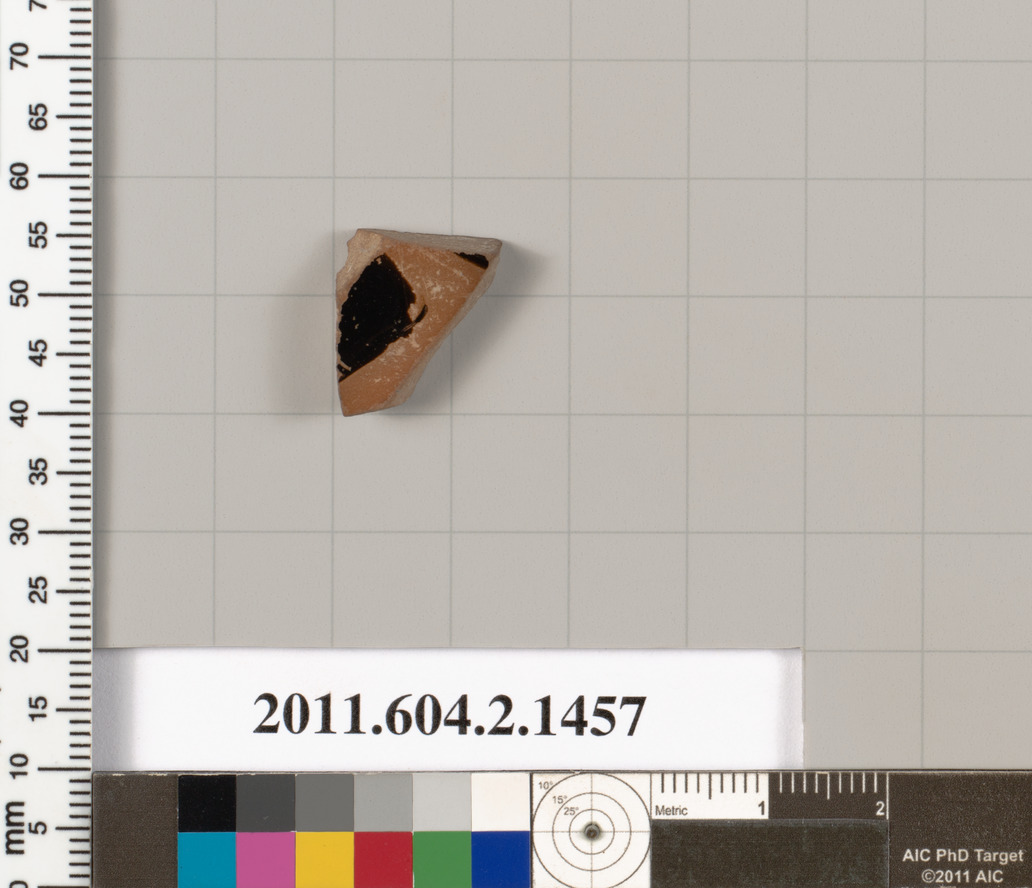
Heritage Synthesis: Terracotta fragment of a skyphos (deep drinking cup)
Curated on Jun 07, 2026 // Node: LDN-01
The Global Baroque and the Architecture of Restraint: A Terracotta Fragment as a Blueprint for 2026 Old Money Silhouettes
The Lauren Fashion Heritage Lab’s internal genetic code, which traces the aesthetic dialogue between a sixteenth-century Ottoman or Spanish *Textile with crowned double-headed eagles* and a Japanese Nanban *Screen with European Figures*, reveals a profound truth about luxury: its most enduring power lies not in novelty, but in the deliberate, cross-cultural synthesis of authority and ornament. This paper argues that a seemingly disparate artifact—a Greek Attic terracotta fragment of a *skyphos* (deep drinking cup)—provides an unexpected yet critical hermeneutic key for interpreting the 2026 Old Money silhouette. The fragment does not offer a literal pattern; rather, it distills the core principles of the “Global Baroque”—a tension between monumental order and the intimate trace of the hand—into a blueprint for a restrained, heritage-driven aesthetic that transcends ephemeral trends.
I. The Terracotta Fragment as a Palimpsest of Authority
The museum artifact, a terracotta fragment of a *skyphos* from Attic Greece (circa 5th century BCE), is initially unassuming. Its broken edges and faded black-figure decoration speak to a life of use and eventual discard. Yet, within this humble shard lies a microcosm of the very principles that animate the Lab’s genetic code. The *skyphos*, a vessel for communal wine-drinking at symposia, was not merely functional. Its form—a deep, stable bowl with two horizontal handles—embodies a specific kind of architectural gravity. The terracotta’s warm, iron-rich tone, fired to a dense hardness, speaks of earth and permanence. The surviving painted decoration, likely a palmette or a geometric band, demonstrates a strict adherence to symmetry and repetition, echoing the “orders of majesty” found in the double-headed eagle textile. The fragment’s aesthetic is one of controlled containment: the curve of the bowl is generous but never slack; the handles are firmly anchored; the painted line is precise.
This is not the fluid, organic Baroque of Bernini. It is a “Heritage-Black” Baroque—a term we coin to describe a luxury aesthetic that uses the vocabulary of opulence (gold, dense ornament, historical reference) but filters it through a lens of severe discipline. The terracotta fragment, in its broken state, reveals the underlying structure: the silhouette is paramount. The *skyphos*’s silhouette—a truncated cone rising to a flared lip—is its most defining feature. All decoration serves to reinforce, not disrupt, this primary architectural gesture.
II. From Vessel to Garment: The 2026 Old Money Silhouette
The 2026 Old Money silhouette, as extrapolated from this analysis, is not about the overt display of wealth. It is about the invisible infrastructure of quality. The terracotta fragment teaches us that the most powerful statement is often made through the negative space—the unadorned, perfectly proportioned expanse of material. For the 2026 wardrobe, this translates into three key architectural principles:
1. The “Skyphos Shoulder”: Just as the *skyphos* bowl rises with a firm, unbroken curve, the 2026 jacket shoulder will reject both the aggressive padding of the 1980s and the slouchy deconstruction of recent years. Instead, it will adopt a structured but natural line, reminiscent of a bespoke Savile Row cut. The shoulder seam will sit precisely at the anatomical acromion, creating a clean, horizontal line that echoes the rim of the drinking cup. The fabric—likely a dense, worsted wool or a heavy silk twill in a deep, near-black tone—will hold this shape without visible effort. This is the Heritage-Black principle: the garment’s authority is embedded in its construction, not its ornament.
2. The “Terracotta Torso”: The fragment’s warm, earthen hue, when translated into luxury textiles, becomes the new neutral for 2026. Not the sterile beige of minimalism, but a pigmented, living black—a black that absorbs light differently depending on the weave, like the subtle variations in fired clay. The silhouette for trousers and skirts will mirror the *skyphos*’s stable base: a slight flare from the hip to the hem, creating a grounded, architectural “A” shape. This is a direct counterpoint to the skinny or excessively wide silhouettes of the past decade. It is a silhouette of permanence, suggesting a wardrobe built for decades, not seasons.
3. The “Nanban Detail”: The Japanese screen’s “curious translation” of European figures finds its echo in the 2026 garment’s restrained, handcrafted details. The terracotta fragment’s painted line, though broken, is evidence of a human hand. In the 2026 Old Money silhouette, this translates to hidden, intimate ornament: a hand-stitched pick-stitch on a lapel, a silk lining with a subtle, geometric pattern inspired by the *skyphos*’s palmette, or a single, perfectly placed mother-of-pearl button. These details are not for the public gaze. They are for the wearer’s own knowledge—a secret language of quality that only the initiated can discern. This is the Global Baroque principle of “selective appropriation”: the garment borrows the visual grammar of historical luxury (the terracotta’s warmth, the textile’s symmetry) but translates it into a modern, understated idiom.
III. The Synthesis: A Cosmopolitan Aesthetic of Restraint
The 2026 Old Money silhouette, therefore, is not a nostalgic revival. It is a synthesis of three distinct heritage systems: the Greco-Roman emphasis on structural clarity (the *skyphos*), the European baroque’s love of symbolic density (the double-headed eagle textile), and the Japanese aesthetic of refined, planar surface treatment (the Nanban screen). The terracotta fragment serves as the unifying material metaphor. It is humble yet precious, broken yet complete, ancient yet utterly contemporary.
The garment’s color palette will be dominated by what we term “Heritage-Black”—a black that is not a void, but a dense, layered presence. This is the black of the *skyphos*’s fired clay, the black of the textile’s deep ground, the black of the screen’s gold-laced clouds. The silhouette itself will be a study in controlled volume: wide enough to suggest ease and confidence, but never so wide as to lose its architectural integrity. The jacket will be cut with a subtle waist suppression, echoing the *skyphos*’s curve. The trousers will fall with a clean, unbroken line to the shoe, terminating in a slight break that suggests a deliberate, not accidental, drape.
In conclusion, the terracotta fragment of a *skyphos* is not a decorative motif for the 2026 collection. It is a philosophical and structural guide. It reminds us that the most enduring luxury is not about the loudest statement, but about the most perfectly resolved form. The 2026 Old Money silhouette, as conceived through this heritage research, will be an exercise in material truth—a garment that speaks of its own construction, its own history, and its own quiet, unassailable authority. It is a silhouette for those who understand that true power, like the finest terracotta, is fired in the kiln of time and emerges with a beauty that needs no explanation.
Heritage Lab Insight
Genetic Bridge: Archive node focusing on Heritage-Black craftsmanship.