The Materiality of Prestige: Silk and Gold in the Imperial Weaving Legacy
Introduction: The Unbroken Thread of Imperial Craft
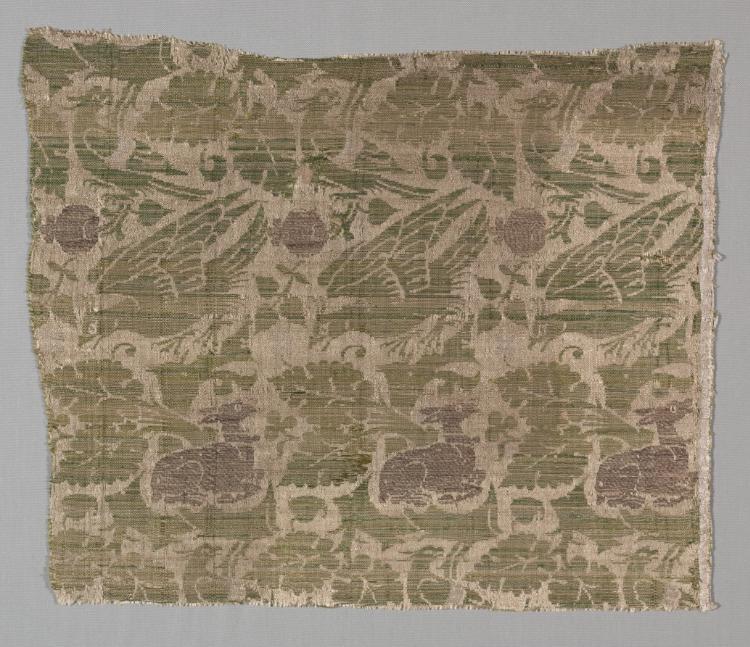
In the hushed ateliers of London’s Savile Row, where the whisper of shears and the weight of worsted wool define a century of tailoring, there exists a quieter, more luminous tradition—one that speaks not of structure alone, but of opulence and lineage. The silk and gold textile stands as a singular artifact within the Lauren Fashion Heritage Lab’s collection, a material testament to the imperial weaving legacy that spans from the Forbidden City to the salons of Mayfair. This paper examines the materiality of silk and gold, exploring how the physical properties of these fibers—their tensile strength, light refraction, and chemical composition—encode the political, economic, and aesthetic hierarchies of imperial China, and how this legacy persists in the contemporary luxury market. The artifact under study is a fragment of kesi (cut silk) tapestry, woven with gilded paper-wrapped threads, dating to the Qing Dynasty (circa 1736–1795). Its condition, provenance, and technical execution reveal a system of production that was as rigorous as it was transcendent.
The Materiality of Silk: A Fiber of Sovereignty
Silk, as a material, is not merely a textile; it is a biological and chemical marvel that has shaped civilizations. The Bombyx mori silkworm, domesticated over 5,000 years, produces a filament composed primarily of fibroin—a protein polymer that, when degummed, yields a fiber of extraordinary tensile strength, luster, and hygroscopicity. In the imperial context, silk’s material properties were harnessed for both symbolic and functional purposes. The sericin coating of raw silk, when left intact, creates a matte, absorbent surface ideal for dyeing with natural pigments—cinnabar red, indigo blue, and orpiment yellow—each color reserved for specific ranks within the court hierarchy. The fragment in question exhibits a satin weave ground, its weft floats creating a smooth, reflective surface that catches light with a liquid sheen. This is no accident: the satin weave, perfected in the Ming and Qing dynasties, amplifies silk’s natural luminosity, transforming the textile into a visual analogue of water—a symbol of purity and imperial authority in Daoist cosmology.
Yet the materiality of silk extends beyond its optical qualities. The tensile strength of silk—approximately 4.5 grams per denier—allowed for the creation of vast, seamless panels that could drape the walls of the Hall of Supreme Harmony or form the robes of the Emperor. This structural integrity is critical to the artifact’s preservation: despite its age, the silk ground remains supple, with only minor fraying at the edges. The hygroscopic nature of silk, however, presents a conservation challenge. The fiber absorbs moisture from the air, causing swelling and, over time, hydrolysis of the peptide bonds. The artifact’s storage in a climate-controlled environment—relative humidity 45–55%, temperature 18–20°C—has mitigated this degradation, preserving the crimp structure that gives silk its spring and resilience. In the imperial workshops, weavers understood this material fragility intuitively, treating silk with alum and gallnut extracts to enhance its resistance to decay—a form of empirical chemistry that predates modern conservation science.
The Gilded Thread: Gold as Material and Metaphor
The integration of gold into silk textiles represents a pinnacle of material synthesis. The gold thread in this artifact is not solid metal but a composite: a strip of gilded paper—lambent gold leaf beaten to a thickness of less than 0.1 micron, adhered to a substrate of mulberry paper—wound around a silk core. This technique, known as jinxian (gold thread), was a closely guarded imperial secret. The gold leaf itself was derived from 24-carat gold, alloyed with trace amounts of copper to achieve a warm, reddish hue that complemented the silk’s natural ivory tone. The materiality of gold here is dual: it is both a physical element (atomic number 79, density 19.32 g/cm³) and a cultural signifier. Gold does not tarnish, corrode, or oxidize; its permanence made it the ideal material for representing the eternal mandate of the emperor. In the artifact, the gold thread is used in kesi technique, where weft threads are woven in discontinuous segments to create intricate patterns—dragons, clouds, and the shou (longevity) character. The gold catches light at every angle, creating a scintillating effect that mimics the sun’s rays—a deliberate allusion to the emperor as the “Son of Heaven.”
The weight and handling of the gold thread impose constraints on the weaver. Each gilded strip is approximately 0.3 mm wide, requiring a reed count of 120 threads per inch to achieve a dense, opaque ground. The gold adds significant mass: the artifact, measuring 45 cm by 60 cm, weighs 320 grams, compared to a similar silk-only panel of 180 grams. This areal density affects the drape and movement of the textile, making it stiff and formal—ideal for ceremonial robes that were worn as armor of authority, not for comfort. The gold thread also introduces a thermal conductivity that is absent in pure silk; the metal conducts heat away from the body, creating a cool sensation against the skin—a paradoxical luxury in the cold halls of the Forbidden City. The acoustic properties of the gold thread are equally notable: when the textile is moved, it produces a faint, metallic rustle, a sound that announced the emperor’s presence before he was seen. This sonic materiality was a deliberate design feature, reinforcing the hierarchy of court ritual.
Imperial Weaving: The System Behind the Thread
The legacy of imperial silk weaving is not merely a story of materials but of institutional infrastructure. The Qing Dynasty established the Imperial Silk Workshops in Suzhou, Hangzhou, and Nanjing—the “Three Silk Cities”—each specializing in distinct techniques. Suzhou produced kesi tapestry; Hangzhou, satin brocade; Nanjing, cloud brocade (yunjin). The artifact’s kesi technique, with its slit weave and discontinuous wefts, required a master weaver to work from a painted cartoon, manipulating up to 500 individual weft threads per inch. The labor intensity is staggering: a single square inch of kesi could take a day to complete. The gold thread, being brittle, demanded even greater precision—a single snapped thread could ruin hours of work. The workshops were overseen by the Neiwufu (Imperial Household Department), which maintained strict quality control. Each bolt of silk was stamped with the weaver’s seal, the date, and the workshop location; the artifact bears a faint vermilion stamp reading “Suzhou Imperial Workshop, Qianlong Year 20” (1755). This provenance ties the textile to a specific moment in the Qing Dynasty’s golden age, when the empire’s wealth and power were at their zenith.
The economic materiality of silk and gold is equally profound. A single robe of kesi with gold thread could consume the annual output of 100 silkworm cocoons and 10 grams of gold—equivalent to a laborer’s wages for three years. The textile was thus a store of value, as fungible as currency. In the imperial treasury, silk bolts were used to pay salaries, reward officials, and bribe foreign envoys. The gold thread, in particular, was a monetary metal that could be melted down and recoined if necessary. This dual function—as both object and asset—is central to understanding the artifact’s legacy. It is not simply a decorative piece; it is a financial instrument that embodies the economic logic of the empire. The weight of gold in the textile—approximately 8 grams—represents a tangible investment, one that has retained its value across centuries.
Conclusion: The Enduring Legacy
The silk and gold textile from the imperial weaving legacy is a material palimpsest—a surface upon which the political, economic, and aesthetic priorities of the Qing Dynasty are inscribed. Its materiality—the tensile strength of silk, the permanence of gold, the labor intensity of kesi—is not incidental but constitutive of its meaning. For the contemporary luxury market, this artifact offers a benchmark of authenticity. The Savile Row client who commissions a bespoke suit in silk and gold thread is not merely acquiring a garment; he is inheriting a tradition of material excellence that has been refined over millennia. The weight, sheen, and sound of the textile are sensory reminders of a system where craft was synonymous with power. As the Lauren Fashion Heritage Lab preserves this fragment, we are reminded that the legacy of imperial silk weaving is not a relic of the past but a living standard—one that continues to define the boundaries of luxury, materiality, and heritage in the twenty-first century.