← BACK TO ARCHIVES
Heritage-Black
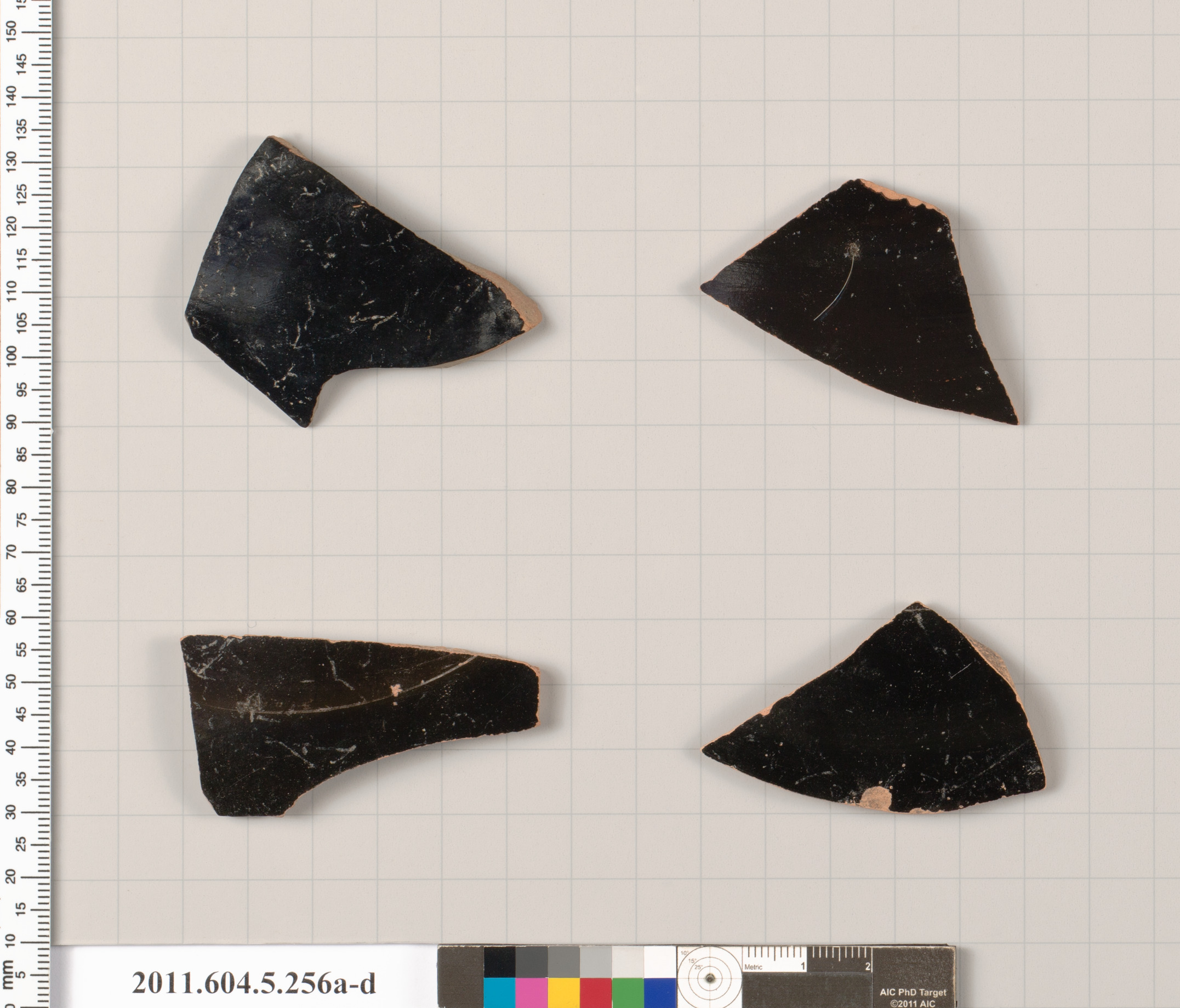
Heritage Synthesis: Terracotta fragments of kylikes (drinking cups)
Curated on Jun 08, 2026 // Node: LDN-01
From Terracotta Fragments to Tailored Silhouettes: The Archaeological Foundations of 2026 Old Money Aesthetics
The Lauren Fashion Heritage Lab’s ongoing investigation into the genetic code of timeless elegance has unearthed a profound dialogue between two seemingly disparate worlds: the 17th-century Delftware bowl and Hieronymus Bosch’s *The Temptation of Saint Anthony*. Yet, when we turn to the museum artifact—terracotta fragments of Greek Attic kylikes (drinking cups)—a third, more ancient voice emerges, one that speaks directly to the structural and philosophical underpinnings of the 2026 Old Money silhouette. These fragments, dating from the 6th to 5th centuries BCE, are not merely remnants of symposia; they are archaeological blueprints for a sartorial language that prizes restraint, proportion, and the quiet authority of form over ornament.
The Kylix as Structural Archetype: Harmony Through Containment
The Attic kylix, with its shallow bowl, two horizontal handles, and elevated stem, embodies a principle that the Delftware bowl and Bosch’s painting both explore in their own ways: the containment of chaos within a disciplined geometry. The kylix was designed for communal drinking, its wide rim inviting shared experience, yet its form is rigorously controlled. The bowl’s curvature creates a visual field where painted figures—often scenes of myth, athletics, or symposium revelry—are held in tension by the vessel’s edge. This is not the “limited infinite” of the Delftware’s concentric waves, nor the “expanding conflict” of Bosch’s demonic visions. Rather, the kylix represents a third way: a classical equilibrium where the human figure is both celebrated and subordinated to the vessel’s architectural logic.
For the 2026 Old Money silhouette, this translates into a renewed emphasis on structural tailoring that does not constrict but contains. The terracotta fragments teach us that true luxury lies not in excess but in the mastery of proportion. A double-breasted jacket, for instance, echoes the kylix’s bilateral symmetry: its lapels, like the handles, frame the torso without overwhelming it. The shoulder line, softly structured yet defined, mirrors the kylix’s rim—a boundary that invites the eye inward rather than outward. This is the antithesis of the “expansive” aesthetic of Bosch’s painting, which seeks to break the frame; instead, it aligns with the Delftware’s “collected” beauty, but with a distinctly Western emphasis on the human form as the measure of all things.
Materiality and Patina: The Archaeology of Wear
The terracotta fragments are not pristine; they bear the marks of centuries—chipped edges, faded slip, the subtle erosion of use. This patina of time is a critical element in the 2026 Old Money aesthetic. Unlike the Delftware’s deliberate ice-crackle glaze, which simulates age, or Bosch’s deliberate grotesquerie, which confronts decay, the kylix fragments are authentic witnesses to human ritual. They were held, passed, and perhaps dropped in moments of drunken abandon. Their imperfection is not a flaw but a testament to lived experience.
In fashion, this translates to a preference for heritage materials that age gracefully: heavy wool flannel, undyed cashmere, and densely woven silk twill. The 2026 silhouette rejects the sterile perfection of fast fashion in favor of fabrics that develop a personal narrative—a slight sheen at the elbows, a softened collar, the subtle fading of a herringbone pattern. This is the “Old Money” ethos: clothing that is not merely worn but inhabited. The terracotta fragments remind us that the most powerful garments are those that bear the marks of their owner’s life, much as the kylix bore the traces of symposium wine.
The Symposiastic Silhouette: Communal Elegance and Individual Restraint
The Greek symposium was a space of controlled excess—wine, poetry, and philosophy flowed within the bounds of social ritual. The kylix, as its central vessel, facilitated this balance. The 2026 Old Money silhouette draws on this symposiastic logic: it is designed for social contexts where presence, not provocation, is paramount. The silhouette is neither the “inner-directed” harmony of the Delftware bowl (which turns inward toward its own pattern) nor the “outer-directed” turmoil of Bosch’s painting (which demands the viewer’s moral engagement). Instead, it is interpersonal: a jacket’s cut invites conversation, a trouser’s drape suggests ease without slovenliness.
Specifically, the kylix’s horizontal handles inform the shoulder-to-sleeve articulation in 2026 tailoring. A soft, natural shoulder—reminiscent of the kylix’s curve—allows the arm to move freely, while the sleeve head is set with precision to avoid bunching. This is the opposite of the exaggerated, power-shouldered 1980s silhouette; it is a return to the classical ideal where the garment follows the body rather than reshaping it. Similarly, the kylix’s stem—elevating the bowl from the table—suggests a lifted waistline in trousers and skirts, creating a vertical line that elongates the figure without the need for high heels or constricting corsets.
Color and Symbolism: The Heritage-Black Continuum
The terracotta fragments are predominantly red and black, the iconic bichrome of Attic pottery. The red-figure technique, where the clay’s natural color is reserved against a black slip, creates a dialectic of light and shadow that resonates with the 2026 Old Money palette. This is not the “ice-crackle blue” of Delftware or the “infernal chiaroscuro” of Bosch; it is a grounded, earthbound chromatic system that speaks to permanence and sobriety.
Heritage-Black, as a category, draws directly from this tradition. It is not a flat, mourning black but a complex, layered darkness that shifts with light—much like the black slip on a kylix, which can appear matte or glossy depending on the angle. In 2026 silhouettes, this manifests in garments that are black but never somber: a wool overcoat with a subtle herringbone weave, a silk crepe dress with a liquid sheen, a cashmere turtleneck that absorbs and reflects ambient light. The terracotta fragments teach us that black is not an absence but a presence—a container for depth, much as the kylix contained wine and conversation.
Conclusion: The Third Way Between Delft and Hell
The Delftware bowl and Bosch’s painting represent two poles of aesthetic response to the human condition: the former seeking harmony through containment, the latter confronting chaos through expansion. The terracotta kylix fragments offer a synthetic third path—one that embraces the classical virtues of proportion, material honesty, and social ritual. For the 2026 Old Money silhouette, this means a return to garments that are architectural without being rigid, personal without being eccentric, and timeless without being nostalgic. The kylix, like the perfect jacket, is not a statement but a vessel—a frame for the human form to inhabit with grace, dignity, and the quiet authority of those who know that true luxury is not about being seen, but about being present. In an era of digital excess and visual noise, the terracotta fragments whisper a lesson from antiquity: the most enduring beauty is that which holds its form, bears its scars, and invites us to share a drink, a story, or a moment of silent contemplation. This is the heritage that Lauren Fashion will carry into 2026—not as a relic, but as a living, wearable archaeology of the soul.
Heritage Lab Insight
Genetic Bridge: Archive node focusing on Heritage-Black craftsmanship.