Terracotta Fragments and the Architecture of Old Money: A 2026 Silhouette Analysis
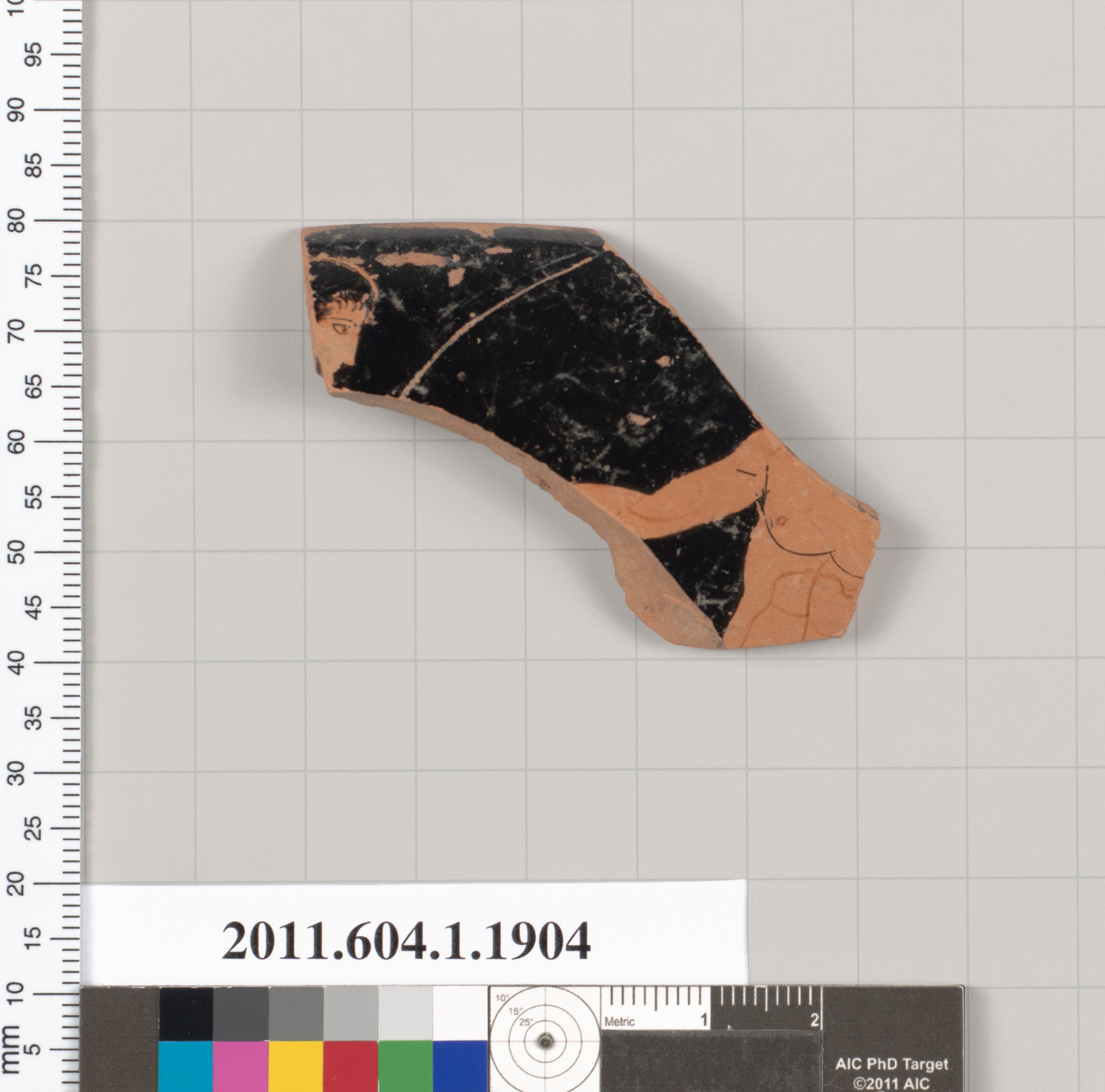
The terracotta rim fragment of a Greek Attic kylix, dating from the late 6th to early 5th century BCE, is more than a shard of ancient pottery. It is a material testament to a civilization’s deepest aesthetic convictions: that form must serve function, that ornament must emerge from structure, and that the highest beauty is found in the disciplined restraint of the line. For Lauren Fashion Heritage Lab, this artifact does not merely inform a collection; it provides the philosophical scaffolding for the 2026 Old Money silhouette. The kylix fragment—with its subtle curvature, its precise rim, its evidence of a once-articulated handle—speaks directly to the heritage of understatement that defines the Old Money aesthetic. It is not the complete vessel that commands attention, but the fragment’s insistence on quality, proportion, and the invisible labor of the artisan’s hand.
The Geometry of Restraint: From Kylix Rim to Jacket Shoulder
The kylix, as a drinking cup for symposia, was designed for the hand. Its rim—the fragment we possess—is a study in controlled tension. The curve is not arbitrary; it follows the ergonomic logic of the lip, the thumb, the gesture of lifting. In the 2026 Old Money silhouette, this translates directly into the shoulder line of the tailored jacket. The kylix rim’s gentle, inward-turning lip finds its analogue in the soft, natural shoulder of a bespoke blazer. There is no padding, no aggressive structure—only the subtle architecture of fabric draped to follow the body’s own geometry. This is the antithesis of the power-shoulder of the 1980s or the exaggerated silhouette of contemporary streetwear. The kylix teaches us that authority resides in precision, not volume. The 2026 jacket shoulder will be defined by a seam that sits precisely at the acromion, with a sleeve head that rolls softly, echoing the kylix’s rim: a line that knows exactly where it begins and ends, and has no need to announce itself.
Surface as Narrative: The Dialogue Between Terracotta and Textile
The terracotta fragment’s surface—its matte, slightly porous texture, its faint traces of black-figure decoration—offers a profound lesson in materiality. Unlike the polished, reflective surfaces of silver or porcelain, terracotta is humble. It does not dazzle; it endures. In the context of the 2026 Old Money wardrobe, this translates into a preference for textures that whisper rather than shout. Consider the herringbone wool of a topcoat, the twill of a cavalry trouser, the subtle rib of a cashmere roll-neck. These are not fabrics that demand attention; they reward close observation. The kylix’s black-figure decoration—often depicting symposium scenes or mythological narratives—is not immediately legible from a distance. One must lean in, engage, and appreciate the craft. Similarly, the Old Money silhouette of 2026 will favor jacquard weaves, micro-patterns, and tonal textures that reveal their complexity only upon intimate inspection. This is the antithesis of logo-driven luxury. It is the luxury of the initiated, the connoisseur who understands that a fragment of a kylix contains more wisdom than a pristine, mass-produced amphora.
The Handle as Metaphor: Articulation and Movement
While the fragment we possess is a rim, the kylix’s defining feature is its pair of horizontal handles. These handles are not decorative appendages; they are functional articulations that allow the cup to be held, passed, and raised with grace. In the 2026 Old Money silhouette, the handle becomes a metaphor for garment articulation. The sleeve of a tailored coat must allow the arm to move freely, to gesture, to embrace. The trouser must permit the body to sit, to stride, to recline. This is the heritage of the bespoke tailor, who understands that a garment is not a static shell but a dynamic second skin. The kylix’s handles are attached with precision, their joinery invisible to the casual observer. Likewise, the 2026 silhouette will prioritize invisible engineering: the hidden gusset in a shirt sleeve, the articulated back panel of a blazer, the gusseted crotch of a tailored trouser. These are not innovations; they are rediscoveries of ancient principles. The kylix fragment reminds us that true luxury is not in the visible but in the functional—the thing that works so well it is never noticed.
Patina and the Philosophy of Wear
The terracotta fragment bears the marks of its history: chips, abrasions, the subtle discoloration of centuries of handling. In the Old Money aesthetic, this is not damage; it is patina. Patina is the evidence of a life well-lived, of objects that have been used, cherished, and passed down. The 2026 Old Money silhouette will embrace this philosophy through garments that are designed to age gracefully. A heavy linen blazer that softens with each wear. A pair of unlined suede loafers that mold to the foot. A cashmere sweater that develops a gentle halo of pilling. These are not flaws; they are narratives. The kylix fragment teaches us that the most valuable objects are not those preserved in museum cases but those that have been held, passed from hand to hand, and used in the rituals of daily life. The 2026 wardrobe will be built on this principle: investment pieces that reward use, that become more beautiful with time, that carry the memory of the wearer’s gestures.
The Symposia of Silence: Old Money as a Shared Language
The kylix was not a solitary object. It was part of a symposium—a gathering of equals, a ritual of shared discourse. The 2026 Old Money silhouette is similarly social. It is not about individual expression but about belonging to a code. The cut of a trouser, the weight of a fabric, the set of a collar—these are signals understood by those who share the same heritage. The kylix fragment, with its subtle curvature and its evidence of a once-complete form, speaks to a community of taste. The 2026 silhouette will be defined by silent signals: the width of a lapel, the depth of a vent, the choice of horn versus resin buttons. These are not arbitrary; they are the grammar of a visual language that has been refined over centuries. The kylix, as a fragment, invites us to imagine the whole. The 2026 Old Money wardrobe, in its restraint, invites us to imagine the person—their history, their values, their place in a lineage that stretches back to the symposia of Athens.
Conclusion: The Fragment as Foundation
The terracotta kylix fragment is not a relic; it is a blueprint. For the 2026 Old Money silhouette, it offers a return to first principles: proportion over volume, texture over pattern, articulation over rigidity, patina over perfection. It reminds us that the most enduring luxury is not the newest but the most considered—the object that has been shaped by the hand, refined by use, and valued across generations. In the Lauren Fashion Heritage Lab, we do not merely look at artifacts; we listen to them. The kylix fragment speaks of a time when a cup was not a commodity but a companion. The 2026 Old Money silhouette will be its echo: garments that are not worn but inhabited, not displayed but lived. This is the heritage of black—not the black of mourning, but the black of depth, of the infinite, of the void that contains all possibility. The fragment is complete in its incompleteness. The silhouette is finished in its restraint. This is the architecture of Old Money, built on the foundation of a shard of terracotta, and it will endure.