The Lithic and the Liquid: Terracotta’s Tectonic Echo in 2026 Old Money Silhouettes
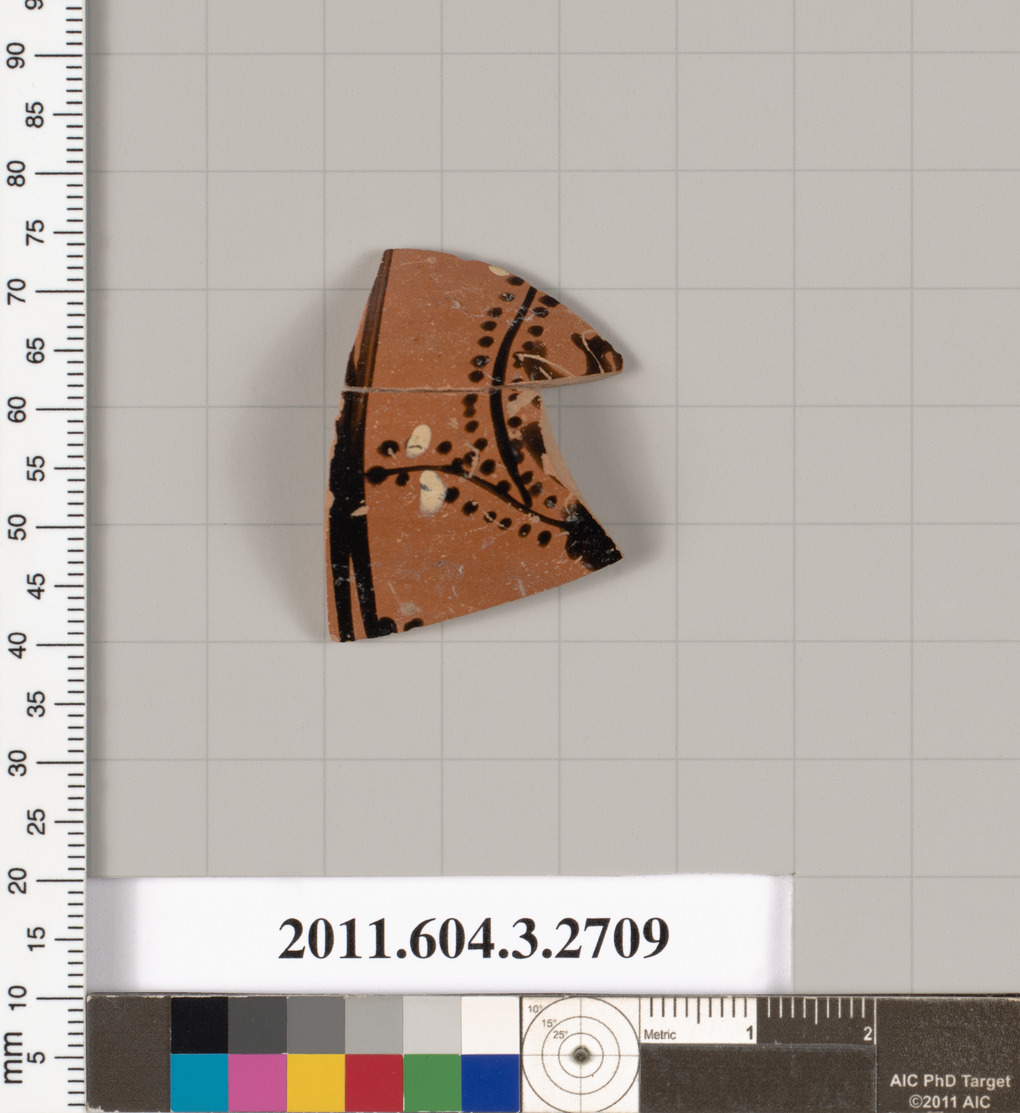
The Lauren Fashion Heritage Lab’s internal genetic code, drawn from the Chinese literati stone Rock in the form of a fantastic mountain and the Buddhist Seated luohan with a servant, posits a profound dialectic: the mineral world as a vessel for spiritual topography, and the painted figure as a conduit for meditative stillness. This paper argues that the museum artifact—a Terracotta fragment of an oinochoe (jug) from Greek Attica—functions as a third tectonic term in this dialogue. Its fired clay, bearing the index of the potter’s wheel and the kiln’s transformative heat, offers a material grammar for the 2026 Old Money silhouette. Where the literati stone embodies the “thin, wrinkled, leaky, translucent” (瘦皱漏透) principles of abstract nature, and the luohan painting enacts the “empty stillness” (空寂) of Chan Buddhist transcendence, the Attic terracotta fragment introduces a Heritage-Black aesthetic of grounded permanence—a silhouette that does not float above the earth but emerges from its very crust.
I. The Terracotta Fragment as a Geological Index
The oinochoe fragment, a shard of a wine jug from classical Athens, is not merely a broken vessel but a compressed archive of making. Its terracotta body—low-fired, porous, and rich in iron oxides—records the specific geology of Attic clay beds. The potter’s wheel left concentric striations, a rhythmic trace of human labor that parallels the “wrinkled” (皱) surface of the Lingbi stone. Yet unlike the stone, which is a natural object culturally elevated, the terracotta is a manufactured lithic: clay transformed through fire into a permanent, if fragile, material. This transformation mirrors the Old Money ethos of endurance through refinement. The 2026 silhouette, when read through this fragment, rejects ephemeral trends in favor of a material permanence that recalls the kiln’s irreversible chemical change. The silhouette becomes a “fired” form—structured, weighty, and resistant to the entropy of fast fashion.
The fragment’s broken edges are equally instructive. They are not smooth but jagged, revealing the cross-section of the vessel’s life: the interior glaze, the body’s core, the exterior slip. This stratification suggests a layered approach to garment construction. In 2026 Old Money silhouettes, this translates into visible seams, exposed linings, and deliberate raw hems that do not apologize for their construction but celebrate it as a form of geological honesty. The terracotta’s Heritage-Black hue—a deep, matte umber achieved through controlled oxidation—becomes the foundational color for a capsule wardrobe: a black that is not void but substance, not absence but presence. This is the black of the earth after rain, of the kiln’s interior, of the literati stone’s shadowed crevices.
II. The “Thin, Wrinkled, Leaky, Translucent” Silhouette
The literati stone’s aesthetic principles—thinness, wrinkling, leaking, translucency—find a direct analogue in the terracotta fragment’s morphology. The oinochoe’s handle, now a broken stub, once formed a thin, tensile arc that defied the clay’s natural plasticity. In the 2026 silhouette, this “thinness” manifests as ultra-fine knitwear or precision-cut leather that clings to the body without constriction, creating a second skin that is both protective and permeable. The “wrinkling” of the stone’s surface—its texture of age and erosion—is echoed in the deliberate creasing of linen trousers or the crushed velvet of a blazer, where fabric memory becomes a narrative of wear.
The “leaky” quality—the stone’s perforations that allow light and air to pass through—is perhaps the most radical translation. The terracotta fragment, though solid, once contained liquid; its interior volume was a negative space for wine. The 2026 silhouette borrows this negative space through strategic cutouts, mesh panels, and open-weave structures that reveal the body as a living landscape. These apertures are not sensual in a vulgar sense but philosophical, recalling the luohan painting’s “empty stillness” where absence generates presence. Finally, “translucency” in the stone is not transparency but a depth of surface—the way light penetrates the stone’s patina. In fabric, this translates to sheer wool, double-faced cashmere, or layered organza that creates a chromatic depth akin to the terracotta’s iron-rich glow.
III. The “Seated Luohan” and the Silhouette’s Meditative Stasis
The Seated luohan with a servant introduces a figural stillness that counterbalances the terracotta’s functional dynamism. The luohan’s robes, painted with mineral pigments, fall in geometric folds that mimic the strata of sedimentary rock. This is not the fluid drapery of Greek himation but a tectonic drapery—fabric that behaves like stone, holding its shape against gravity. In the 2026 Old Money silhouette, this translates to structured outerwear—a double-breasted coat in heavy wool, a tailored blazer in stiffened cotton—that creates a second architecture around the body. The silhouette becomes a portable temple, a space for introspection and composure.
The luohan’s gaze, directed inward, suggests a silhouette that does not perform for the viewer but exists in a state of self-contained elegance. The terracotta fragment, once part of a vessel for communal libation, is now a solitary artifact. This tension between the social and the solitary is resolved in the 2026 silhouette through garments that are both ceremonial and intimate: a silk evening dress that wraps the body like a scroll, a wool overcoat that closes with hidden toggles, a cashmere turtleneck that rises to the chin like a monk’s collar. These pieces do not shout; they resonate with the quiet authority of the luohan’s meditative pose.
IV. “Qi” and the Kinetic Potential of Clay
The Chinese concept of qi (氣)—the vital energy that animates all things—is central to the literati stone’s aesthetic. The stone’s perforations are not random but channels for qi flow, transforming a static object into a dynamic microcosm. The terracotta fragment, though broken, retains a kinetic memory: the curve of the oinochoe’s body suggests the pour of wine, the lift of the handle, the rotation on the wheel. This frozen motion is the essence of the 2026 silhouette. Garments are designed not for static display but for potential movement: a pleated skirt that unfurls with the stride, a jacket that drapes asymmetrically to suggest a gesture, a pair of trousers that crease at the knee as if mid-step. The silhouette is a vessel for the body’s qi, channeling energy through cut, fabric, and construction.
V. Conclusion: The Heritage-Black Continuum
The Attic terracotta fragment, when read through the lens of the literati stone and the luohan painting, reveals a Heritage-Black aesthetic that is neither nostalgic nor avant-garde but timeless. It is the black of the kiln’s fire, the stone’s shadow, the monk’s robe. In the 2026 Old Money silhouette, this black becomes a foundational grammar—a color that absorbs light and time, that refuses the binary of ornament versus function. The silhouette is tectonic: it builds from the earth upward, layering wool, cashmere, and silk like geological strata. It is perforated: it opens to the body’s breath, allowing qi to circulate. It is still: it holds the body in a posture of quiet authority, like the luohan in his eternal meditation.
Ultimately, the terracotta fragment teaches us that the most enduring luxury is not rarity but resonance. A shard of a wine jug, a rock from a scholar’s desk, a painting of a monk—these are not commodities but companions in a dialogue across millennia. The 2026 Old Money silhouette, grounded in Heritage-Black, becomes the latest iteration of this conversation: a garment that is not worn but inhabited, not consumed but contemplated. It is the material manifestation of “器以载道”—the vessel that carries the Way.