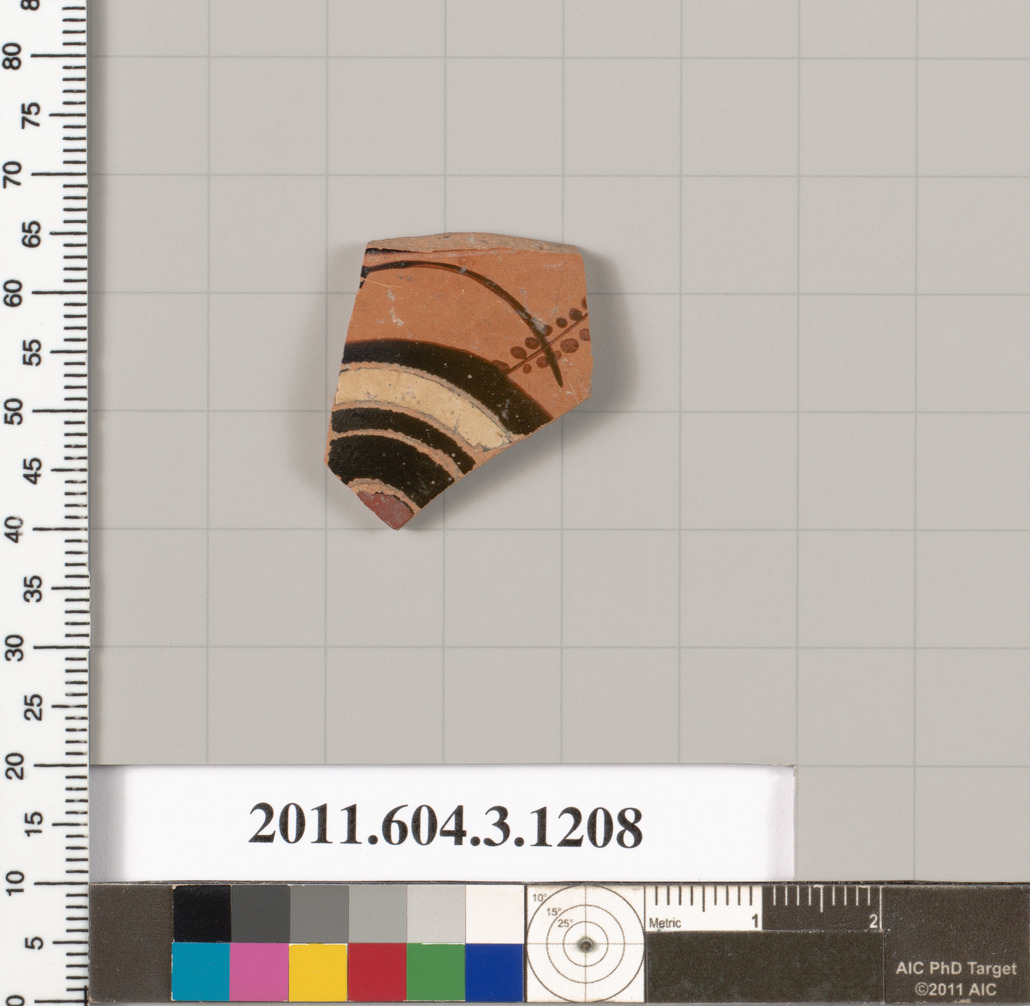
The Sphinx’s Vessel: Terracotta Fragment, Cyclical Time, and the 2026 Old Money Silhouette
The Lauren Fashion Heritage Lab’s internal genetic code—a meditation on Ingres’ Oedipus and the Sphinx and the Ming dynasty Landscape-Inscribed Plate—presents a dialectic between the “interrogative” Western gaze and the “responsive” Eastern absorption. This philosophical framework, when applied to the material culture of antiquity, yields profound insights for the 2026 Old Money silhouette. The museum artifact in question—a terracotta fragment of a Greek Attic mastoid, or narrow-based drinking cup—is not merely a shard of pottery. It is a vessel of cyclical time, a tactile counterpoint to the linear, tragic destiny of Oedipus. Where Ingres’ canvas freezes a moment of existential confrontation, this fragment embodies a continuum of use, ritual, and quiet endurance. For the 2026 Old Money aesthetic, which seeks to transcend transient trends and articulate a lineage of quiet power, the mastoid fragment offers a blueprint for a silhouette that is both grounded and transcendent: a form that answers the Sphinx not with a solution, but with a posture of timeless composure.
From Interrogative Canvas to Responsive Vessel
The internal code’s comparison of Ingres’ painting and the Ming plate illuminates two distinct modes of being. The painting is a dramatic instant, a sharp, triangular composition where Oedipus’s rational gaze meets the Sphinx’s riddling form. The background’s abyss and distant light foretell a tragic, linear future. This is a world of cause and effect, of a hero who must act to know. In contrast, the Ming plate is a cyclical landscape, a microcosm where the vessel’s circular form symbolizes completeness and the flow of qi. The landscape is not a problem to be solved but a world to inhabit; the inscription is not an answer but a poetic echo. The aesthetic is one of harmony, of being within rather than against.
The Attic mastoid fragment occupies a fascinating third space. It is a drinking cup, a vessel for the symposium—a ritual of social bonding, philosophical discourse, and, crucially, the consumption of wine, a substance associated with Dionysian ecstasy and the blurring of linear time. Unlike the static, singular moment of the painting, the cup was held, passed, and used in a cyclical event. Its narrow base, while precarious, implies a moment of balance, a controlled pause within a flowing ceremony. The terracotta material itself—fired earth, humble and durable—speaks to a different temporality: not the dramatic, fatalistic arc of Oedipus, nor the eternal, meditative stillness of the Ming landscape, but a generational, cyclical rhythm of planting, harvesting, firing, drinking, and breaking. This is the temporality of the Old Money archetype: not a story of rise and fall, but of steady, unbroken stewardship.
Materiality and the 2026 Silhouette: The Weight of Heritage
For the 2026 Old Money silhouette, the mastoid fragment dictates a shift in material philosophy. The “Old Money” aesthetic has long been associated with fine wools, cashmere, and silk—fabrics that speak of comfort and discreet luxury. However, the terracotta fragment introduces a new textural vocabulary: earthiness, weight, and a matte, unreflective surface. The 2026 silhouette will not be about the slick, polished sheen of new wealth, but about the patina of use. Think of a double-faced cashmere coat in a deep, oxidized rust—a color that is not the bright red of a Ferrari, but the burnt umber of ancient pottery. The fabric should have a slight, dry hand, reminiscent of the terracotta’s porous surface. The silhouette itself will be volumetric but grounded, echoing the cup’s narrow base and swelling body. A-line skirts with a heavy drape, wide-leg trousers that pool at the ankle like a stable base, and structured blazers with a slight, architectural shoulder—all in matte, earthy tones of ochre, slate, and clay.
The fragment’s fractured edge is also a critical design signal. In an era of digital perfection, the 2026 Old Money silhouette will embrace the beauty of imperfection. This is not the distressed, manufactured grunge of streetwear, but the authentic wear of inheritance. A cashmere sweater with a meticulously repaired elbow, a linen shirt with a faint, sun-faded line from a collar, a leather belt with a buckle that has been polished for decades. These details are the equivalent of the fragment’s broken rim—they tell a story of time, of use, of a garment that has been lived in, not just worn. This is the antithesis of the fast-fashion “newness” and the hyper-visible logos of nouveau luxury. It is a quiet assertion of continuity.
Cyclical Form: The Silhouette as a Vessel for Time
The mastoid’s form—a narrow base supporting a wider, rounded body—provides a direct structural metaphor for the 2026 silhouette. The narrow base suggests a disciplined, restrained foundation: a slim, high-waisted trouser, a tailored pencil skirt, a fitted turtleneck. This is the “Oedipus” element—the rational, controlled structure. The swelling body above it, however, introduces the “Ming plate” element: volume, ease, and a sense of contained breath. A cocoon coat, a draped blouson, a wide, flowing sleeve. The silhouette is not a single, rigid line, but a dynamic equilibrium between constraint and release. It is a form that can hold a glass of wine, a conversation, a legacy.
Furthermore, the fragment’s role in the symposium—a ritual of cyclical return—informs the wardrobe as a system. The 2026 Old Money wardrobe will not be a collection of individual “statement” pieces, but a coherent set of vessels, each designed for a specific ritual within a cyclical life. A heavy wool coat for the autumn walk, a linen suit for the summer garden party, a cashmere robe for the evening at home. Each garment is a cup, used and reused, gaining meaning with each cycle. The aesthetic is one of ritualistic repetition, not novelty. The “new” is not a different silhouette, but a deeper patina on the same one.
Conclusion: The Answer in the Vessel
Ingres’ Oedipus stares at the Sphinx, demanding an answer. The Ming plate offers a landscape for contemplation. The Attic mastoid fragment, however, suggests a third path: the answer is not in the riddle or the view, but in the act of holding. The 2026 Old Money silhouette, informed by this fragment, becomes a vessel for time itself. It is not a solution to the Sphinx’s question, but a posture of enduring grace. It is the shape of a hand that has held the same cup for generations, a form that does not seek to conquer the abyss, but to drink from it, in quiet, cyclical communion. This is the ultimate heritage: not a story told, but a form lived.