← BACK TO ARCHIVES
Heritage-Black
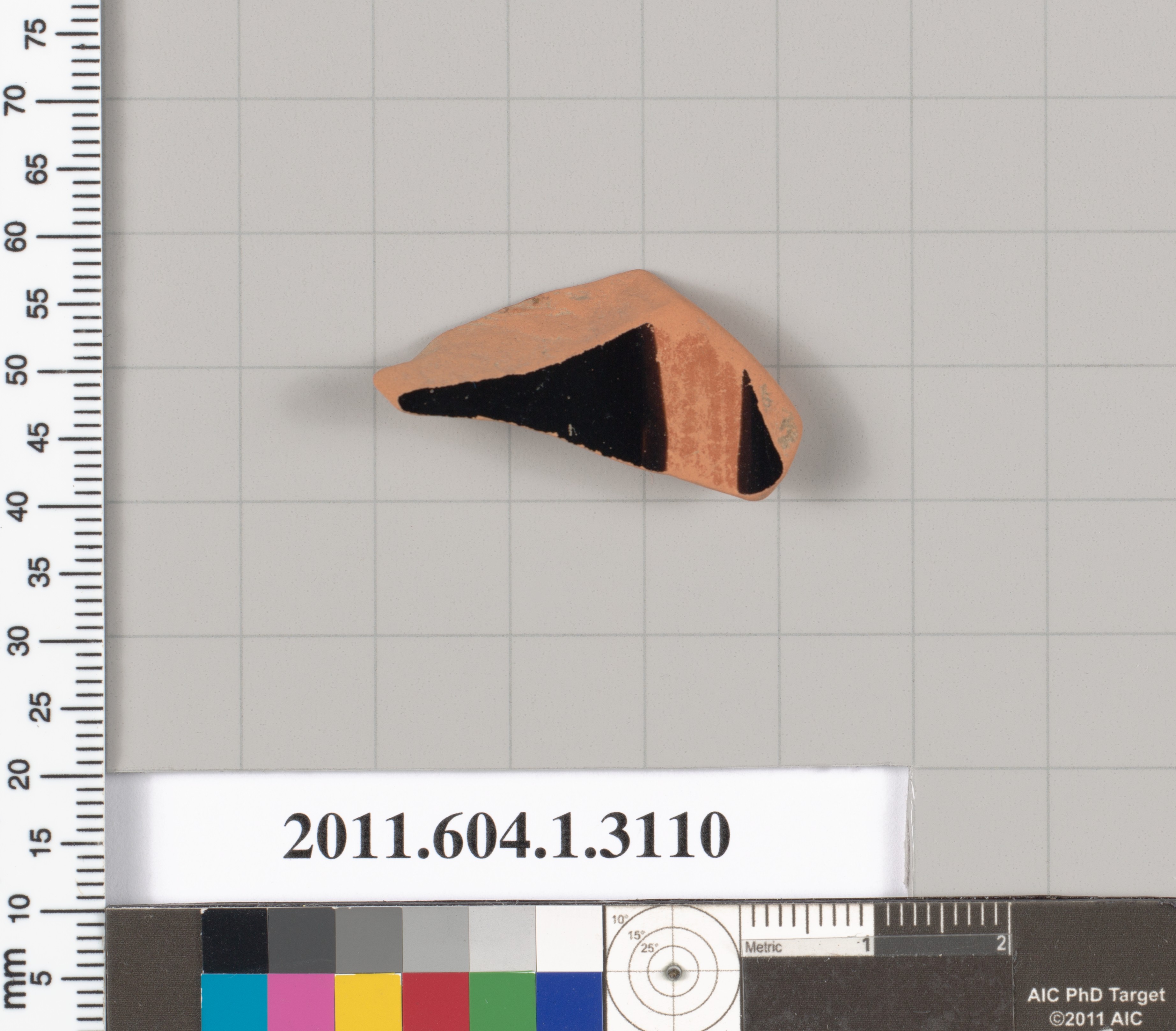
Heritage Synthesis: Terracotta fragment of a kylix (drinking cup)
Curated on Jun 08, 2026 // Node: LDN-01
The Dialectics of Stillness and Ferocity: Terracotta Fragments, Udumbara Visions, and the 2026 Old Money Silhouette
The Lauren Fashion Heritage Lab’s internal genetic code, articulated through the paradoxical pairing of the *Udonge* (Udumbara Flower) temple plaque and the visceral energy of *The Hunt*, presents a profound aesthetic dialectic. This tension—between the ethereal, time-defying stillness of Eastern Zen and the carnal, time-compressed ferocity of Western Baroque—finds an unexpected, yet remarkably fertile, synthesis in a seemingly unrelated artifact: a Greek Attic terracotta kylix fragment. This broken drinking cup, a relic of symposia and social ritual, does not depict flowers or hunts. Instead, its fragmented form, its materiality of fired clay, and its cultural function as a vessel for shared experience offer a third term in this binary. For the 2026 Old Money silhouette, this terracotta fragment becomes a masterclass in *restrained power* and *inhabited history*, translating the dialectic of “emptiness” and “intensity” into a sartorial language of quiet authority.
The Fragment as a Third Aesthetic: Between the Udumbara and the Hunt
The *Udonge* plaque operates on a principle of *being through non-being*. Its aesthetic strategy is one of radical subtraction: the flower is barely there, a ghostly white cluster against decaying wood, inviting a contemplative gaze that pierces the veil of the mundane. It is an art of the *void*, where meaning is generated not by presence but by the space around it. In stark contrast, *The Hunt* is an art of the *plenum*—a riot of muscle, blood, and motion that leaves no space unfilled. Its power lies in its overwhelming, almost suffocating, materiality.
The Attic kylix fragment, however, occupies a liminal space. It is a fragment of a whole, a broken piece of a once-complete vessel. Its terracotta surface is neither the ethereal ink of the Zen scroll nor the oily, layered pigment of the Baroque canvas. It is humble, earthen, and fired. Its “depth” is not metaphysical or dramatic but *archaeological*. It carries the patina of centuries of use, burial, and rediscovery. This is the aesthetic of the *relic*. It does not demand the inward meditation of the Udumbara nor the outward shock of the Hunt. Instead, it commands a different kind of attention: one of *historical consciousness*. The viewer is not asked to transcend time or to be consumed by a moment, but to *inhabit* the passage of time itself. The fragment’s beauty is in its incompleteness, its silent testimony to a life lived and a world lost.
This is the crucial insight for the 2026 Old Money silhouette. The Old Money aesthetic has long been defined by an aversion to novelty and a reverence for heritage. But in an era of hyper-visible branding and algorithmic trend cycles, this reverence risks becoming mere nostalgia or, worse, costume. The terracotta fragment offers a corrective. It teaches that true heritage is not about pristine preservation but about *honest wear*. The chipped edge, the faded glaze, the crack that tells a story of a fall—these are not flaws to be hidden but narratives to be worn. The 2026 silhouette, therefore, must not be a perfect reproduction of a 1920s blazer or a 1950s riding boot. It must be a *fragment* of that lineage, re-contextualized for a new century.
Translating the Fragment into Fabric and Form
How does this translate into concrete design? The terracotta kylix’s key material lesson is that of *weight* and *texture*. Terracotta is not a precious material; it is common clay. Yet, through the act of firing and the passage of time, it acquires a gravitas that silk or gold-thread cannot replicate. For 2026, this suggests a turn toward *heritage-black* wools, cashmeres, and heavy cottons that are not merely dark but *dense*. These are fabrics that feel substantial in the hand, that drape with a deliberate, almost architectural weight. Think of a double-faced cashmere overcoat in a deep, matte charcoal, its surface so dense it absorbs light rather than reflecting it. This is the fabric equivalent of the terracotta’s fired earth—unflashy, but undeniably present.
The silhouette itself must echo the fragment’s logic of *incompleteness* and *reassembly*. The 2026 Old Money look should not be a head-to-toe, perfectly matched ensemble. It should be an assemblage of *fragments*: a beautifully worn pair of leather brogues from a 1930s pattern, a blazer cut with the severe, clean lines of a mid-century Italian tailor, a pair of trousers with a subtle, almost imperceptible drape that speaks to a 1970s bespoke tradition. The cohesion comes not from matching but from a shared *tonality*—a consistent palette of heritage-black, deep umber, and faded ochre that mirrors the terracotta’s own earthy spectrum. The “fit” is not perfect; it is *lived-in*. A slight pull at the shoulder, a crease at the elbow—these are the sartorial equivalents of the kylix’s crack, signs of a garment that has been worn, not merely displayed.
The Dialectic Resolved: The Quiet Ferocity of Restraint
The terracotta fragment also resolves the tension between the Udumbara’s stillness and the Hunt’s ferocity. The kylix was, after all, a vessel for wine—a substance that loosens inhibitions and fuels both philosophical discourse and passionate abandon. It is an object that contains the potential for both the Zen-like clarity of a symposium and the Dionysian frenzy of a hunt. The fragment, in its broken state, holds this duality in suspension. It is a *container of memory*.
For the 2026 Old Money silhouette, this translates into a design philosophy of *latent energy*. The silhouette is not static like the Udumbara, nor explosive like the Hunt. It is *poised*. A perfectly tailored double-breasted jacket in heritage-black wool is not a statement of aggression; it is a statement of *readiness*. The sharp lapel, the structured shoulder, the precise waist suppression—these are not decorative. They are the architectural bones of a body prepared for action. The garment is a vessel, like the kylix, waiting to be filled with the wearer’s life. Its “ferocity” is not in its color or pattern but in its *discipline*. The quiet discipline of a perfectly rolled cuff, the subtle ferocity of a hand-stitched buttonhole—these are the marks of a garment that has been made with the same intensity as a Rubens hunt, but whose final expression is one of Zen-like control.
In conclusion, the Attic terracotta kylix fragment, when read through the lens of the Udumbara and the Hunt, offers a powerful blueprint for the 2026 Old Money silhouette. It is an aesthetic of the *fragment*, the *relic*, and the *vessel*. It rejects the ethereal void of pure Zen and the overwhelming plenum of pure Baroque, choosing instead the grounded, historical, and tactile reality of broken clay. The 2026 silhouette will be quiet, but not silent. It will be restrained, but not weak. It will be a collection of fragments, worn with the unselfconscious authority of one who knows that true heritage is not about the past, but about how the past is *inhabited* in the present. It is the art of wearing time itself.
Heritage Lab Insight
Genetic Bridge: Archive node focusing on Heritage-Black craftsmanship.