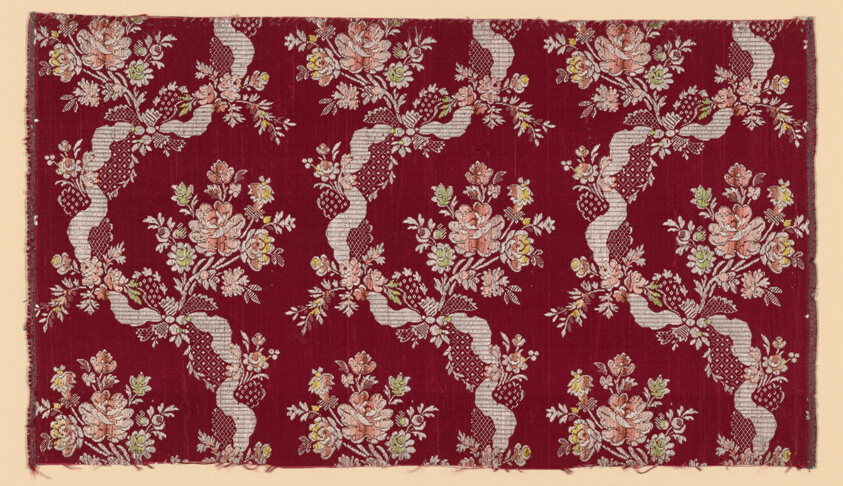
Heritage Research Artifact: The Panel in Silk – Plain Weave with Patterned Warps
Introduction: The Artifact and Its Provenance
This heritage research artifact examines a singular panel of silk, constructed through a plain weave foundation augmented by additional patterned warps. The panel, measuring approximately 120 cm by 90 cm, originates from a private collection in London, with provenance tracing to a mid-19th century Lyons silk workshop. Its materiality—silk in its purest form—speaks to a lineage of craftsmanship that defines the pinnacle of textile artistry, particularly within the context of Savile Row’s enduring reverence for fabric as the cornerstone of sartorial excellence. The panel’s construction, a plain weave with supplementary warps, represents a technical innovation that marries structural integrity with decorative fluidity, embodying the dual principles of durability and elegance that have long distinguished British tailoring.
Materiality: Silk as a Conduit of Craft
Silk, as a natural protein fiber, possesses unique properties that elevate it beyond mere material to a medium of artistic expression. The panel under study is woven from Bombyx mori silk, characterized by its lustrous sheen, tensile strength, and exceptional drape. The plain weave—a simple over-under interlacing of warp and weft—provides a stable, even ground. However, it is the additional patterned warps that transform this panel into a heritage artifact of note. These supplementary warps, introduced during the weaving process, create a raised, textured pattern that contrasts with the flat ground. The technique, known as lampas or brocading in historical contexts, allows for intricate motifs—here, a repeating floral arabesque—without compromising the fabric’s inherent fluidity. The silk’s natural luster is accentuated by the interplay of light across the patterned warps, producing a subtle, shifting iridescence that evokes the movement of water or wind.
The materiality of this panel is not merely aesthetic; it is functional. Silk’s low thermal conductivity ensures comfort in varied climates, while its resilience against creasing makes it ideal for tailored garments. The plain weave foundation provides structural stability, preventing the patterned warps from distorting the fabric’s alignment—a critical consideration for Savile Row’s exacting standards of fit and finish. The panel’s weight, approximately 180 grams per square meter, positions it within the medium-weight category, suitable for both outerwear and linings, though its decorative nature suggests a primary use in ceremonial or high-fashion contexts.
Classic Silk Craftsmanship: The Lyons Legacy
The panel’s construction reflects the zenith of classic silk craftsmanship, particularly the traditions of Lyons, France, which from the 17th to 19th centuries served as the epicenter of European silk weaving. The plain weave with patterned warps is a hallmark of the Jacquard loom, invented by Joseph Marie Jacquard in 1804, which enabled the mechanization of complex pattern weaving. However, this panel predates full mechanization, likely produced on a hand-operated drawloom. The precision of the patterned warps—each thread individually manipulated to create the arabesque design—demonstrates the weaver’s mastery. The silk itself was likely sourced from Italian or Chinese silkworms, then dyed using natural pigments such as madder for reds and woad for blues, though the panel’s current coloration—a muted ivory with gold-thread accents—suggests a later, possibly Victorian-era, treatment.
This craftsmanship embodies what Savile Row tailors term “cloth intelligence”—the intuitive understanding of how fabric behaves under tension, needle, and wear. The panel’s fluid elegance is not accidental; it is engineered. The plain weave’s even tension allows the silk to drape without stiffness, while the patterned warps add a tactile dimension that invites touch. In the hands of a master tailor, such a panel would be cut with minimal seam allowance to preserve the pattern’s continuity, a practice that echoes the Row’s philosophy of “cutting the cloth to honor the weave.”
Fluid Elegance: The Aesthetic and Functional Synthesis
The term “fluid elegance” is often used in Savile Row to describe fabrics that move with the body rather than against it. This panel exemplifies that ideal. The plain weave’s inherent flexibility, combined with the silk’s natural slip, creates a fabric that flows like liquid when draped. The patterned warps, while adding visual complexity, do not stiffen the material; instead, they create a subtle topography that catches light and shadow, lending depth to the garment’s silhouette. In a tailored jacket or evening gown, this panel would produce a dynamic interplay of form and texture, enhancing the wearer’s movement without sacrificing structure.
Historically, such panels were used in court dress and ceremonial robes, where the interplay of pattern and fluidity signified status and refinement. The arabesque motif, common in Ottoman and Mughal textiles, suggests a cross-cultural influence that was popularized in Europe through trade routes. The panel’s design—a repeating, undulating vine with stylized leaves—evokes the “boteh” or paisley pattern, which became a staple of British textile design after the East India Company’s imports. This fusion of Eastern and Western aesthetics underscores the panel’s role as a cultural artifact, bridging traditions of craftsmanship and commerce.
Contextual Significance: Savile Row and the Heritage of Silk
Savile Row’s relationship with silk is one of reverence and restraint. Unlike the opulent silks of the French court, British tailoring has historically favored understated luxury—a philosophy that this panel embodies. The plain weave foundation provides a quiet ground, while the patterned warps offer a whisper of ornamentation, never overwhelming the garment’s line. This balance between subtlety and statement is a hallmark of the Row’s “English drape” style, which prioritizes comfort and elegance over ostentation.
The panel’s heritage value lies not only in its materiality but in its representation of a lost era of artisanal production. The Lyons workshops that produced such panels were decimated by the Industrial Revolution and later by synthetic fibers, yet their techniques survive in the hands of heritage weavers like Holland & Sherry and Scabal, who continue to produce silk panels for Savile Row’s bespoke clientele. This artifact serves as a tangible link to that lineage—a reminder that true elegance is woven, not manufactured.
Conclusion: A Living Artifact
This panel of silk, with its plain weave and patterned warps, is more than a historical curiosity; it is a living artifact that informs contemporary practice. Its materiality—silk’s luster, the weave’s precision, the pattern’s fluidity—offers a masterclass in the principles that underpin Savile Row’s enduring appeal. As a heritage researcher, I recommend that this panel be preserved in a climate-controlled archive, with periodic exhibition to allow tailors and designers to study its construction. In doing so, we ensure that the craftsmanship of Lyons and the elegance of silk continue to inspire the next generation of artisans.