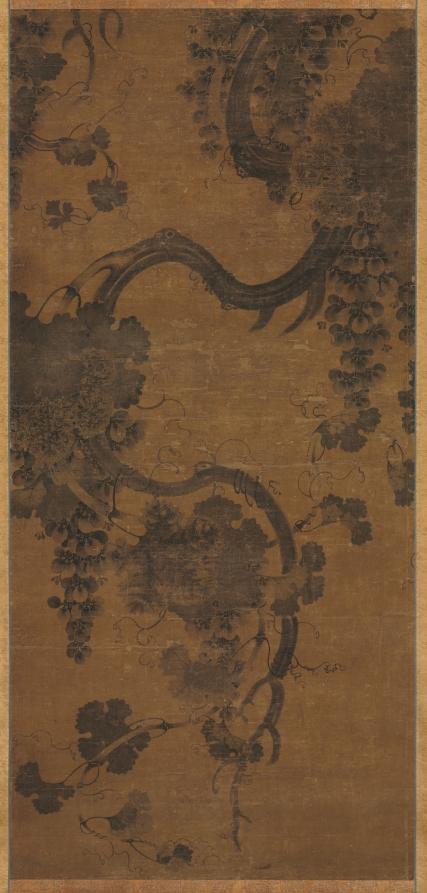
The Grapevine in Silk: A Study of Imperial Weaving’s Enduring Legacy
In the hushed ateliers of London’s Savile Row, where precision meets provenance, the whisper of silk remains a constant. Yet, to truly understand the fabric that drapes the world’s most discerning shoulders, one must look beyond the loom and into the vine. The grape—Vitis vinifera—is not merely a fruit of the earth; it is a symbol of abundance, transformation, and imperial ambition. When rendered in silk, particularly within the context of imperial weaving traditions, the grape becomes a narrative thread connecting the opulence of ancient courts to the refined tailoring of today. This artifact explores the materiality of silk as a vessel for the grape motif, tracing its legacy from the workshops of the Ming and Qing dynasties to the bespoke clothiers of Mayfair.
The Materiality of Silk: A Conduit for Imperial Symbolism
Silk, as a material, possesses a unique duality. It is at once delicate and resilient, luminous and grounded. The sericulture process—from the mulberry leaf to the cocoon—demands patience and precision, qualities that resonate with the meticulous craft of Savile Row tailoring. In imperial China, silk was not merely a textile; it was a currency of power. The imperial workshops, particularly those under the Ming (1368–1644) and Qing (1644–1912) dynasties, elevated silk weaving to a state-sanctioned art form. The grape motif, introduced along the Silk Road from Persia and Central Asia, was quickly adopted as a symbol of fertility, prosperity, and the sweetness of life. Yet, its integration into Chinese silk weaving was not mere mimicry. The grape was reimagined through the lens of Confucian harmony and Daoist naturalism, often intertwined with peonies, lotuses, or dragons to signify the union of earthly bounty and celestial order.
The materiality of silk allowed for an unprecedented level of detail. The warp and weft of kesi (cut silk tapestry) or satin damask could render the veining of a grape leaf or the translucency of a ripening cluster with a subtlety that no other fibre could achieve. The imperial weavers, working under the strictures of the Jiangnan silk workshops, used a palette of natural dyes—indigo, madder, and safflower—to create gradients that mimicked the blush of a grape’s skin. This was not decoration; it was a statement of mastery over nature and material. For the gentleman of Savile Row, such a cloth speaks to a heritage of control and refinement—a fabric that has been shaped by the hands of artisans who understood that true luxury lies in the invisible labour behind the visible surface.
The Grape Motif: From Imperial Robes to Bespoke Suiting
The grape motif in imperial silk weaving was not static. During the Qing dynasty, the longpao (dragon robe) of the emperor often featured grapevines as a secondary pattern, symbolising the emperor’s role as the cultivator of the realm. The grape clusters were rendered in gold thread against a ground of imperial yellow, their curvilinear forms echoing the sinuous dragon that coiled through the fabric. This juxtaposition of the organic and the mythical created a visual language of authority. The grape, in this context, was not a passive ornament; it was an active participant in the narrative of governance—a reminder that the emperor’s bounty was both literal and metaphorical.
In the transition to Western tailoring, the grape motif found new resonance. The 19th-century fascination with Chinoiserie brought these silks to European courts, where they were repurposed into waistcoats, cravats, and dressing gowns. The Savile Row establishment, ever attuned to the language of cloth, recognised the grape as a motif that bridged the ornamental and the structural. A silk tie woven with a subtle grape pattern, for instance, can evoke the same sense of cultivated abundance as a Qing dynasty robe, but within the restrained vocabulary of a London gentleman. The key is in the scale and the weave. A grosgrain or barathea silk, with its ribbed texture, can ground the grape motif, preventing it from becoming overly decorative. The pattern must be sotto voce—a whisper of the vine rather than a shout.
Preserving the Legacy: The Art of the Handloom
The legacy of imperial silk weaving is not merely a historical curiosity; it is a living practice that informs the work of contemporary textile artisans. The handloom, with its capacity for irregularity and nuance, remains the gold standard for reproducing the grape motif with authenticity. In the workshops of Suzhou, weavers still use the dobby or jacquard looms to create silks that echo the imperial past. Yet, the modern iteration is not a copy; it is a reinterpretation. The grape clusters may be stylised, the leaves simplified, but the materiality remains paramount. The silk must be of the highest grade—6A mulberry silk—to ensure a lustre that catches the light without glare. The dyeing process must be slow and natural, allowing the colour to penetrate the fibre rather than sit on its surface.
For the Savile Row client, this attention to materiality is non-negotiable. A bespoke suit or jacket lined in a grape-motif silk is not merely a garment; it is a talisman of a tradition that spans millennia. The weight of the fabric, the drape, the way the pattern aligns at the seams—all of these details are part of a conversation between the wearer and the weaver. The grape, in this context, becomes a symbol of continuity. It connects the imperial court to the modern boardroom, the Silk Road to Savile Row. It is a reminder that true heritage is not about nostalgia; it is about the disciplined application of ancient knowledge to contemporary craft.
Conclusion: The Vine and the Loom
The grape in silk is a study in contrasts—the ephemeral and the enduring, the organic and the crafted. Its journey from the vineyards of Central Asia to the looms of imperial China, and finally to the cutting tables of London, is a testament to the power of material culture. As a heritage research artifact, the grape-motif silk challenges us to look beyond the surface. It asks us to consider the hands that wove the fabric, the dyes that coloured it, and the symbols that imbued it with meaning. For the discerning gentleman, this is not mere cloth; it is a legacy woven into the very fibre of being. And on Savile Row, where tradition is the ultimate luxury, that legacy is worn with quiet, unassailable confidence.