The Terracotta Stamnos Fragment as a Hermeneutic Lens for 2026 Old Money Silhouettes: A Study in Material Memory and Transcendent Form
Introduction: The Paradox of the Fragmentary Archive
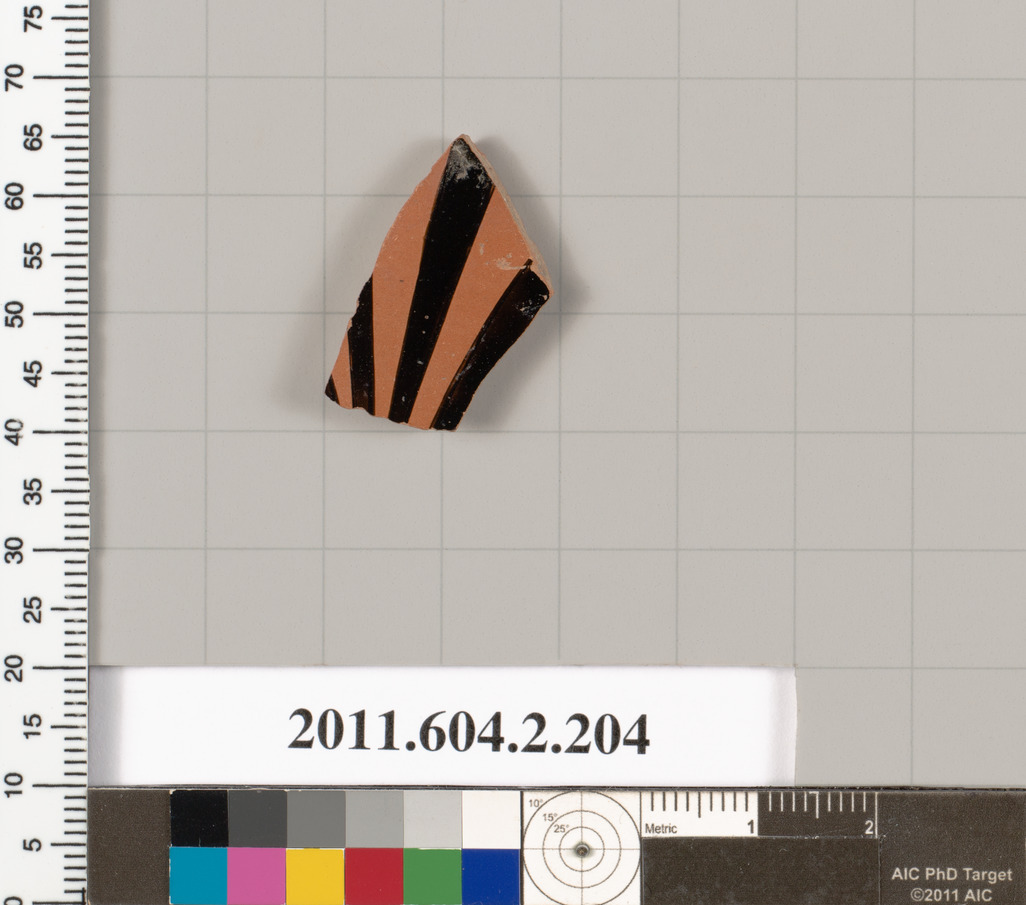
At the Lauren Fashion Heritage Lab, we engage with artifacts not as static relics but as dynamic genetic codes that inform the evolution of our design language. The terracotta fragment of a Greek Attic stamnos—a vessel used for mixing wine and water in symposia—presents a seemingly incongruous source for 2026 Old Money silhouettes. Yet, its broken state, its earthy materiality, and its functional history offer a profound counterpoint to the Buddhist sculptures analyzed in our internal genetic code. Where the Bodhisattva and the Amulet with Bovine Head represent the sacred spectrum from transcendent idealism to immanent protection, the stamnos fragment embodies a secular spectrum of material memory: from ceremonial utility to aesthetic ruin. This paper argues that the terracotta’s formal qualities—its attenuated curvature, its tactile surface, and its narrative of use and decay—provide a critical framework for reinterpreting the Old Money aesthetic as a practice of heritage-black restraint, where absence and presence converse in the language of timeless luxury.
I. The Stamnos as a Vessel of Social Ritual and Material Integrity
The original stamnos, crafted in the 5th century BCE, was not merely a container but a social actor in the Greek symposium—a ritualized space of philosophical discourse, political bonding, and aesthetic pleasure. Its terracotta composition, fired to a warm ochre, was valued for its porous integrity: it breathed with the wine, tempering its acidity and absorbing the oils of human touch. This material honesty resonates with the Old Money ethos, which prizes substance over spectacle. The fragment we study—a curved shard preserving the vessel’s shoulder and part of its lip—retains the sweep of the original form, a silhouette that is both generous and disciplined. For 2026, this suggests a silhouette that is voluminous yet structured, like a double-breasted overcoat in heavy wool or a tailored cashmere coat with a dropped shoulder. The terracotta’s earth-toned patina—a result of millennia of burial—informs a color palette of heritage-black tempered with umber, sienna, and ochre, evoking the tactile memory of ancient soil.
II. The Fragmentary Aesthetic: Absence as Design Principle
Unlike the intact Buddhist sculptures, which project wholeness and transcendence, the stamnos fragment is defined by absence. Its broken edges are not flaws but narrative markers of time, use, and transformation. This fragmentary aesthetic offers a powerful counterpoint to the Old Money silhouette’s traditional emphasis on unbroken lines and pristine finishes. In 2026, we propose a reinterpretation: the silhouette as a deliberate fragment of a larger, imagined whole. Think of a cropped jacket that ends just above the hip, revealing the waistline of a high-waisted trouser; or a sleeveless dress that exposes the arm, creating a negative space that echoes the stamnos’s missing body. This is not deconstruction for its own sake but a hermeneutic gesture—an invitation for the viewer to complete the form in their mind, much as an archaeologist reconstructs a vessel from shards. The heritage-black palette intensifies this effect: black absorbs light, making the absence more palpable, more contemplative.
III. The Curvature of the Shoulder: A Silhouette of Restrained Volume
The most striking formal element of the stamnos fragment is its shoulder curve—a gentle, swelling arc that transitions from the narrow neck to the broader body. This biomorphic line is echoed in the Bodhisattva’s serene posture, but in the terracotta, it is secularized into a functional elegance. For 2026, this curve informs the shoulder line of the Old Money silhouette: not the sharp, padded shoulders of the 1980s power suit, but a soft, sculptural volume that suggests inherent structure without rigidity. A wool blazer with a slightly dropped shoulder and a gentle puff at the sleeve head; a cashmere coat with a rounded, almost architectural shoulder—these forms evoke the vessel’s capacity to contain while remaining open to the hand. The heritage-black fabric, whether in heavy wool crepe or matte silk, amplifies this sculptural quality, turning the garment into a wearable fragment of ancient form.
IV. The Tactile Surface: Patina as Luxury
The terracotta’s surface is not smooth but textured—a micro-topography of firing marks, mineral deposits, and handling wear. This patina is the ultimate Old Money signifier: it cannot be faked, only earned through time. In 2026, this translates into a tactile approach to fabric. Wool is chosen for its natural lanolin sheen, cashmere for its fuzzy halo, velvet for its pile that shifts in light. The heritage-black palette is not flat but layered: a black wool with a subtle herringbone weave; a black silk with a matte finish; a black lace that reveals the skin beneath. These textural variations create a visual patina that rewards close inspection, much like the stamnos fragment rewards the archaeologist’s touch. The silhouette itself becomes a surface for time: a pleated skirt that holds the memory of the body; a knit sweater that softens with wear.
V. The Ritual of Dressing: From Symposium to Sartorial Ceremony
Finally, the stamnos fragment reminds us that clothing, like vessels, is ritualized. The Greek symposium was a ceremony of mixing—wine, water, ideas, bodies. The Old Money silhouette in 2026 is similarly a ceremony of mixing: heritage-black with terracotta accents; structured tailoring with fluid draping; masculine cuts with feminine details. The fragmentary aesthetic invites the wearer to complete the ensemble through their own gestures and movements. A cropped jacket worn with a flowing silk skirt; a high-necked cashmere sweater paired with wide-leg trousers—these are sartorial fragments that, when combined, create a whole greater than the sum of its parts. The heritage-black palette serves as the unifying ground, the void from which form emerges, much like the empty space within the stamnos once held wine.
Conclusion: The Fragment as a Bridge Across Time
In synthesizing the terracotta stamnos fragment with our internal genetic code, we discover that fragmentation is not loss but potential. The Bodhisattva and the Amulet with Bovine Head represent the sacred extremes of Buddhist art; the stamnos fragment occupies a secular middle, where material memory and human ritual converge. For the 2026 Old Money silhouette, this means embracing absence as a design tool, patina as a luxury, and curvature as a form of restrained power. The heritage-black palette, with its depth and absorption, becomes the canvas for these fragmentary narratives. Ultimately, the stamnos fragment teaches us that true luxury is not about completeness but about the stories that absence tells—a lesson as relevant to the 2026 wardrobe as it was to the 5th-century symposium.