1. Silhouette as Reconstructed Vessel: Asymmetry and Architectural Draping
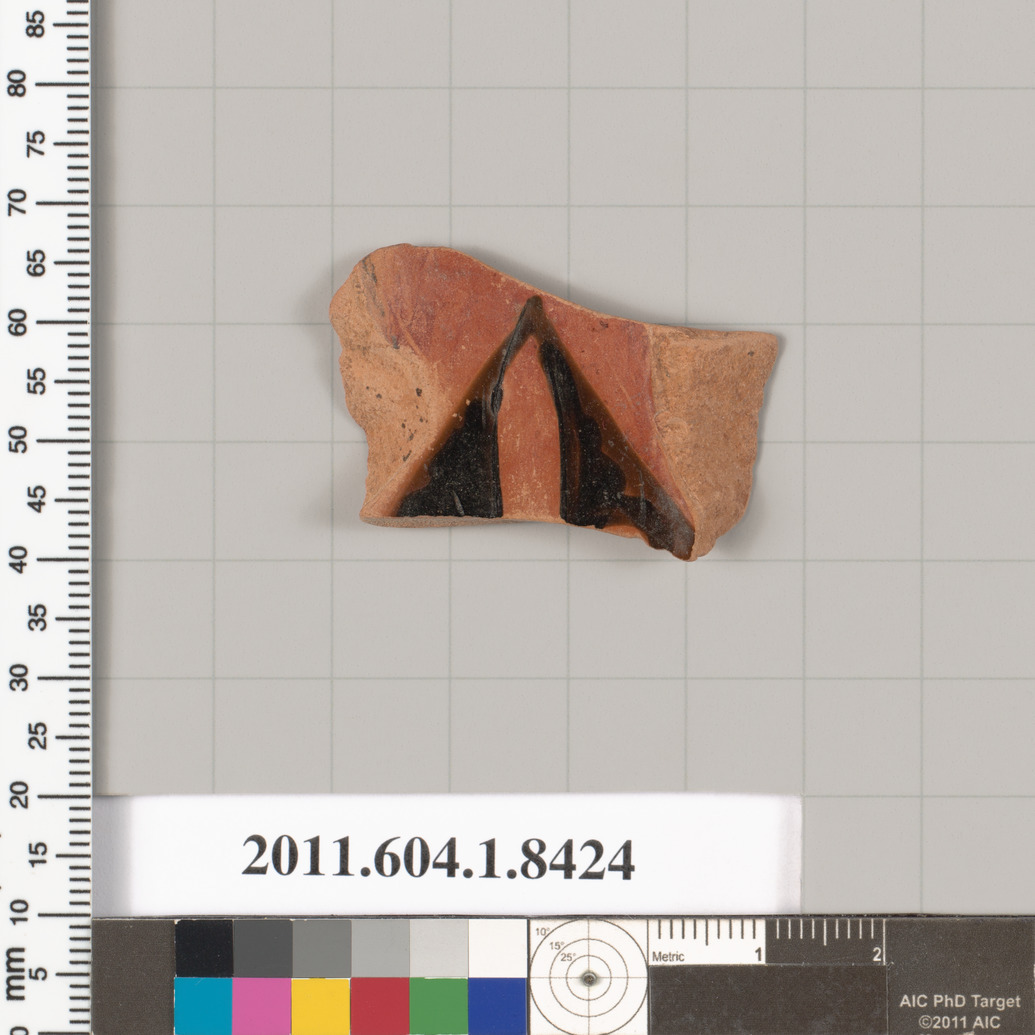
The complete kylix was symmetrical, a perfect circle. The fragment is inherently asymmetrical, its beauty lying in its unbalanced curve. Translated into silhouette, this inspires a departure from strictly tailored, bilateral symmetry. Imagine a single-shouldered wool crepe gown where the drape originates from one precise point on the shoulder, cascading down in a terracotta-like curve across the body, leaving the other shoulder starkly, elegantly bare—a study in balanced imbalance. A Heritage-Black cashmere coat might be cut with a spiraling seam that wraps the torso, suggesting the rotational form of the original vessel, yet terminating in a raw, self-finished edge along the hem or cuff, acknowledging its own constructed nature. The silhouette is no longer a static icon but a dynamic, partially revealed form.
2. The Honesty of the Edge: Deconstruction as Refinement
The most potent feature of the fragment is its broken edge. In 2026 tailoring, this manifests not as distressed deconstruction, but as a hyper-refined celebration of internal structure. A jacket in a dense, matte wool—reminiscent of terracotta’s unglazed texture—might have its lapel facing left intentionally unfinished, revealing the layers of canvas, horsehair, and silk thread within. This is not a flaw, but a confident display of craftsmanship, akin to the fragment’s exposure of its clay body. Seams could be exaggerated and left partially open at strategic points, like the fractured lines on the artifact, hinting at the garment’s assembly and inviting contemplation of its form. Hems on skirts or trousers may feature a deliberate, clean "break" or step, rejecting the conventional continuous line for a more architectural, fragmentary statement.
3. Narrative Through Absence: Negative Space and Partial Motifs
The painted scene on the kylix fragment is interrupted. This informs a sophisticated approach to pattern and embellishment. The Lauren 2026 collection could feature brocades or jacquards where a classic paisley or floral motif is not repeated ad infinitum, but appears once, dramatically, across a shoulder or down a sleeve, and is then abruptly severed by a seam or a panel of solid fabric. It tells a partial story, allowing the wearer’s own presence to complete the narrative. Embroidery might cluster densely in one area and fade into mere guideline stitches or vanish altogether, mimicking the way time wears away detail from an artifact. This creates a garment that is not loudly declarative, but quietly allusive, demanding closer inspection and personal interpretation—the ultimate Old Money virtue of being understood only by those with the code.
4. The Palette of Excavation: Earth, Oxide, and Patina
The terracotta fragment provides a masterclass in color. It is not a single hue, but a spectrum of baked earth: the deep iron-red of the clay body, the subtle black of the painted glaze, the whitish tan of mineral deposits accrued over centuries. This dictates a 2026 palette rooted in non-colors that speak of materiality and age. Heritage-Black remains foundational, but now alongside shades of Oxidized Ochre, Fired Sienna, Ash White, and Calcified Grey. Fabrics will be chosen for their innate, textural character: rough-hewn linens, crêpe with a dusty hand, matte wools that absorb light like ancient clay. The shine, if present, will be the subtle sheen of aged silk thread or the dull gleam of oxidized metal fastenings, never a brash, new polish.
In conclusion, the Terracotta fragment teaches that true heritage is not about preserving a frozen image of the past, but about engaging with its resonant, broken beauty. For Lauren Fashion’s 2026 Old Money vision, this means cultivating an aesthetic of intelligent absence, structural poetry, and narrative subtlety. The silhouette becomes a fragment of a larger, implied whole—the wearer’s life, intellect, and legacy. It is clothing that acknowledges the passage of time, honors the beauty of craftsmanship laid bare, and finds profound elegance not in ostentatious completion, but in the perfectly calibrated, evocative pause. It is, in essence, the art of dressing the modern figure as a timeless, dignified, and compelling artifact—beautifully incomplete, and infinitely suggestive.