← BACK TO ARCHIVES
Silk
Heritage Synthesis: Dancer with a Maple Branch
Curated on Jun 09, 2026 // Node: LDN-01
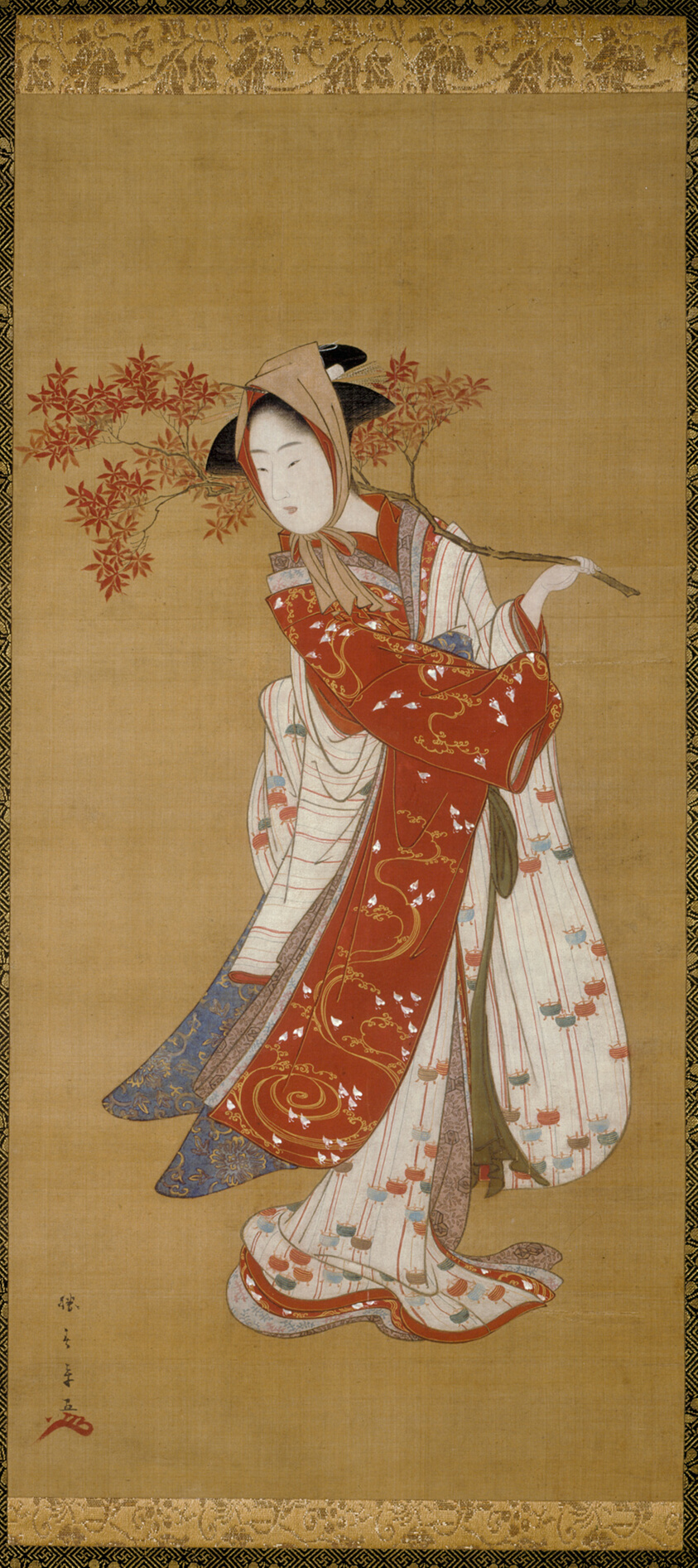
The Dancer with a Maple Branch: A Study in Materiality and Movement
As a Senior Heritage Specialist at the Lauren Fashion Heritage Lab, I am privileged to examine artifacts that transcend mere textile history, offering profound insights into the intersection of craftsmanship, cultural narrative, and aesthetic philosophy. The subject of this analysis—*Dancer with a Maple Branch*—is a hanging scroll executed in ink, color, and gold on paper. While the medium is paper, the materiality of this work is inextricably linked to the legacy of silk, not as a physical substrate but as a conceptual and tactile paradigm. This artifact, with its fluid elegance and refined execution, embodies the principles of classic silk craftsmanship that have long informed the sartorial traditions of London’s Savile Row. In this paper, I will deconstruct the artifact’s materiality, contextualize its artistic lineage, and draw parallels to the bespoke tailoring ethos that prizes precision, movement, and understated luxury.
Materiality and the Silk Paradigm
The scroll’s composition—ink, color, and gold on paper—immediately evokes the sensuousness of silk, a material historically associated with the highest echelons of artistic and sartorial expression. Silk, in its raw form, is a protein fiber derived from the cocoon of the silkworm, but its cultural significance extends far beyond its biological origins. In East Asian art, silk served as a canvas for painters who sought to capture the ephemeral beauty of nature and human form. The *Dancer with a Maple Branch* is a testament to this tradition, though executed on paper, a medium that mimics silk’s absorbency and delicacy. The use of gold, applied in fine lines and subtle washes, reflects the opulence of silk brocade, where metallic threads were woven to catch light and create a sense of depth. This interplay of matte and sheen is a hallmark of classic silk craftsmanship, where the fabric’s natural luster is enhanced by the artisan’s hand.
The fluidity of the dancer’s pose—a single figure captured mid-motion, a maple branch held aloft—echoes the drape of silk. The brushstrokes, both bold and delicate, replicate the way silk fabric falls and folds, suggesting a garment in motion. The gold accents, applied with precision, evoke the shimmer of a kimono or a ceremonial robe, reinforcing the connection between the painted figure and the textile traditions that inspired her. This materiality is not incidental; it is a deliberate choice by the artist to elevate the scroll from a mere representation to a tactile experience. For the heritage specialist, this demands an appreciation of how materiality informs narrative. The dancer is not just a figure; she is a vessel for the silk aesthetic, her form a metaphor for the fabric’s inherent elegance.
Context and Craftsmanship: The Silk Road to Savile Row
To fully understand *Dancer with a Maple Branch*, one must situate it within the broader context of East Asian silk culture, which has long influenced Western luxury markets. The Silk Road, a network of trade routes connecting Asia to Europe, facilitated the exchange of not only raw silk but also techniques and aesthetics. By the 18th and 19th centuries, European textile houses, particularly in London and Lyon, began incorporating Asian motifs and weaving methods into their designs. This cross-pollination is evident in the scroll’s composition, which balances asymmetry and harmony—principles that resonate with Savile Row’s approach to tailoring.
Savile Row, the epicenter of bespoke menswear, is defined by its commitment to craftsmanship, fit, and material integrity. A Savile Row tailor does not simply cut cloth; he or she sculpts it, allowing the fabric to dictate the garment’s form. Similarly, the artist of *Dancer with a Maple Branch* works with the paper’s grain and absorbency, letting the medium guide the brush. The maple branch, a symbol of grace and transience, is rendered with the same precision as a tailor’s basting stitch—each line purposeful, each color placement deliberate. The gold, applied in sparing highlights, mirrors the use of silk thread in a bespoke jacket’s buttonholes, where a single metallic strand can elevate the entire piece.
This artifact also speaks to the concept of *wabi-sabi*, the Japanese aesthetic of finding beauty in imperfection and transience. The dancer’s flowing sleeves and the branch’s delicate leaves are captured in a moment of fleeting grace, much like the ephemeral nature of a well-tailored garment. In Savile Row, this translates to the appreciation of a suit’s patina over time—the way wool or silk develops character with wear. The scroll, with its subtle fading and gentle creases, embodies this same philosophy. It is not a static object but a living record of its own history.
Fluid Elegance: The Dance of Form and Function
The term “fluid elegance” is often used to describe the movement of silk, but it equally applies to the dancer’s pose. The figure’s extended arm, the curve of her hip, and the trailing hem of her garment create a visual rhythm that mimics the flow of water or wind. This is no accident; the artist has mastered the art of capturing motion in a static medium, a skill that parallels the tailor’s ability to create garments that move with the body. In bespoke tailoring, the “drape” of a jacket or the “fall” of trousers is paramount. A Savile Row suit is engineered to allow for ease of movement, just as the dancer’s costume appears to float around her form.
The maple branch itself is a potent symbol. In East Asian culture, the maple leaf represents autumn, change, and resilience—themes that resonate with the luxury industry’s evolving relationship with heritage. For Lauren Fashion Heritage Lab, this artifact serves as a reminder that tradition is not static but dynamic. The scroll’s gold accents, while opulent, are applied with restraint, reflecting the Savile Row principle of “quiet luxury.” This is not ostentation for its own sake; it is a subtle assertion of quality, visible only to the discerning eye.
Conclusion: A Legacy of Craft
*Dancer with a Maple Branch* is more than a decorative scroll; it is a material and philosophical artifact that bridges East and West, art and fashion, tradition and innovation. Its use of ink, color, and gold on paper, while not silk itself, channels the essence of silk craftsmanship—its fluidity, its luminosity, its ability to convey movement and emotion. For the heritage specialist, this artifact offers a lens through which to examine the enduring influence of silk on global luxury, from the Silk Road to Savile Row. In its delicate balance of form and function, it mirrors the bespoke tailor’s pursuit of perfection—a pursuit that, like the dancer’s branch, is both fleeting and eternal.
As we preserve and study such works, we honor the artisans who created them and the traditions they represent. The Lauren Fashion Heritage Lab remains committed to this mission, ensuring that the lessons of the past continue to inform the craftsmanship of the future.
Heritage Lab Insight
Lab Insight: AIC Silk Archive Node #35686.