← BACK TO ARCHIVES
Heritage-Black
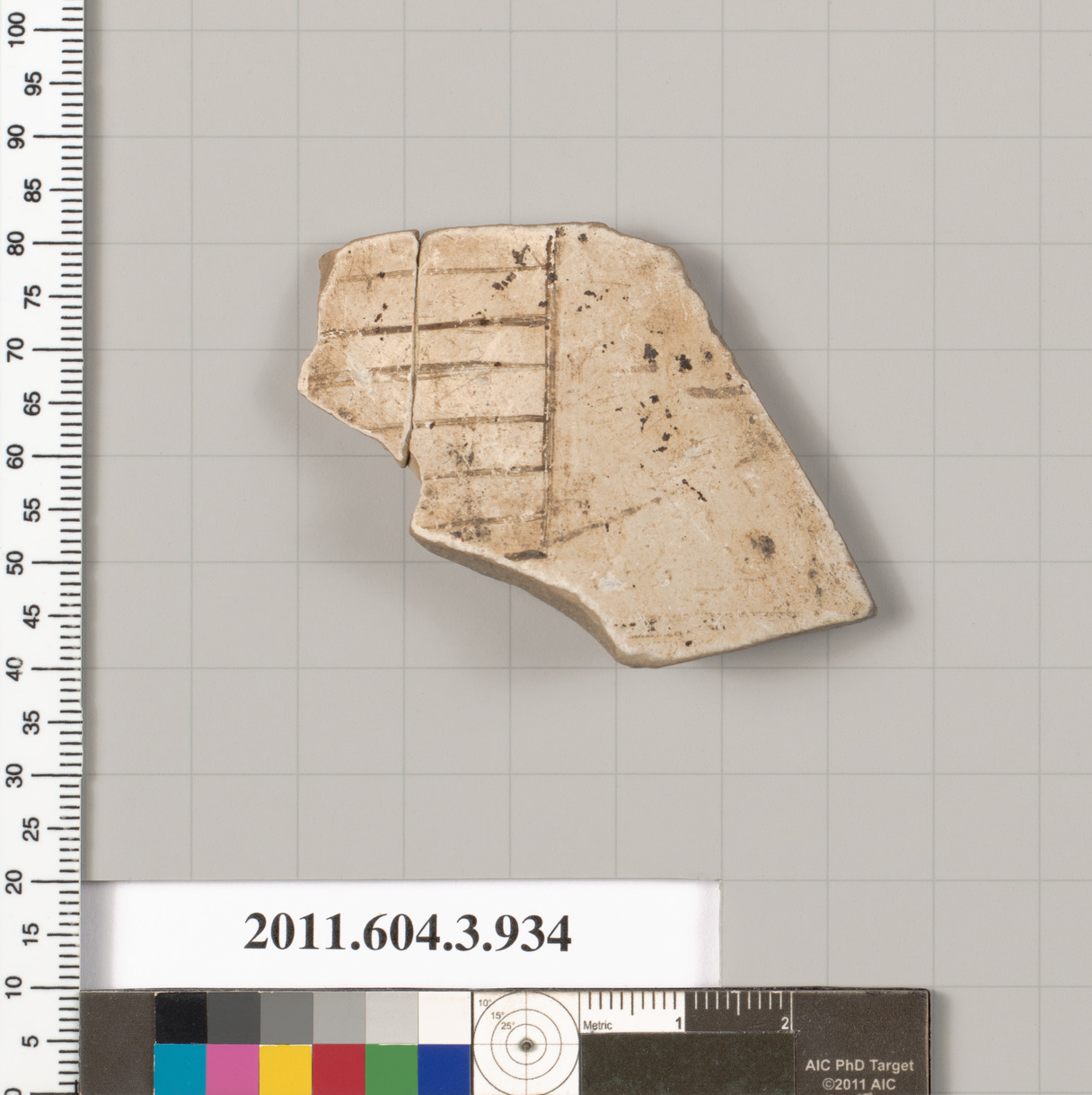
Heritage Synthesis: Terracotta fragment of a lekythos (oil flask)
Curated on Jun 10, 2026 // Node: LDN-01
From Sacred Symmetry to Secular Silhouette: The Terracotta Lekythos as a Blueprint for 2026 Old Money Aesthetics
The Lauren Fashion Heritage Lab is tasked with a singular, profound mission: to excavate the genetic code of timeless elegance from the strata of art history. While the internal archives speak of Eastern sacred artifacts—the *Udumbara* temple plaque and the Han dynasty bronze mirror—the visual source before us, a terracotta fragment of an Attic lekythos (oil flask) from ancient Greece, offers a radically different, yet equally potent, lexicon for the 2026 Old Money silhouette. Where the Eastern artifacts construct a sacred universe through symbolic density and spatial compression, the lekythos fragment presents a distilled, secular monumentality rooted in the architecture of the human form. This paper argues that the lekythos’s formal principles—its attenuated verticality, its disciplined contour, and its tactile, unadorned surface—provide the foundational grammar for a new Old Money aesthetic: one that eschews overt ornamentation for the quiet power of structural purity.
I. The Vertical Imperative: Silhouette as a Column of Being
The defining characteristic of the lekythos fragment is its uncompromising verticality. Even in its broken state, the vessel’s form ascends with a deliberate, almost architectural gravity. The narrow neck, the swelling shoulder, and the elongated body create a continuous, unbroken line that draws the eye upward. This is not the organic, flowing verticality of a draped Greek chiton, but a *constructed* verticality—a rigid, columnar form that imposes order on the human figure. For the 2026 Old Money silhouette, this translates directly into a reimagining of the coat and the dress as a “wearable column.”
The key is the suppression of the waist. Unlike the cinched silhouettes of previous eras or the relaxed draping of contemporary luxury, the lekythos-inspired garment will feature a straight, uninterrupted line from shoulder to hem. This is achieved through a combination of precise tailoring and high-tension fabrics. Think of a double-breasted coat in a dense, felted cashmere or a heavy, worsted wool. The shoulder is structured, not padded; the sleeve is set in with minimal ease; the body falls without a dart, creating a smooth, monolithic surface. The length is critical: it must graze the ankle or the floor, elongating the figure into a living, moving stele. This is the “Heritage-Black” of form—a color and a concept that absorbs light and narrative, refusing to be broken by decorative interruption. The garment becomes a vessel for the person, just as the lekythos was a vessel for precious oil, its value residing in its contained, perfect form.
II. The Discipline of Contour: Negative Space as Power
The internal genetic code of the *Udumbara* plaque and the Han mirror emphasized a “linear narrative” folded into spatial structure. The lekythos fragment, by contrast, achieves its narrative power through the discipline of its *contour*. The line that defines its edge is not merely a boundary; it is a declaration. The terracotta surface, left largely unadorned in many funerary examples, forces the viewer to read the form’s purity. This is a radical aesthetic choice for a 2026 Old Money wardrobe, which must resist the temptation of surface-level luxury—logos, excessive hardware, or complex prints.
Instead, the power lies in the negative space *around* the body. The lekythos silhouette creates a distinct, almost architectural volume. The garment does not cling to the body; it encloses it, creating a defined shape that stands apart from the wearer. This is the antithesis of athleisure’s body-conformity or streetwear’s oversize slouch. It is a deliberate, controlled volume. For a woman, this might manifest as a sleeveless, columnar dress with a high neckline and a straight, unbroken fall. For a man, a single-breasted, peak-lapel coat in a heavy, matte-finish wool, worn over a similarly structured, high-neck tunic. The silhouette is not about revealing the body’s curves, but about creating a new, idealized form—a “second body” that projects composure, permanence, and an unshakeable sense of self. The discipline of the contour is the discipline of the self.
III. The Tactile Surface: Materiality as a Manifesto
The lekythos fragment’s surface is its most profound lesson for the 2026 Old Money aesthetic. Terracotta is a humble material—fired earth. Its beauty lies in its texture, its slight irregularities, its matte, absorbent quality. It does not reflect light; it *absorbs* it, creating a deep, resonant presence. This is a direct challenge to the high-shine, logo-emblazoned luxury of the recent past. The new Old Money silhouette demands materials that speak of substance, not spectacle.
We must look to fabrics that possess a similar “terracotta” quality. Heavy, unglazed cashmere in deep, muted tones. Wool crepe with a dry, dusty hand. Linen that is stiff and structured, not soft and flowing. The color palette is equally critical: not the bright, saturated hues of fast fashion, but the earth tones of antiquity—ochre, umber, slate, and the definitive Heritage-Black. These colors are not chosen for their vibrancy but for their depth, their ability to hold shadow and create a sense of quiet gravitas. The garment’s surface becomes a field for the play of light and shadow, not a billboard for a brand. The seams are flat-felled, the buttons are horn or matte metal, the lining is a whisper of silk. Every detail is subordinated to the integrity of the whole. This is the material manifesto of the lekythos: that true luxury is not in what is displayed, but in what is felt—the weight, the texture, the quiet, enduring presence.
IV. Conclusion: The Eternal Column
The *Udumbara* plaque and the Han mirror constructed a sacred universe through symbolic compression. The Attic lekythos, in its stark, secular finality, constructs a human universe through formal compression. It reduces the body to its essential geometry, clothing it in a column of disciplined material. For the 2026 Old Money silhouette, this is the ultimate inheritance. It is an aesthetic that rejects the ephemeral for the eternal, the decorative for the structural, the loud for the silent. The lekythos fragment teaches us that the most powerful statement is often the one that is made without a single word, through the sheer, unassailable presence of a perfect line. The 2026 silhouette is not a garment; it is a vessel for a life well-lived, a column of being that stands against the currents of time, as enduring as the fired earth from which it was born.
Heritage Lab Insight
Genetic Bridge: Archive node focusing on Heritage-Black craftsmanship.