A Fragment of Fluid Elegance: An Analysis of Material and Method
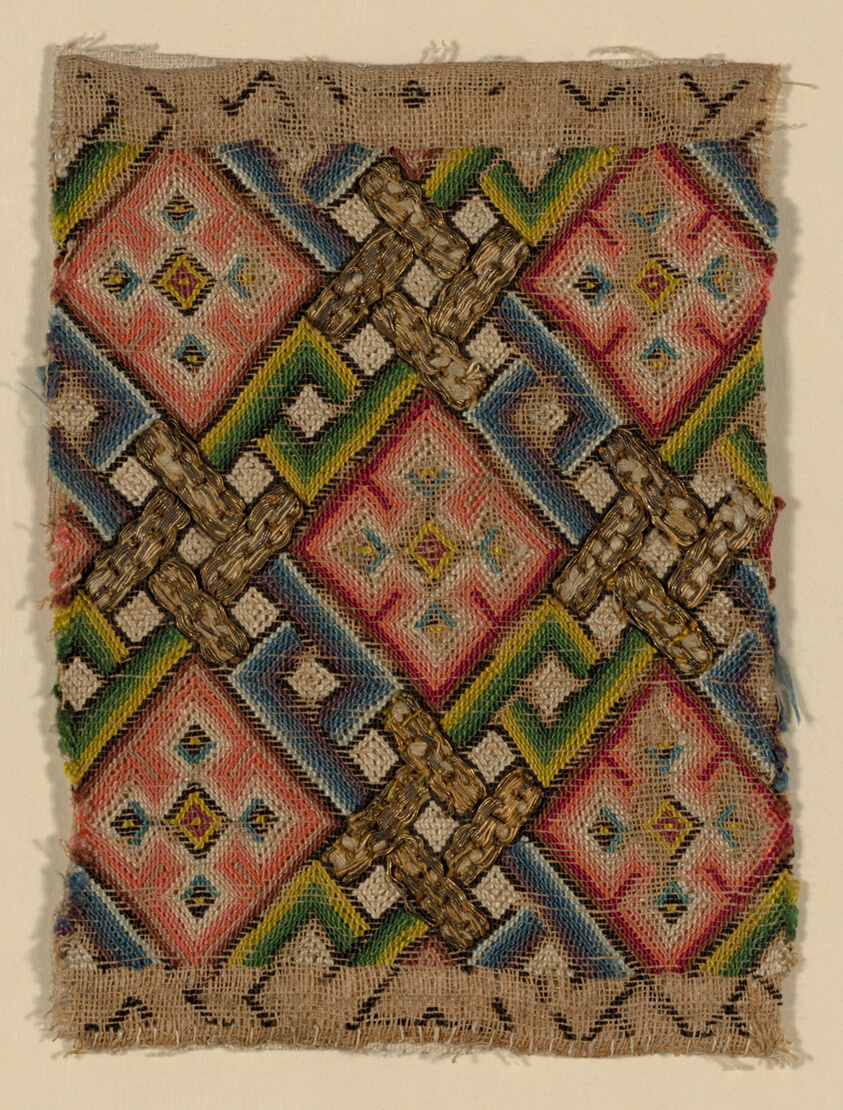
In the considered appraisal of sartorial heritage, one must occasionally confront not the complete garment, but the eloquent fragment. Such is the artefact presently under examination: a swatch of plain-weave linen, serving not as a foundation in its own right, but as the indispensable canvas for an exercise in exalted needlecraft. The subject is not the linen, but the application upon it—a deliberate confluence of silk in its most expressive forms, deployed with a technical rigour that belies the fluid elegance of the final aesthetic. This fragment, in its restrained glory, speaks volumes of a hierarchy of materials and a philosophy of construction where support and spectacle perform their distinct, vital roles.
The Architecture of Opulence: A Hierarchy of Materials
The material schema is both classical and deliberate. The plain-weave linen provides what we in Savile Row would term the understructure—the unseen yet critical foundation. Its virtues are those of stability, tensile strength, and a neutral, yielding surface. It is the sober suiting canvas, the haircloth interfacing; it does not seek attention but exists to permit and sustain it.
Upon this disciplined ground, the narrative of opulence is embroidered. Three distinct silk elements are introduced, each with a specific tonal and textural duty. First, the silk floss, the essential thread of colour and form, applied here in tent stitch. This stitch—a diagonal, uniform, and covering stitch—is the workhorse of precision, building up areas of colour with the meticulousness of a pointillist painter. It establishes the core imagery, the essential design.
The artistry is then elevated through the introduction of metal. The gilt- and silvered-metal-strip-wrapped silk represents the pinnacle of traditional thread manufacture. A slender strip of metal—likely silver or a white metal—is wound with breathtaking precision around a core of silk thread. This hybrid yarn captures and refracts light in a manner wholly distinct from dyed fibre, offering a luminous, metallic sheen that changes with the fall of light and the movement of the wearer. Its application in tent stitch alongside the plain floss integrates this radiance into the very fabric of the design, making it intrinsic rather than applied.
The Pinnacle of Technique: Padded Couching
Yet, it is the third technique, padded couching, that transforms the work from the merely exquisite to the truly sculptural. Here, the philosophy of the bespoke tailor finds a direct parallel. Just as a lapel is padded and canvased to achieve a specific, graceful roll that endures, padded couching introduces a dimension of relief. The process is methodical: first, a padding material (likely felt or additional layers of thread) is secured to the linen ground, building up the desired form. Upon this raised form, the precious metal-wrapped threads are laid, and then secured—couched—to the surface with minute, virtually invisible stitches of a finer thread.
The result is a play of light and shadow impossible to achieve with flat embroidery. The padded elements catch the light upon their crests, while shadows pool in their valleys, creating a dynamic, low-relief topography. This is not mere decoration; it is architectural embellishment. It demonstrates an understanding that true luxury engages more than one sense—it is as much about form and tactility as it is about visual splendour. The intent is a surface that invites the hand as surely as it captivates the eye, possessing a dignified substance.
Contextual Synthesis: Classic Craftsmanship and Fluid Elegance
The stated context of "classic silk craftsmanship and fluid elegance" is thus precisely borne out by the material evidence. The craftsmanship is resolutely classic: the stitches (tent and couching) are historical and time-tested; the materials (linen, silk, metal thread) are traditional and noble; the techniques require a patience and skill that cannot be rushed. This is the needlework equivalent of a hand-padded chest piece or a hand-stitched buttonhole—the mark of a cultivated, unhurried hand.
Yet, the outcome is one of fluid elegance. This is the critical synthesis. The precision of the technique does not result in stiffness or rigidity. The tent stitches, when expertly executed, create a supple, almost woven surface. The couched metals, for all their structural padding, follow lines that suggest movement—perhaps the curve of a vine, the sweep of a plume, the undulation of a wave. The linen ground, while firm, allows the entire composition a gentle drape and flexibility. It is, in essence, the embodiment of a sartorial principle we hold dear: a rigorous internal construction that facilitates and enhances graceful external expression.
In conclusion, this fragment stands as a testament to a refined aesthetic intelligence. It illustrates a complete understanding of the dialogue between foundation and flourish, between structural integrity and surface beauty. The linen provides the authoritative silence against which the silk sings its complex, luminous aria. In the world of bespoke cloth, we speak of a garment having a "quiet confidence." This embroidered fragment possesses precisely that. It does not shout; it insinuates. It represents an opulence that is earned through mastery, an elegance that flows from discipline, and a heritage built, stitch by deliberate stitch, upon the unshakeable foundations of classic craft. It is, in every sense, a fragment of the sublime.