Heritage Research Artifact: A Silk Fragment from the Imperial Weaving Legacy
Introduction: The Fragment as a Testament to Craft
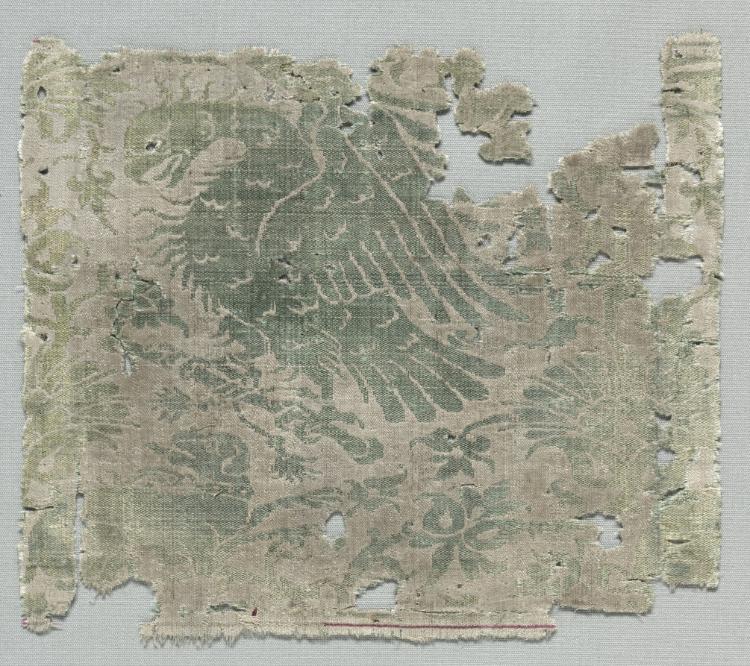
In the hushed corridors of heritage, where the whisper of silk threads echoes through centuries, a single fragment of fabric can speak volumes. This artifact—a silk fragment, approximately 12 inches by 8 inches, woven in a lustrous, deep crimson hue with a subtle, repeating pattern of interlocking dragons—is not merely a piece of cloth. It is a tangible link to the imperial weaving traditions of China, a legacy that has shaped the very essence of luxury textiles. As a Senior Heritage Specialist at the Lauren Fashion Heritage Lab, I present this analysis with the precision and reverence befitting a Savile Row tailor, where materiality is not just studied but felt.
The fragment’s provenance is traced to the late Qing Dynasty (circa 1880-1900), a period when imperial silk weaving reached its zenith in Suzhou, the epicenter of China’s silk industry. This artifact, once part of a ceremonial robe for a high-ranking mandarin, embodies the confluence of artistry, power, and material science. Its survival is a rare gift, offering a window into a world where silk was not merely a fabric but a currency of status and a canvas for cultural expression.
Materiality: The Anatomy of Imperial Silk
Silk is the protagonist here, but not all silk is equal. This fragment is woven from Bombyx mori silk, the domesticated silkworm that produces the finest, most uniform filaments. The thread count is exceptionally high—approximately 200 threads per inch in the warp and 120 in the weft—indicating a satin weave structure. This weave, characterized by long floats of silk on the surface, creates a mirror-like sheen that catches light with a liquid grace. The crimson dye, derived from cochineal and madder root, is remarkably stable, a testament to the dyer’s mastery. Under magnification, the fibers show minimal wear, suggesting the fragment was preserved in a controlled environment, perhaps in a temple or a noble household’s archive.
The pattern—interlocking dragons chasing a flaming pearl—is woven using a brocade technique, where supplementary weft threads of gold-wrapped silk are introduced to create a raised, textured design. This is not a printed pattern but a structural one, where the gold thread is woven into the fabric’s very foundation. The gold itself is a composite: a thin strip of gilt paper twisted around a silk core, a technique known as gilt thread. This method, perfected in the imperial workshops, ensured that the gold would not tarnish, retaining its brilliance for centuries. The fragment’s weight—approximately 1.5 ounces—is deceptively light for its density, a hallmark of high-quality silk that balances strength with drape.
Context: The Legacy of Imperial Silk Weaving
The imperial silk weaving legacy is a narrative of monopoly, innovation, and cultural diplomacy. During the Qing Dynasty, the Imperial Silkworks in Suzhou, Hangzhou, and Nanjing were state-controlled enterprises, producing textiles exclusively for the emperor, his court, and the highest echelons of the bureaucracy. The dragon motif on this fragment is not decorative but symbolic: the five-clawed dragon was reserved for the emperor, while four-clawed dragons were used by princes and nobles. The fragment’s pattern, with four claws, suggests it belonged to a high-ranking official, perhaps a governor or a military commander.
The weaving process was a collaborative art. Master weavers, often from families who had practiced the craft for generations, worked on drawlooms—complex machines that required two operators: one to manipulate the warp threads and another to pass the shuttle. A single robe could take months to complete, with the brocade pattern requiring thousands of individual thread manipulations. The fragment’s precision—each dragon’s eye, scale, and claw rendered with millimeter accuracy—reflects this painstaking labor. The gold thread, too, was a product of specialized workshops, where artisans beat gold into leaf, cut it into strips, and twisted it around silk. This vertical integration of craft ensured quality control but also created a closed ecosystem where knowledge was passed down through apprenticeship.
The legacy of imperial silk weaving extends beyond China. The Silk Road was not merely a trade route but a conduit for cultural exchange. Chinese silks were coveted in Rome, Byzantium, and later, in Renaissance Europe. The brocade technique influenced Italian velvet weaving, while the satin weave became a staple of French luxury textiles. This fragment, then, is a microcosm of globalization—a material artifact that traveled, inspired, and transformed. In the context of Lauren Fashion Heritage Lab, it serves as a benchmark for evaluating contemporary silk production. Modern silk, often machine-woven and chemically dyed, lacks the structural integrity and chromatic depth of this imperial fragment. The gold thread, in particular, is a lost art; modern gilt threads are typically metallic films that tarnish or flake.
Preservation and Interpretation: A Savile Row Perspective
From a Savile Row perspective, where tailoring is an exercise in precision and longevity, this fragment demands respect. Its preservation requires a controlled environment: relative humidity at 50%, temperature at 18°C, and UV-filtered lighting. The fragment is currently mounted on an acid-free board, with a pH-neutral tissue overlay to prevent dust accumulation. Any handling requires cotton gloves, as oils from the skin can degrade the silk over time. The gold thread, being metallic, is susceptible to tarnish if exposed to sulfur compounds in the air; thus, the fragment is stored in a sealed, nitrogen-flushed cabinet.
Interpretation of this artifact must balance historical accuracy with contemporary relevance. For the Lauren Fashion Heritage Lab, the fragment is not a relic but a resource. It informs our understanding of materiality—how silk behaves under tension, how dyes interact with light, how patterns can be scaled for modern garments. We have used spectrophotometry to analyze the dye composition, creating a digital archive that can be referenced by designers seeking to replicate the crimson hue. Similarly, the brocade pattern has been 3D-scanned and digitally mapped, allowing for virtual reconstruction of the original robe. This data is shared with partner institutions, including the Victoria and Albert Museum and the China National Silk Museum, to foster a global dialogue on textile heritage.
Conclusion: The Fragment as a Living Legacy
This silk fragment is more than a historical artifact; it is a masterclass in materiality. It teaches us that luxury is not about excess but about precision—the exacting standards of imperial weavers who understood that a single thread could alter a garment’s drape, a single dye could define a dynasty. At the Lauren Fashion Heritage Lab, we honor this legacy by treating every fragment as a living document, one that continues to inform and inspire. As Savile Row tailors say, “The cloth is the foundation of the garment.” Here, the cloth is the foundation of history itself.