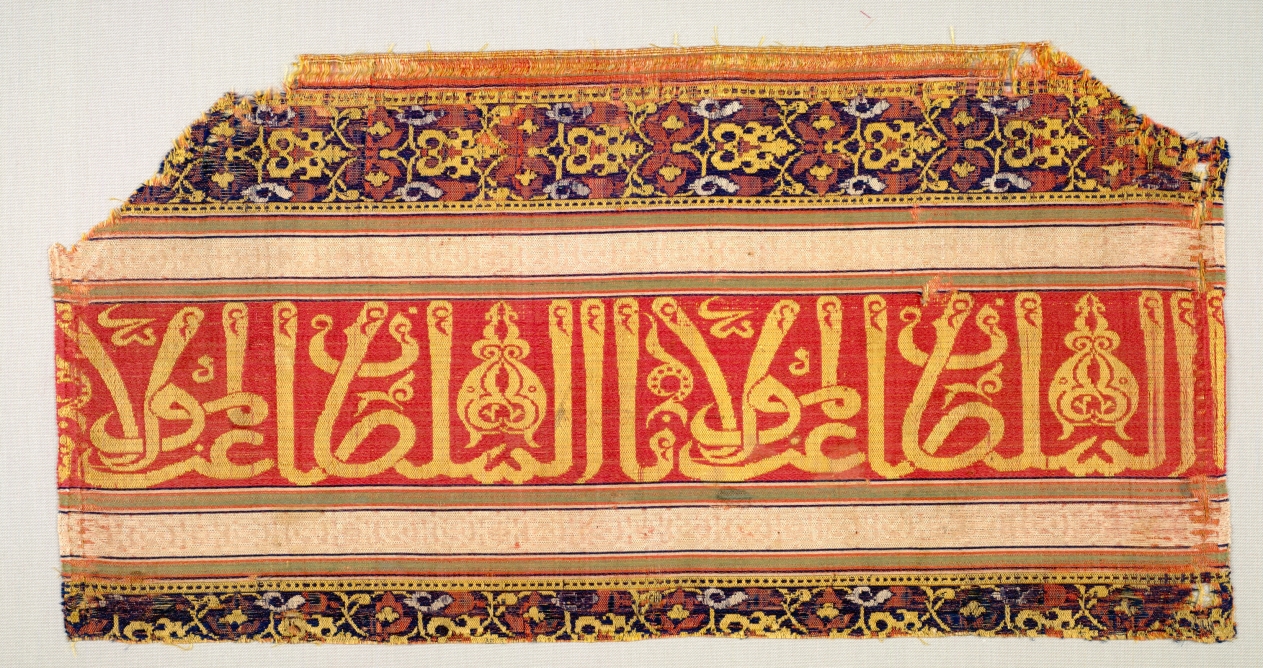
The Striped Silk Fragment: A Study in Materiality and Imperial Legacy
Within the hushed archives of the Lauren Fashion Heritage Lab, we encounter a singular artifact: a fragment of striped silk, once part of a garment. Its materiality—the cool, resilient touch of silk—immediately anchors it within a grand narrative. This is not merely a textile; it is a document of imperial ambition, a testament to the meticulous craft that defined the silk-weaving traditions of the East, and a silent witness to the global exchange that shaped Western luxury. As a Senior Heritage Specialist, I approach this fragment not as a relic, but as a living archive of technique, power, and aesthetic evolution.
Materiality and the Silk Road’s Echo
The silk itself is a marvel of natural engineering. Its filament, extruded by the Bombyx mori silkworm, possesses a unique triangular prism structure that refracts light, lending the fabric its characteristic luster and depth. This fragment, with its subtle sheen, speaks to a purity of sericulture that was the guarded secret of imperial China for millennia. The stripes, precise and unwavering, are not printed but woven—a testament to the weaver’s mastery over the drawloom. Each stripe required the coordination of warp and weft threads, often using multiple shuttles to create the alternating bands of color and texture. In the context of imperial silk weaving, such precision was not merely decorative; it was a display of control over nature and labor. The stripes themselves—perhaps a narrow band of deep indigo against a field of ivory, or a subtle pattern of gold and crimson—echo the hierarchical codes of the Chinese court, where specific patterns and colors were reserved for the emperor, his consorts, and the highest-ranking officials.
The materiality of this silk also reveals its journey. The weight and drape suggest a garment of substance—perhaps a robe or a court coat—designed to move with authority. The silk’s resilience, even in this fragmentary state, indicates a high twist in the yarn, a technique often employed to enhance durability and luster. This was not a fabric for the faint of heart; it was engineered for ceremony, for the slow, deliberate movements of a courtier or a diplomat. The stripes, too, serve a functional purpose: they guide the eye, creating a visual rhythm that emphasizes the wearer’s stature. In the imperial context, the garment was a second skin, a declaration of status woven into every thread.
The Imperial Workshop: A Legacy of Precision
To understand this fragment, we must consider the imperial silk workshops of the Ming and Qing dynasties, particularly those in Suzhou, Hangzhou, and Nanjing. These were not mere factories; they were academies of craft, where generations of weavers refined techniques passed down through families. The imperial workshops operated under the direct patronage of the emperor, producing silks for court use, diplomatic gifts, and religious ceremonies. The stripes on this fragment are likely the product of a kesi or jin technique—a tapestry weave or a compound weave that allowed for intricate patterns and color changes without breaking the weft thread. This method was labor-intensive, requiring the weaver to manipulate each colored thread manually, often working from a pattern drawn on paper. The result was a fabric of unparalleled precision, where the stripes are not merely decorative but integral to the structure of the cloth.
The legacy of imperial silk weaving is one of both artistry and control. The workshops were governed by strict regulations: the use of gold thread, for example, was reserved for the emperor, and the color yellow was forbidden to all but the imperial family. The stripes on this fragment, if they include gold or yellow, would have been a mark of supreme authority. Even without such regal hues, the fragment’s stripes speak to a system of visual language—a semiotics of power that was understood across the empire. The width of the stripes, the spacing between them, and the choice of colors all conveyed meaning. A narrow stripe might indicate a lower rank, while a broad stripe of crimson or azure could signify a high official or a member of the imperial clan.
From Imperial Court to Global Commodity
By the 18th and 19th centuries, this silk—and its striped patterns—had traveled far beyond the Forbidden City. The East India Company and other European trading entities brought such fabrics to London, Paris, and beyond. The stripes, once a symbol of imperial hierarchy, were recontextualized as markers of exotic luxury. Savile Row tailors, with their exacting standards, recognized the quality of these silks and began incorporating them into waistcoats, cravats, and evening wear for the British aristocracy. The fragment we hold today may well have been part of a garment worn at a London ball or a diplomatic reception, its stripes now speaking a different language—one of cosmopolitan taste and global commerce.
This transition from imperial court to Savile Row is a story of adaptation. The stripes, once rigidly codified, became more fluid in Western hands. Tailors might combine them with other patterns, or use them as accents in a coat lining. The materiality of the silk, however, remained unchanged: its luster, its drape, its ability to hold a crease. For the discerning gentleman, a striped silk waistcoat was a statement of discernment—a nod to the ancient craft of the East, filtered through the precision of London tailoring. The legacy of imperial weaving thus found a new home, not in the halls of the Forbidden City, but in the quiet elegance of a Mayfair fitting room.
Preserving the Fragment, Honoring the Craft
Today, as we examine this fragment under controlled light, we are reminded of the fragility of such heritage. The silk, though resilient, is subject to degradation from light, humidity, and handling. Our role at the Lauren Fashion Heritage Lab is to preserve not just the physical artifact, but the knowledge it embodies. Each stripe is a record of a weaver’s skill, a patron’s ambition, and a culture’s values. By studying the materiality of this silk—its weave, its dyes, its provenance—we contribute to a larger understanding of how luxury is made, traded, and transformed.
In the end, this striped silk fragment is more than a piece of a garment. It is a bridge between worlds: between the imperial workshops of Suzhou and the bespoke ateliers of Savile Row, between the rigid hierarchies of the Chinese court and the fluid codes of Western fashion. Its stripes, once a symbol of power, now speak of connection—of the threads that bind us to a shared history of craft and commerce. As we preserve this fragment, we honor the legacy of those who wove it, those who wore it, and those who continue to find meaning in its enduring beauty.