The Socratic Vessel: Terracotta’s Silent Pedagogy and the 2026 Old Money Silhouette
I. Introduction: The Paradox of Depth in Fashion Heritage
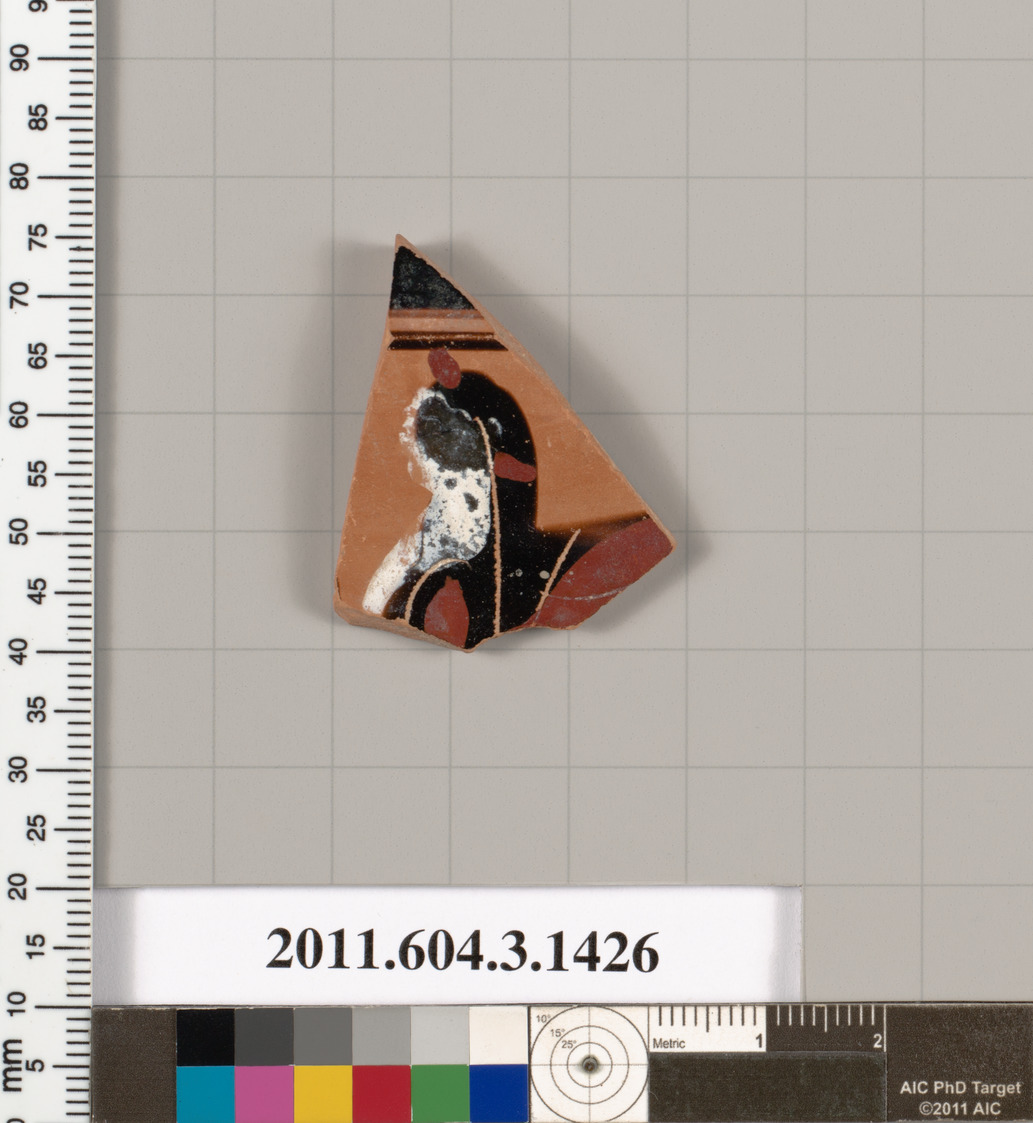
The internal genetic code of Lauren Fashion Heritage Lab posits a profound aesthetic dialectic: the juxtaposition of Jacques-Louis David’s The Death of Socrates—a masterpiece of narrative sublimity—with a terracotta skyphos (deep drinking cup) bearing the same name. This fragment, a Greek Attic artifact from the 5th century BCE, embodies what the code identifies as “existence depth” versus “representational depth.” For the 2026 Old Money silhouette, this terracotta fragment is not merely a historical curiosity but a pedagogical artifact that redefines luxury as a state of being rather than a narrative of having. The Old Money aesthetic, long associated with understated opulence, finds its philosophical anchor in this vessel’s silent materiality.
II. The Terracotta Fragment: A Material Manifesto
The museum artifact—a terracotta fragment of a skyphos—offers a stark contrast to the painted drama of David’s canvas. Where David’s work demands intellectual decoding—the philosopher’s raised finger, the weeping disciples, the poison cup—the skyphos fragment exists in a state of pure presence. Its terracotta clay, fired to a warm, earthy ochre, bears the marks of the potter’s wheel and the kiln’s heat. The fragment’s broken edges are not flaws but testimonies to time, a material history that speaks without words. This is the “物性” (thingness) that the internal code invokes: a depth that does not require narrative interpretation but rather direct sensory engagement.
For the 2026 Old Money silhouette, this material philosophy translates into a rejection of overt branding, logo-heavy embellishment, or narrative-driven design. Instead, the silhouette must embody what the code calls “existence depth”—a quality that emerges from the inherent properties of the fabric and form. The terracotta fragment teaches us that a garment’s deepest meaning lies not in what it represents (status, wealth, history) but in what it is: a piece of cloth, a cut, a drape, a weight. This is the silent pedagogy of the vessel: it demands we “face” it, not “read” it.
III. The 2026 Silhouette: From Narrative to Presence
The 2026 Old Money silhouette, informed by this terracotta fragment, will reject the theatricality of contemporary luxury fashion—the runway spectacles, the logo-laden streetwear, the hyper-narrativized collections. Instead, it will embrace a phenomenological minimalism that echoes the skyphos’s functional integrity. Key characteristics include:
1. The Unadorned Line: Just as the skyphos’s form is defined by its curve and rim rather than painted decoration, the 2026 silhouette will prioritize pure structural lines. Tailored blazers with no visible buttons, trousers with invisible seams, and dresses that rely on gravity and drape rather than darts or pleats. The “story” is the body’s relationship to the cloth, not a designer’s narrative.
2. Material as Message: The terracotta’s earthy, unglazed surface—its raw materiality—informs a fabric palette of Heritage-Black wool, unbleached linen, and matte cashmere. These materials do not shout; they resonate. A Heritage-Black wool coat, for instance, derives its depth from the weave’s density and the fiber’s natural luster, not from a logo or a pattern. This is the “existence depth” of the vessel: the coat is not a symbol of wealth but a manifestation of quality.
3. The Fragmentary Aesthetic: The broken edges of the skyphos inspire a silhouette that embraces incompleteness as a form of elegance. Asymmetrical hems, raw edges, and intentional “flaws” in stitching or draping become markers of authenticity. This is not deconstruction for shock value but a philosophical acceptance of time’s passage—a nod to the vessel’s millennia of existence. The 2026 Old Money silhouette will feature garments that appear “found” rather than “made,” as if they have always existed.
IV. The Dialectic Resolved: Balance Between Narrative and Silence
The internal code’s dialectic between David’s narrative depth and the skyphos’s existence depth is not a binary choice but a balance. For the 2026 Old Money silhouette, this means integrating subtle narrative cues without overwhelming the material presence. A Heritage-Black cashmere sweater, for example, might feature a single, hand-stitched seam that references the skyphos’s wheel-thrown spiral—a whisper of story rather than a shout. The silhouette’s depth lies in the tension between what is said and what is felt.
This balance is embodied in the “Socratic Cut”: a silhouette that is both philosophical (carrying the weight of history) and phenomenological (existing purely in the present). A long, fluid skirt in Heritage-Black wool, for instance, might be cut to mimic the skyphos’s gentle curve, its hem brushing the floor like the vessel’s lip. The garment does not tell a story of Socrates, but it embodies the same quiet dignity—the same refusal to be reduced to a symbol.
V. Conclusion: The Vessel as Garment
The terracotta skyphos fragment, in its silent materiality, offers the 2026 Old Money silhouette a profound lesson: true luxury is not about being seen but about being felt. The Heritage-Black palette, the unadorned lines, the fragmentary edges—all are invitations to presence. As the internal code suggests, the deepest aesthetic experience occurs when we are “simultaneously struck by a philosophy and a cup.” In fashion terms, this means a garment that is both a thought and a thing—a material object that carries the weight of history while existing fully in the now.
The 2026 Old Money silhouette, thus informed, will not be a revival of past styles but a reclamation of material truth. It will be a silent vessel, waiting to be filled not with stories but with lived experience. In this, it achieves the ultimate paradox of depth: the more it refuses to mean, the more it is.