The Mourning Sampler: An Artifact of Grief, Craft, and the Enduring Legacy of Silk
Introduction: The Silent Lexicon of Loss
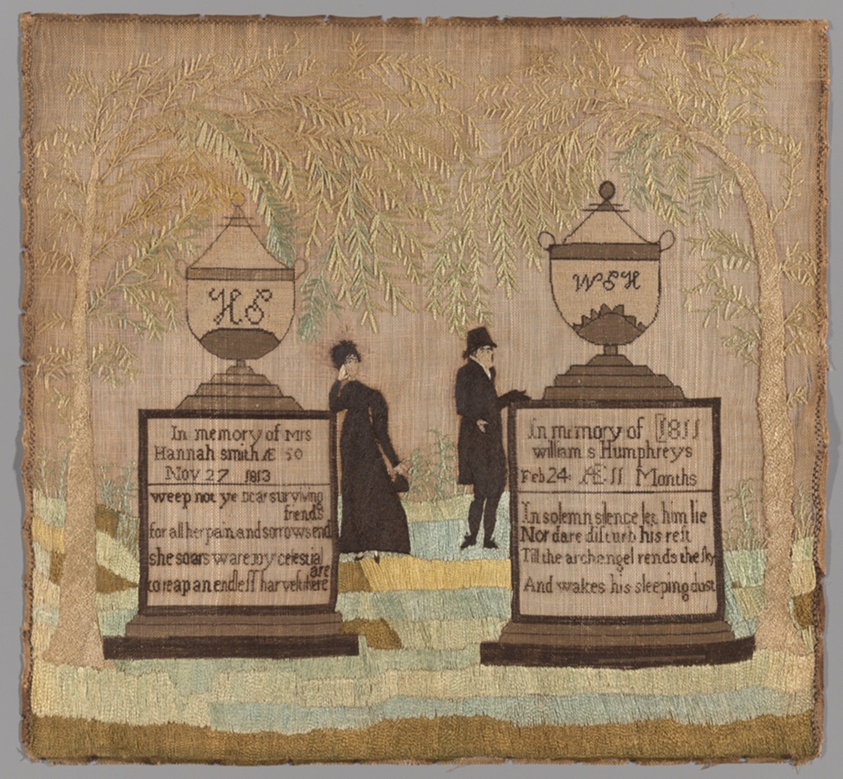
In the hushed corridors of heritage, few artifacts speak with the quiet eloquence of the mourning sampler. This is not merely a piece of needlework; it is a materialized elegy, a tactile document of personal and cultural grief. As the Senior Heritage Specialist for the Lauren Fashion Heritage Lab, I have the privilege of examining such objects not as static relics, but as living dialogues between maker, material, and moment. The subject of this paper—a mourning sampler executed on a ground of linen, plain weave, and embroidered with silk floss—represents a pinnacle of sentimental craftsmanship. Its stitches—tent, cross, long, stem, whip, and couching—are not mere techniques; they are the calligraphy of sorrow, rendered in the most luxurious of fibers.
This artifact, contextualized within the late 18th to early 19th century, embodies the intersection of personal mourning rituals and the commercialized silk trade. The choice of silk floss is paramount. It is a material that speaks of status, of permanence, and of a certain fluid elegance that linen alone cannot convey. The sampler becomes a repository of memory, where each thread is a vow against oblivion.
Materiality: The Foundation of Remembrance
The foundation of this artifact is linen, plain weave. Linen, derived from the flax plant, is a fabric of remarkable durability and subtle luster. Its plain weave structure provides a stable, grid-like canvas essential for the precision of counted-thread embroidery. However, linen is also a humble material, associated with utility and domesticity. It is the ground upon which grief is inscribed, a neutral stage for the drama of silk.
It is the silk floss that elevates this sampler from a domestic exercise to a work of art. Silk, in the context of the 18th and 19th centuries, was a global commodity of immense value. The classic silk craftsmanship evident in this piece reflects the meticulous sericulture and dyeing techniques that defined the era. The floss, with its high twist and brilliant sheen, catches light differently than wool or cotton. It creates a surface of fluid elegance, where the embroidery seems to float above the linen ground. This optical effect is deliberate. The silk mimics the ephemeral quality of life itself—beautiful, fragile, and luminous in its brief moment.
The selection of stitches is a masterclass in textile engineering. Tent stitch provides a dense, tapestry-like consistency for solid areas, often used for the background or for the depiction of architectural elements like tombs or weeping willows. Cross stitch, a staple of sampler work, offers geometric precision for lettering and borders. Long stitch and stem stitch create flowing lines for the sinuous branches of the willow tree, a ubiquitous symbol of mourning. Whip stitch adds a dimensional outline, while couching allows for the application of thicker, metallic threads or the creation of textured surfaces, such as the bark of a tree or the folds of a mourning gown. Each stitch is a decision, a deliberate act of making that mirrors the slow, deliberate process of grieving.
Context: Silk as a Social and Emotional Currency
The mourning sampler did not exist in a vacuum. It was a product of a society that codified grief through material culture. Following the death of a loved one, particularly in the wake of the Napoleonic Wars or the high infant mortality rates of the period, families would commission or create these samplers as part of a broader mourning ritual. The silk floss was not an incidental choice. It was a statement of economic and emotional investment. Silk was expensive. To use it for a private, domestic object was to signal that the deceased was worthy of the finest materials, that their memory was not cheap.
This aligns with the ethos of London Savile Row, where fabric is never merely fabric. On Savile Row, a length of silk is a narrative, a promise of quality, a marker of identity. The mourning sampler operates on the same principle. The silk floss is the thread that connects the private sphere of the home to the global networks of trade and fashion. The classic silk craftsmanship of the sampler mirrors the techniques used in high-end dressmaking and upholstery. The same tent stitch used to embroider a sampler might be used to create a pocket for a waistcoat or a panel for a formal gown. The sampler, therefore, is not an isolated craft; it is a miniature, intimate version of the larger textile economy.
The fluid elegance of the silk embroidery also speaks to the aesthetic ideals of the period. The Romantic movement valued emotion, nature, and the sublime. The weeping willow, the urn, the plinth—these are not just motifs; they are visual poetry. The silk floss, with its ability to capture and reflect light, animates these symbols. The tree seems to sway, the urn to glow. The sampler becomes a living memorial, a space where the deceased is not just remembered but felt.
Heritage Significance: The Artifact as Archive
As a heritage artifact, this mourning sampler is a primary source of immense value. It documents not only the technical skill of its maker but also the emotional and social structures of its time. The use of silk floss is a key indicator of class and aspiration. The precision of the tent, cross, long, stem, whip, and couching stitches reveals the education of the embroiderer, likely a young woman from a genteel family. The sampler was a proof of her accomplishments, a demonstration of her ability to manage the household’s textile needs and to participate in the cultural language of sentiment.
From a conservation perspective, the fragility of the silk floss is a constant concern. Silk is protein-based and susceptible to light damage, humidity, and insect attack. The linen ground, while robust, can become brittle. The preservation of such an artifact requires a deep understanding of its materiality. We must respect the classic silk craftsmanship by maintaining stable environmental conditions and using minimal intervention. The goal is not to halt time but to slow its decay, allowing future generations to read this silent lexicon of loss.
Conclusion: The Threads That Bind
The mourning sampler, with its linen ground and silk floss embroidery, is a profound testament to the human need to memorialize. It is a document of grief, a showcase of skill, and a luxury object all at once. The fluid elegance of its execution belies the heavy emotion it carries. In the language of Savile Row, we might say that this sampler is bespoke—tailored to the specific contours of a family’s loss. The stitches are the seams of memory, the silk the thread of continuity.
As we study this artifact, we are reminded that heritage is not about preserving the past in amber. It is about understanding the choices, materials, and emotions that shaped it. The mourning sampler, in its quiet dignity, teaches us that the most enduring legacies are often the most personal. And in the shimmer of its silk, we see not just a reflection of a lost loved one, but of our own shared humanity.