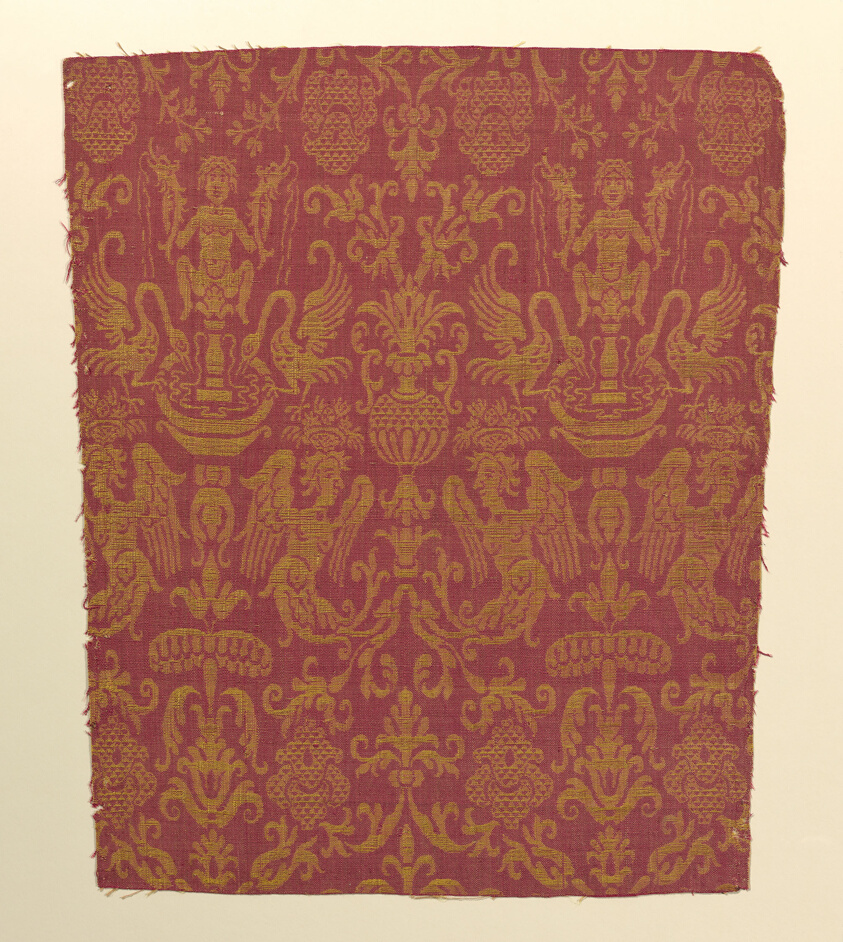
The Fragment as a Testament: Deconstructing Materiality and Craft in Classic Silk Elegance
Introduction: The Silent Narrative of a Fragment
In the hallowed ateliers of London’s Savile Row, where precision tailoring meets centuries of heritage, the fragment is not merely a remnant—it is a primary source of knowledge. As Senior Heritage Specialist for Lauren Fashion Heritage Lab, I present this artifact as a critical study in materiality, craft, and the enduring language of elegance. The subject is a fragment of silk and linen, plain weave with supplementary patterning wefts bound by secondary binding warps in plain interlacings. This piece, though incomplete, speaks volumes about the technical mastery and aesthetic philosophy that define classic silk craftsmanship. It is a microcosm of a tradition that values fluidity, structure, and the quiet power of refined detail.
Materiality: The Dialogue Between Silk and Linen
The choice of silk and linen in a single weave is a deliberate act of balance. Silk, with its natural luster, tensile strength, and ability to absorb dye with unparalleled depth, has long been the fabric of luxury. Linen, conversely, offers a matte, crisp texture and a structural integrity that counters silk’s fluidity. In this fragment, the two fibers are not blended but interwoven in a plain weave—the simplest and most ancient of textile structures. Yet, the complexity emerges in the supplementary patterning wefts and secondary binding warps.
The supplementary patterning wefts are the narrative threads. They are introduced into the plain weave ground, creating raised, textured motifs that catch light differently than the base fabric. These wefts are bound by secondary binding warps, which operate in plain interlacings—a technique that ensures the pattern remains secure without distorting the overall hand of the cloth. The result is a fabric that feels both substantial and airy, a paradox that is the hallmark of classic silk craftsmanship. The linen ground provides a stable, breathable foundation, while the silk patterning wefts add a layer of opulence that is tactile and visual.
This materiality is not accidental; it is engineered for elegance. The plain weave structure allows for a draping quality that is neither stiff nor limp. It holds a shape when tailored, yet moves with the body—a quality prized in Savile Row suits and evening gowns. The secondary binding warps ensure that the supplementary wefts do not shift or fray, preserving the integrity of the pattern over time. This is a fabric designed for longevity, for heirloom status, for the slow, deliberate pace of bespoke creation.
Craftsmanship: The Art of the Supplementary Weft
The technique of supplementary patterning wefts bound by secondary binding warps is a testament to the weaver’s skill. Unlike brocade or damask, which rely on complex loom mechanisms, this method is deceptively simple. The weaver must manually insert each supplementary weft, binding it with a secondary warp that runs in a plain interlacing pattern. This requires an intimate understanding of tension, density, and rhythm. A single misalignment can disrupt the entire pattern, rendering the fabric unbalanced.
In the context of classic silk craftsmanship, this technique is a bridge between utility and artistry. The plain weave ground is the workhorse—durable, stable, and unassuming. The supplementary wefts are the artists—introducing color, texture, and depth. The secondary binding warps are the guardians, ensuring that the art remains anchored to the utility. This interplay is a metaphor for the Savile Row ethos: the foundation of impeccable tailoring supports the flourish of design, never overwhelming it.
The fragment’s patterning is subtle, almost reticent. It does not shout for attention; it invites closer inspection. This is the language of understated elegance, where quality is not flaunted but felt. The motifs, likely geometric or floral, are rendered in a tone-on-tone palette, allowing the texture to do the work of visual interest. In a world of fast fashion and digital prints, this fragment reminds us that true luxury is tactile, not visual alone.
Context: Classic Silk Craftsmanship and Fluid Elegance
To understand this fragment, one must place it within the lineage of classic silk craftsmanship. From the silk routes of China to the looms of Lyon and the tailoring houses of London, silk has been a symbol of status, refinement, and cultural exchange. However, the specific combination of silk and linen in a plain weave with supplementary patterning wefts is a later innovation, likely emerging in the 19th or early 20th century, when industrial weaving allowed for greater experimentation with fiber blends and structural complexity.
Fluid elegance is the defining aesthetic of this period. It is a rejection of the stiff, corseted silhouettes of earlier eras in favor of garments that move with the body. This fragment embodies that philosophy. The linen ground provides a slight stiffness that prevents the fabric from clinging, while the silk wefts add a liquid sheen that catches the light as the wearer moves. The result is a fabric that is both structured and flowing, a paradox that is the essence of modern luxury.
In the context of Lauren Fashion Heritage Lab, this fragment is a research artifact that bridges past and present. It informs our understanding of how heritage techniques can be adapted for contemporary design. The use of secondary binding warps, for example, is a precursor to modern reinforcement methods used in high-performance textiles. The plain weave ground is a reminder that simplicity is the foundation of complexity. For the modern designer, this fragment offers a lesson in restraint: that elegance does not require excess, but rather, the precise placement of every thread.
Conclusion: The Fragment as a Living Document
This fragment of silk and linen is more than a piece of cloth; it is a living document of craft, materiality, and aesthetic philosophy. It speaks to a time when weaving was a form of storytelling, when every thread was chosen for its purpose, and when elegance was measured not by volume but by quality. As a heritage specialist, I see in this fragment a call to preserve not just the object, but the knowledge it contains—the tension of the warp, the rhythm of the weft, the patience of the weaver.
In the halls of Savile Row, where tradition is both honored and challenged, this fragment is a quiet reminder that true craftsmanship is timeless. It does not seek to dominate; it seeks to endure. And in its endurance, it offers a path forward for those who would create the next chapter of classic silk craftsmanship. The fragment is not an end; it is a beginning—a thread waiting to be woven into the future.