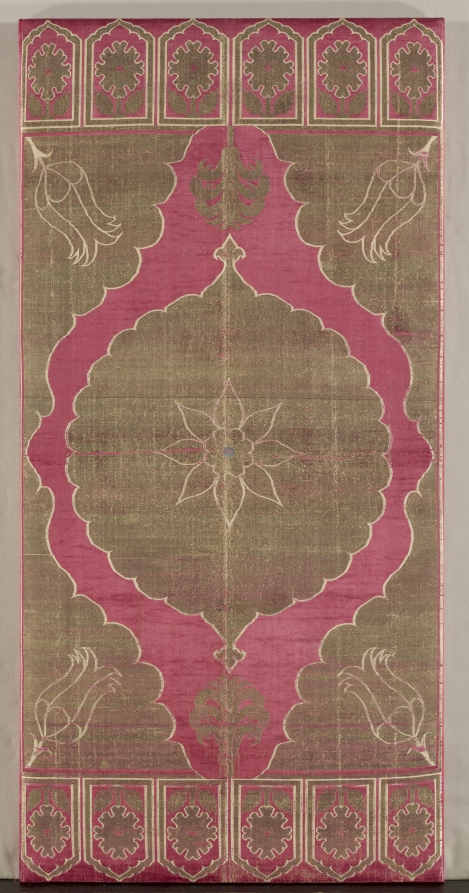
The Lampas Silk Cushion Cover: A Legacy of Imperial Weaving in the Modern Interior
In the hushed ateliers of London’s Savile Row, where precision tailoring meets centuries of textile mastery, the lampas silk cushion cover stands as a quiet testament to an art form that once clothed emperors and now graces the discerning home. As a Senior Heritage Specialist at the Lauren Fashion Heritage Lab, I approach this artifact not merely as a decorative object, but as a woven document of imperial ambition, technical virtuosity, and enduring luxury. The lampas weave, with its intricate interplay of warp and weft, embodies a legacy that bridges the opulent courts of the Ming and Qing dynasties with the restrained elegance of contemporary British design. This paper examines the materiality, historical context, and cultural resonance of the lampas silk cushion cover, arguing that its preservation and reinterpretation are vital to understanding the lineage of fine craftsmanship in an age of mass production.
Materiality: The Anatomy of Imperial Silk
Silk, the foundation of this artifact, is a fibre of unparalleled complexity. Derived from the cocoons of Bombyx mori, the mulberry silkworm, it possesses a natural lustre, tensile strength, and dye affinity that have made it the preferred medium for ceremonial and luxury textiles for over five millennia. The lampas weave, however, elevates silk to a structural art form. Unlike simpler weaves such as taffeta or satin, lampas is a compound structure, typically featuring two or more warp and weft systems that interlace to create a pattern on a ground weave. In the case of this cushion cover, the silk threads are likely degummed—a process that removes sericin to reveal the fibre’s inherent sheen—then dyed with natural pigments such as indigo, madder, or cochineal, yielding colours that deepen with age rather than fade.
The cushion cover’s tactile quality is paramount. Running a hand across its surface reveals a subtle relief: the pattern, often a floral or geometric motif, rises slightly from the satin or twill ground, a result of the supplementary wefts that float across the reverse side. This technique, perfected in imperial Chinese workshops during the Tang dynasty (618–907 CE) and later refined in European centres like Lyon and Spitalfields, requires extraordinary precision. A single lampas loom can hold thousands of warp threads, each tensioned individually, and the weaver must manipulate multiple shuttles to execute the design. The density of the weave—often exceeding 100 threads per centimetre—ensures that the fabric is both durable and supple, ideal for a cushion that must withstand daily use while retaining its structural integrity. This is not a fragile relic; it is a robust, functional luxury, designed to endure.
Historical Context: From Imperial Courts to Savile Row
The legacy of imperial silk weaving is inextricably linked to the Silk Road, a network of trade routes that connected China to the Mediterranean from the 2nd century BCE. Silk was not merely a commodity; it was a currency of power. In the Forbidden City, lampas silks were reserved for the emperor’s robes, throne cushions, and ceremonial banners, their patterns imbued with symbolic meaning—dragons for imperial authority, clouds for transcendence, and peonies for prosperity. The Qianlong Emperor (r. 1735–1796), a noted patron of the arts, commissioned vast quantities of lampas silk from the imperial workshops in Suzhou and Nanjing, where weavers were bound by oath to secrecy. The techniques were guarded as state secrets, and the export of certain weaves was forbidden, ensuring that lampas remained a marker of elite status.
By the 18th century, European fascination with Chinese silks had sparked a counter-legacy. In London, the Spitalfields silk industry, supported by Huguenot weavers fleeing religious persecution, adapted lampas techniques to produce brocades and damasks for the British aristocracy. Savile Row, established in the 1730s as a hub for bespoke tailoring, became a natural conduit for these textiles. The Row’s tailors, accustomed to working with the finest wools and linens, recognised that lampas silk offered a unique opportunity for interior furnishings—cushions, wall hangings, and upholstery—that could complement the tailored lines of a gentleman’s suit. The cushion cover, then, is a hybrid artifact: its weave is rooted in Chinese imperial tradition, but its form and function are distinctly British, reflecting a culture of domestic refinement that values understated opulence over overt display.
Cultural Resonance: The Artifact as Living Heritage
Today, the lampas silk cushion cover occupies a liminal space between museum piece and functional object. In the context of the Lauren Fashion Heritage Lab, it serves as a pedagogical tool, reminding us that heritage is not static but iterative. The cushion cover’s pattern—perhaps a stylised lotus or a geometric lattice—speaks to a universal language of design that transcends cultural boundaries. Yet its materiality demands respect. Silk is hygroscopic, sensitive to light and humidity, and prone to fraying if mishandled. Conservationists recommend storing such artifacts in acid-free tissue, away from direct sunlight, and rotating them seasonally to distribute wear. But to lock it away in a vault is to deny its purpose. A cushion cover is meant to be touched, to support the weight of a body, to invite contemplation. The challenge for heritage specialists is to balance preservation with use, to honour the weaver’s labour while allowing the object to live.
On Savile Row, this balance is achieved through collaboration. Tailors and textile conservators work together to source or commission lampas silks that replicate historical patterns using modern, sustainable methods. The result is a new generation of cushion covers that echo the imperial legacy while meeting contemporary standards of ethical production. This is not appropriation but continuation—a dialogue between past and present that ensures the lampas weave remains relevant. The cushion cover, in this light, becomes a symbol of resilience: it has survived dynasties, revolutions, and industrialisation, and it now adapts to the demands of a climate-conscious clientele.
Conclusion: The Thread That Binds
The lampas silk cushion cover is more than a decorative accessory; it is a thread that binds the imperial courts of Asia to the bespoke interiors of London. Its materiality—the lustre of silk, the complexity of the weave—encodes centuries of technical mastery and cultural exchange. As we preserve and reinterpret such artifacts, we affirm that heritage is not a relic of the past but a living practice, one that informs how we craft, consume, and cherish beauty in the present. For the discerning collector or the Savile Row connoisseur, this cushion cover offers a quiet, tactile connection to a legacy that continues to unfold, one warp and weft at a time.